Coffee farmers in Trans Nzoia have hailed the Coffee Cherry Advance Revolving Fund (CCARF) for easing the financial burden of coffee production and enabling them to meet farm expenses and maintain their farms.
The farmers said the fund had provided timely financial support for activities including harvesting, labour and purchase of farm inputs, allowing them to continue investing in coffee while awaiting proceeds from the sale of their produce.
The government introduced the Coffee Cherry Advance Revolving Fund to provide affordable financing to smallholder coffee farmers and cushion them from cash flow challenges experienced during the production and marketing cycle.
According to data from the New Kenya Planters Co-operative Union (KPCU), as at August 17, 2026, a total of Sh15.07 billion had been disbursed to 683,980 coffee farmers across the country.
In Trans Nzoia, Sh1.15 billion had been disbursed to 2,331 farmers, with beneficiaries saying the financial support has helped them meet production costs and sustain their coffee farms.
Victor Murei, a coffee farmer and proprietor of Blazing Barry’s Coffee, said the fund had helped him meet expenses associated with harvesting, processing and labour, all with ease.
“The Cherry Fund basically helps us to pay the costs of harvesting and also things to do with processing and labour. And the best part is that it is easy to apply as long as you have all the requirements, the process is seamless,” he said.
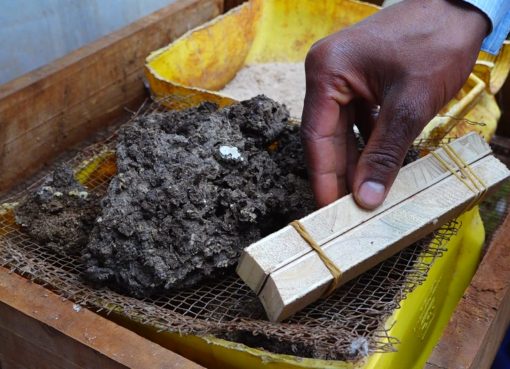
Murei said the fund had also enabled him to invest in equipment, including a coffee grinder, which has supported his coffee processing activities.
He noted that the high cost of production remained one of the major challenges facing coffee farmers, making access to affordable financing important in sustaining the crop.
Murei, who farms about 10 acres of coffee, said farmers also needed to adopt climate-smart practices to protect their crops from changing weather patterns, citing agroforestry as one of the measures he had adopted to reduce the effects of drought on his coffee plants.
“Agroforestry is really important to your coffee so that during a drought, your coffee will not undergo so much stress,” he said.
Murei said more young people should be encouraged to venture into coffee farming, noting that innovation and improved farming practices could make the crop more attractive to the younger generation.
“I think more youths should be involved in coffee. We need to make coffee a little bit more fun rather than doing it the normal way,” he said.
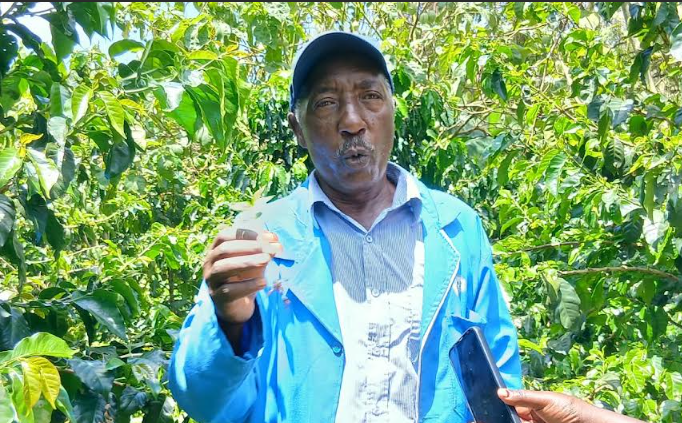
For Peter Kimani, Chairman of Kapsara Coffee Growers Cooperative Society, coffee has been an important source of livelihood for his family and enabled him to educate his children.
Kimani said the introduction of the Coffee Cherry Fund had provided farmers with financial support to purchase farm inputs and meet other expenses associated with coffee production.
“The first thing that has made me happy is when President Ruto came into power and introduced the Cherry Fund, which has helped farmers a lot. Through the fund we have been able to assist farmers and they have the money to grow their own crops, as well as cater to operations involving coffee,” he said.
He added that timely access to financing was particularly important because coffee farming requires continuous investment throughout the production cycle.
“Every month has its time. There are times of pruning, there are times of desuckering, there are times of planting, there are times of harvesting, all which need to be handled differently, so with the cherry fund all this has been made easier,” he said.
Kimani, however, noted that farmers continued to face challenges including inadequate access to appropriate fertilizers, limited agricultural extension services and difficulties in marketing their produce.
He called for increased availability of coffee-specific farm inputs and more extension services targeting coffee farmers to equip them with specialised knowledge on coffee production.
Kimani said farmers required technical support throughout the production cycle, stating that activities such as pruning, desuckering, planting and harvesting had to be undertaken at the appropriate time.
He also urged farmers to diversify their agricultural activities to provide alternative sources of income while waiting for proceeds from coffee.
“I want to urge my fellow farmers to also practice diversity in agriculture because it can sustain you until you get money for coffee,” he said.
Kimani further called for increased access to certified coffee planting materials and support to expand coffee acreage in Trans Nzoia, saying the county had potential to increase coffee production.
The farmers said continued access to affordable financing, coupled with adequate farm inputs, technical support and reliable markets, would be critical in sustaining coffee production and improving household incomes.
For the beneficiaries, the Coffee Cherry Advance Revolving Fund has provided more than financial assistance, enabling them to meet essential production costs and continue investing in coffee as a source of livelihood.
By Isaiah Nayika and Sandra Omondi