The Ministry of Health has activated preparedness measures at national and county levels ahead of the anticipated 2026 El Niño rains.
This includes issuing a health advisory to all 47 counties, even as the Kenya Meteorological Department forecasts a 99 percent probability of above-normal rainfall between October and December 2026, with the rains expected to continue into February 2027.
The advisory, guided by the Health Sector El Niño Contingency Plan, calls on county governments, partners, and members of the public to take early action to protect lives and health.
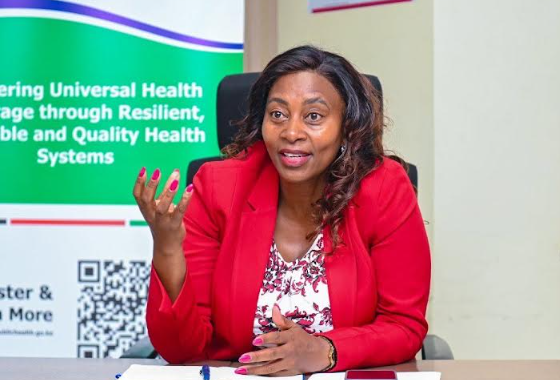
According to the Principal Secretary (PS) for Public Health and Professional Standards, Mary Muthoni Muriuki, the country should be concerned since heavy rainfall and flooding can contaminate water sources and increase mosquito breeding, raising the risk of cholera, typhoid, and other diarrheal diseases, as well as malaria, dengue fever, and Rift Valley fever.
Additionally, the PS pointed out that flooding can also cause injuries and drowning, damage health facilities, and disrupt access to essential healthcare.
“It may affect food supplies and increase the risk of malnutrition, particularly among children, while warmer conditions can lead to dehydration and other heat-related illnesses,” Muriuki highlighted in a press statement.
Further, she said the warnings are grounded in recent experience, noting that during the September 2023 to February 2024 El Niño period, 43 of Kenya’s 47 counties were affected.
“The country recorded 175 deaths, 40 missing people, and 242 injuries, while 384,216 people were displaced into 170 camps,” revealed the PS, adding that of 1,434 health facilities assessed across 11 counties, 64 became inaccessible, and increased cases of cholera, Rift Valley fever, and malaria were reported.
As a result, every county, according to the PS, is expected to maintain basic preparedness, with those facing higher risks of flooding, landslides, disease outbreaks, injuries, or malnutrition required to strengthen readiness without delay.
She called upon county governments to activate emergency coordination teams and Public Health Emergency Operations Centres, identify and protect health facilities at risk, ensure availability of medicines and vaccines, strengthen disease surveillance and reporting, monitor drinking water safety, intensify malaria prevention and mosquito control, prepare ambulances and referral services, manage malnutrition, maintain essential health services, provide mental health and psychosocial support, and share clear, timely information with the public.
Notably, Muriuki outlined areas requiring particular attention including counties of Mandera, Wajir, Marsabit and Garissa in the North Eastern region; Kitui, Makueni and Machakos in the South Eastern region; and Lamu, Kilifi, Kwale, Tana River, Taita Taveta and Mombasa along the Coast.
Others include the Kano Plains in Kisumu, Budalang’i in Busia, the Tana Delta, and landslide-prone areas in Murang’a, Nyeri, and Meru; the Gusii Highlands; West Pokot; and along the Rift Valley escarpment.
“We are acting early and together. We have learnt from previous El Nino emergencies, and our goal is to prevent avoidable deaths, disease outbreaks, and disruption of health services. I call upon every county to prioritize these measures and every family to prepare before the rains begin,” urged the PS.
In her advice to the Public, Muriuki encouraged households to drink only safe water by boiling or treating it when its safety is uncertain; wash hands with soap before eating and after using the toilet; cook food properly and keep it covered; use safe toilets and keep children away from floodwater; sleep under treated mosquito nets and remove stagnant water around homes; and keep essential supplies such as prescribed medicines, first-aid kits, oral rehydration salts and water-treatment products.
Importantly, the PS emphasized that special care should be planned for children, pregnant women, older people, persons with disabilities, and people living alone.
“Anyone experiencing sudden watery diarrhoea, repeated vomiting, severe weakness, difficulty drinking, reduced urination, bloody diarrhoea or persistent fever should seek medical care immediately,” cautioned Muriuki.
While arranging care, she advised that oral rehydration solution should be given if the person is awake and able to drink, and breastfeeding should continue for babies and young children.
“Early action saves lives,” the PS stressed, noting that lessons from previous El Niño emergencies have informed earlier and better-coordinated preparedness measures this time around.
She reiterated that the Ministry’s goal is to prevent avoidable deaths, disease outbreaks, and disruption of health services, and she called on every county to prioritize these measures and every family to prepare before the rains begin.
Equally, Muriuki reaffirmed the Ministry’s commitment to providing technical guidance, coordinating support, and sharing timely and accurate information throughout the season.
Ultimately, she urged members of the public to follow official health and weather advisories and to disregard rumours and misinformation.
With the forecast pointing to a prolonged rainy season, the PS stressed that preparedness—at both the county and household levels—is the country’s strongest defense against a repeat of past El Niño devastation.
By Michael Omondi