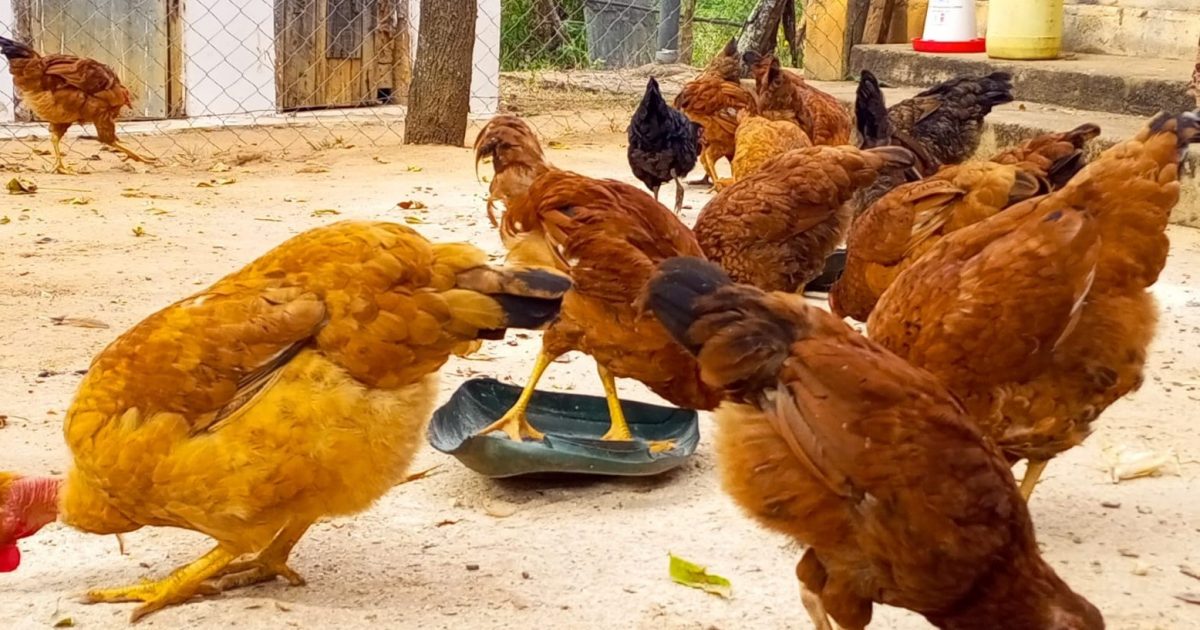
Battered by erratic weather patterns coupled with decreasing and delayed rainfall, hundreds of women farmers in Narok are switching to beekeeping and poultry farming as alternative sources of livelihood that are less vulnerable to climate change.
As the unpredictable rain cycle slashes harvest in the wake of climate change, the smallholder farmers who are members of Paran, an umbrella of 64 women groups from Maasai and Ogiek communities, are also embracing indigenous knowledge, agroecology, and climate-smart agriculture to stabilize their food systems.
According to the Director and founder of Paran, Ms. Nayian Kiplagat, with most parts of the devolved unit under immense threat due to frequent droughts that threaten pastoralism, local communities are slowly embracing alternative sources of livelihood.
Ms. Nayian points out that among the hardest hit by climate change are women who have to walk longer distances in search of water for domestic and livestock use while also taking care of animals, which exposes them to the risk of being attacked in the grazing fields.
Following continued sensitization on climate-friendly interventions to climate change, beekeeping, which has traditionally been a preserve of men, and poultry farming, which was frowned upon in the two communities, are turning out to be profitable ventures for pastoralist women in Narok County.
“Historically, keeping or eating small birds like chickens was associated with a lack of livestock. For a traditional Maasai man, turning to poultry farming implied that he was too poor to own cows. Previously chickens were classified as birds rather than livestock; they have historically been viewed as unclean or improper for humans,” Ms. Nayian chuckles.
The Director states that in the recent decades they have witnessed rainfall levels dwindle, depleting pastures for their livestock and diminishing their harvests, leaving them with no option but to trek for kilometers in search of food and pastures for their livestock.
It was this reality that inspired Ms. Nayian to launch Paran in 2005, an Indigenous women’s organization that brings women together to confront the challenges facing their communities.
“At that time, we faced many challenges affecting communities, and we came together to critically search for solutions,” says Nayian.
At the heart of Paran’s work is the belief that women themselves possess much of the knowledge needed to address the problems confronting their communities.
Ms. Nayian observes that women play crucial roles in Kenya’s agri-food systems—from production to agribusiness—shouldering a disproportionately higher burden of climate change amidst limited access to critical resources.
She indicates that the focus on industrial agriculture in Africa has contributed to unsustainable practices that worsen social inequalities and increase environmental degradation, further reducing productivity and increasing hunger, adding that enhanced involvement of women in agroecology offers a viable alternative.
Ms. Nayan notes that towards entrenching agroecology practices in Narok County, Paran has crafted partnerships to empower women by building their skills and developing practices through collective action, creating opportunities for commercialization, and enhancing their negotiation and leadership skills.
Ms. Nayian notes that building on women’s indigenous knowledge about the use, management, and conservation of diverse species in restoring biodiversity is important, adding that the knowledge encompasses crop rotation, intercropping, the integration of livestock–crop production, agroforestry, and agropastoralism.
This, she adds, reflects the efficient practices of resource reuse and innovations that reduce or eliminate the use of costly, scarce, or environmentally damaging inputs.
According to the Director, Paran member groups’ deep-rooted knowledge of local ecosystems, traditional farming methods, and seed management practices makes them invaluable contributors to sustainable agricultural development.
She says incorporating their perspectives and expertise leads to culturally relevant and effective agroecological practice and that promoting gender equity within agroecological transitions is not only a matter of social justice but also a strategic imperative for enhancing food security and resilience in the face of climate change.
“We as women understand the challenges in our homes and communities because we are the ones who experience them every day,” Nayian says, adding, “When we come together, we are able to share our experiences and find solutions that work for us.”
In Maasai households, pastoralism remains an integral part of community life, while women normally are tasked with managing homes and handling household chores; men usually are away for weeks with livestock in pursuit of pasture or are engrossed in other activities.
“We don’t believe that one solution can work for every community,” Ms. Nayian explains. “We look at the environment and the challenges affecting each group and then identify tailor-made activities that the women can manage and benefit from.”
For women living within conservancies, however, some activities are less practical because of the presence of wildlife. The Paran Women group has thus emphasized options such as beadwork and poultry keeping for some of these groups.
The purpose, she adds, is broader than generating income. The activities are intended to give households additional ways to cope with climate-related pressures while improving food security.
“Women need income, but they also need food in their homes,” Ms. Nayian says. “That is why we are encouraging activities that can give them both an income and something they can use directly in their households.”
Ms. Nayian underscores the importance of bee farming in promoting biodiversity and food security and urges the group’s members to maintain a healthy ecosystem that supports sustainable agriculture.
“Bees are critical in providing pollination to crops; therefore, without them, we would not have food. Seventy-five percent of all crops grown for food rely on pollinators, mostly honeybees, for a successful harvest. Without pollination from honeybees, many fruits and vegetables will not be on our grocery shelves.
By conserving our forests through beekeeping, we’re not only securing our livelihoods but also preserving our natural heritage for future generations,” she elaborates.
Paran has also rolled out a training program for its members on growing food crops in tiny spaces and off the ground.
Ms. Nayian points out that kitchen gardens are the perfect boost to improved food security and nutrition, as one can grow indigenous vegetables such as jute mallow (murenda), vegetable cowpea (kunde), African nightshade (managu), spider plant (saget), pumpkin leaves (sebebe), and African kale (kanzira).
She explains that the Kitchen Garden system Paran has adopted will also afford farmers a steady supply of exotic vegetables such as sukuma wiki, tomatoes, spinach, onions, tomatoes, and fruits such as strawberries, as each terrace allows one to grow different crops.
Other crops that can be grown in these gardens are peas, basil, parsley, capsicum, herbs, chilies, and mint.
Another advantage of the gardens, according to the Director is that they require less water and manure well and come in handy in areas weighed down by shortage of water, as they averagely consume less than 30 litres of water per week.
Recognizing that degraded land threatens both livelihoods and the future of the communities, Paran has embraced restoration as a fundamental component of its operations.
The organization has established 27 Indigenous tree nurseries, involving women in efforts to restore the environment around them.
“For us, planting trees is not only about the environment,” Ms. Nayian says. “It is about our future. If we destroy the land and the natural resources, our children will have nowhere to depend on.”
Paran women provide the labour needed to establish and maintain tree nurseries and other activities. The nurseries also serve as a knowledge hub where the women learn new technologies that respond positively to local conditions.
“We have women who know their land very well,” Ms. Nayian says. “They know which trees can survive, what their farms need, and what challenges they face. That knowledge is very important when planning interventions.”
Bernard Makinya, who coordinates projects at the umbrella organization, says VI Agroforestry played a role in strengthening the organization’s capacity, particularly around policies and organizational systems.
“The support was very important to us because Paran had grown, and we needed systems that could support the organization as it continued expanding,” says Makinya.
Through a grant from Farm Africa, Paran received capacity-building support that helped the organization review and strengthen its internal policies and plans.
The process involved examining areas including environmental safeguards, human resources, finance, procurement, anti-fraud and anti-corruption measures, communication, and strategic planning.
“We looked at different areas of the organization to identify where we needed to strengthen our systems,” Makinya says. “This included finance, procurement, human resources, environmental safeguards, and governance.”
The support also extended to a resource mobilization strategy, whistleblowing policy, job descriptions, and a board charter.
“For us, it was not about having documents just for the sake of having policies,” Makinya explains. “We wanted systems that would actually guide the organization, improve accountability, and help us serve the communities better.”
Board members and staff participated in the capacity-building process, while community representatives were brought into discussions about the policies that had been developed.
“The community was part of the process,” says Makinya. “The documents were shared with community members, and they were given an opportunity to discuss them within their groups before we came together to finalize and adopt them.”
The experience also created an avenue for Paran’s local knowledge to connect with wider discussions about dryland agroforestry and policy.
“That exposure has helped us understand that what we are doing at the community level is connected to bigger conversations around dryland agroforestry and climate change,” Makinya says.
He adds that the engagement has provided an opportunity for the voices of Indigenous women to reach beyond their immediate communities.
“Sometimes the experiences of women remain in the villages where they happen,” he says. “Being part of these discussions gives us an opportunity to share what women are experiencing and also learn from what others are doing.”
Ms. Nayian says Paran has provided community leadership, local knowledge, women’s networks, labour and experience that make the interventions relevant to the communities involved.
“Our strength is the community,” she says. “We know the women; we understand their challenges, and we work with them to find solutions that they can own and sustain.”
Its evidence comes from the realities of farms and households and from women who live with the consequences of environmental change.
VI Agroforestry’s contribution has included capacity building, technical connections, and opportunities to engage with wider agroforestry and policy discussions. Its support has helped Paran strengthen its organizational systems while connecting its local experience to broader expertise.
“Water remains one of our biggest challenges,” Ms. Nayian says. “You can encourage women to grow food, but when there is no water, it becomes very difficult.”
“Empowering women is not only about giving them an activity,” Nayian says. “It is also about giving them a voice and helping them participate in decisions that affect their lives and their communities.”
“The future of our communities depends on what we do today,” Ms. Nayian says. “If we restore our land, support our women, and pass this knowledge to the next generation, then we can build a better future.”
Their understanding of the land, household needs, traditional practices, and changing environmental conditions has shaped the organization’s approach to climate adaptation, conservation, restoration, and livelihoods.
By Emily Kadzo