People with disabilities in Nakuru have a reason to smile after the county government operationalized a Sh27.5 fund for the 2025/2026 financial year, aimed at aiding them in starting income-generating activities.
Nakuru was the first county government to launch the kitty in 2019 after the County Assembly provided a legal framework to guide the fund.
County Secretary Dr. Samuel Mwaura said the county would establish a monitoring framework to track the fund’s implementation and ensure commitments made to PWDs translate into tangible support.
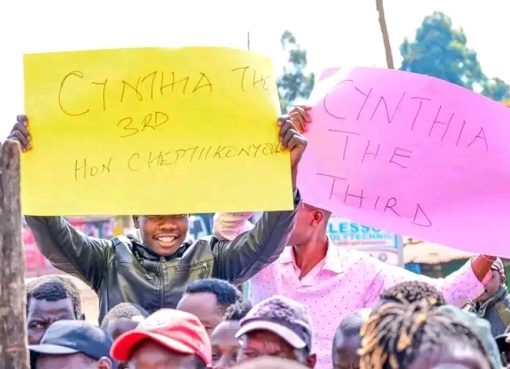
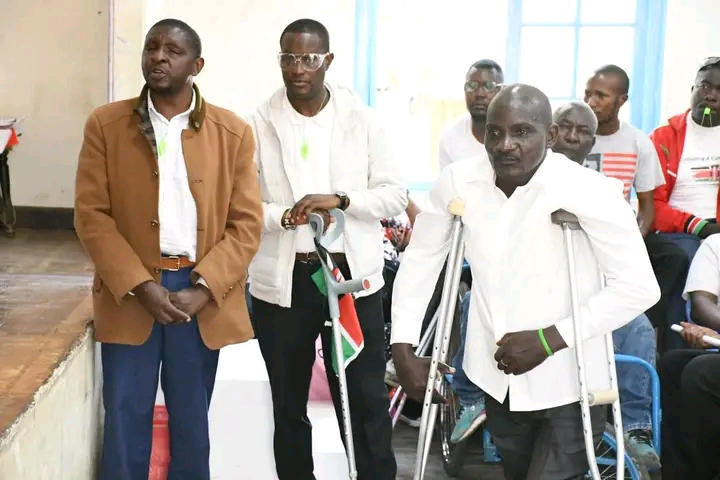
Dr. Mwaura spoke during a consultative meeting with PWD representatives and caregivers, held a day after members of the disability community demonstrated over delays in disbursement of the fund.
Protesters accused the county administration under Governor Susan Kihika of withholding and diverting Sh27.5 million meant for the Nakuru County Persons with Disabilities Fund during the 2025/2026 financial year, alongside omissions in the 2026/2027 budget.
Following the protests, County Executive Committee Member (CECM) for Youth, Sports, Gender, and Social Services Elga Riaga defended her docket and admitted that the funds were not disbursed to PWDs but insisted that her office played its role in ensuring the funds were disbursed.
According to Riaga, all the processes that had halted operationalization of the fund in the financial year 2025/2026 and in prior financial years were undertaken and concluded in earnest.
She stated that her department did its part, including overseeing the appointment and gazettement of PWD committee members.
Further, the department insisted that it had also fast-tracked the gazettement and publication of PWD regulations, with the CECM insisting that her office had requested that the funds be transferred to the PWD’s functional account at Family Bank, a request she stated was not implemented.
During the deliberations on Wednesday, the County Secretary urged PWD representatives to continue participating in public participation forums so that their priorities can inform county planning and budgeting.
“The county administration is committed to addressing the concerns raised and ensuring that PWDs receive appropriate support,” Dr. Mwaura said.
The representatives used the meeting to present their concerns and seek clarification on the status of the fund, which they said was important for improving livelihoods and access to support services.
Chief Officer for Economic Planning Dr. Victor Achoka said the county would provide for the fund through the supplementary budget, with the process expected to begin next month.
According to Achoka, the allocation would follow the budgetary process and would take several months before the funds could reach beneficiaries.
The county’s 2025/2026 Annual Development Plan had set a target of disbursing Sh27.5 million through the disability fund.
However, the plan recorded zero achievement against the target, citing delays linked to the fund’s regulations.
The county has subsequently retained a Sh27.5 million allocation for the Ward Disability Fund in its 2026/2027 development plan, with the money intended to provide assistive devices to PWDs.
The latest commitment follows growing concern among PWD representatives over delays in accessing the funds.
On September 9, members of the Nakuru PWD community issued a five-day notice for peaceful demonstrations, demanding clarification on the status and management of the fund.
The concerns included calls for transparency over allocations and disbursements.
The representatives also called for greater participation of PWD leaders in the management and oversight of the fund, as well as accountability for previous allocations.
Their concerns have placed the disability fund at the center of wider discussions on economic inclusion, social protection, and participation of PWDs in county development.
The County Persons with Disabilities (Amendment) Bill, 2024, provides for the establishment of the Nakuru County Persons Living with Disabilities Fund.
The proposed framework provides for county budget allocations to support the welfare of PWDs and requires proper financial records and annual accounts.
The county already has a legal framework for disability programmes through the Nakuru County Persons with Disabilities Act, 2016, and the Nakuru County Persons with Disabilities Fund Regulations, 2015.
At the national level, Kenya’s Persons with Disabilities Act, 2025, requires national and county governments to facilitate participation of PWDs in public affairs, particularly matters affecting them.
It also requires public participation measures to be accessible to persons with disabilities.
The legislation further requires county public offices to establish disability mainstreaming units to coordinate disability issues, monitor compliance, and liaise with the National Council for Persons with Disabilities.
The Kenya National Bureau of Statistics reported a national disability prevalence of 2.2 per cent in the 2019 Population and Housing Census.
The prevalence was higher in rural areas at 2.6 per cent compared with 1.9 per cent in urban areas.
The 2022 Kenya Demographic and Health Survey, using functional difficulty measures among people aged five years and above, found that five per cent had a lot of difficulty or could not function in at least one of six assessed domains.
Another 15 per cent reported some level of difficulty in at least one domain.
These figures illustrate the importance of accessible social protection, healthcare, education, and livelihood programmes, although the different surveys use different definitions and measurement approaches.
Kenya’s State Department for Social Protection identifies disability inclusion, vocational rehabilitation, economic inclusion, and advocacy for PWD rights among its responsibilities.
Its community-based rehabilitation approach covers health, education, social support, and livelihoods.
The national government also operates the Persons with Severe Disability Cash Transfer programme, which seeks to support extremely poor households caring for persons with severe disabilities.
The programme is implemented across all 47 counties. For Nakuru, county-level interventions provide an additional layer of support, including access to assistive devices, social services, and PWD empowerment programmes.
The county’s social services department lists financial assistance, assistive devices, and inclusive development programmes among its services.
In January 2026, more than 500 PWDs in Nakuru received mobility aids through a partnership involving Through the Roof and Abundant Hope of Glory Church, illustrating the continuing demand for mobility and independence support.
The county has also been undertaking community-based assessment and registration of PWDs in partnership with the National Council for Persons with Disabilities, Civil Registration Services, and other agencies to improve access to government services.
The meeting brought together CECM for Public Service Management Ambrose Ngare, CECM for Trade Stephen Kuria, Director of Political Affairs Joseph Kibore, Director of Enforcement Charles Nyanaro, Director of Communication Benard Namunane, and other county officials.
The planned supplementary budget process will now determine how the Sh27.5 million allocation is incorporated, followed by procurement before disbursement, according to county officials.
The monitoring framework proposed by the County Secretary is expected to provide a mechanism for tracking these stages and reporting progress to the PWD community.
For beneficiaries, the process will be significant not only for access to financial assistance but also for strengthening participation in economic activities and reducing barriers that limit their independence and inclusion in county development.
By Jane Ngugi and Jefther Simeon Afuyo