The National Treasury has vowed to appeal a High Court decision nullifying the proposed partial divestiture of the government’s 15 percent shareholding in Safaricom Public Limited Company (PLC).
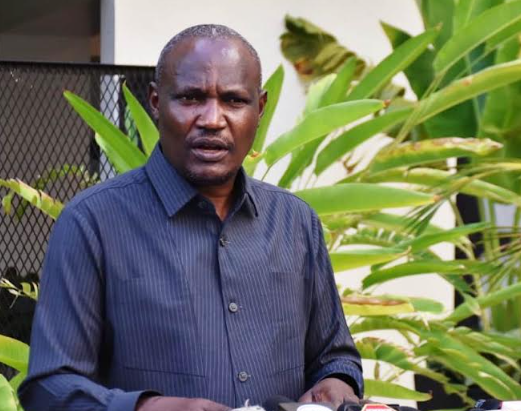
Addressing the media in Kisumu, Wednesday, Treasury Cabinet Secretary (CS) Fellow Certified Public Accountant (FCPA) John Mbadi Ng`onga maintained that the process leading to the proposed divestiture was undertaken in accordance with the law and principles of prudent public financial management and that they had already filed notice to appeal in court.
Mbadi indicated that Treasury was evaluating the full judgment and would outline, through the appropriate legal channels, the grounds for challenging the court’s findings.
“The National Treasury will pursue this appeal vigorously and provide further updates as the matter progresses through the courts,” he added.
The CS noted that the proposal for the Initial Public Offering (IPO) on Safaricom PLC was above board and had gone through Cabinet approval, Parliamentary Committee scrutiny, and a National Assembly resolution under Section 87A of the Public Finance Management Act, 2012.
A three-judge bench of the High Court of Kenya, comprising Justices Francis Gikonyo, Roselyne Aburili, and Tabitha Ouya, on Tuesday declared null and void the government’s sale of its 15 per cent stake in Safaricom to Vodacom Group.
The High Court also quashed the decision contained in Sessional Paper No. 3 of 2025, which had earlier been approved by the National Assembly.
Petitioners Tony Gachoka and Fredrick Ogola, who were opposed to the sale, had argued that the sale contravened the law, as the proper procedure was not followed.
They also argued that proper public participation was not done and the value of the Telco had been undervalued in the proposed sale. The Petitioners cited what they said were risks to national security and data sovereignty.
But Mbadi clarified that the transaction was designed to unlock value from a government-held asset for the Exchequer while safeguarding the strategic character of Safaricom, an institution that touches the daily lives of more than 50 million Kenyans.
“The National Treasury remains confident that the process followed the law and in line with prudent financial management coherent with the nation’s fiscal realities,” Mbadi stated.
He argued that the government had balanced the right to development with its other constitutional obligations in pursuing the transaction.
Mbadi rejected the court’s finding that the safeguards incorporated into the proposed divestiture amounted to constitutional and procedural failures. Among the measures were protections for Safaricom employees, dealers, and business partners.
“We do not accept that the safeguards built into this transaction, including the protections extended to Safaricom’s employees, dealers, and business partners, amounted to the constitutional and procedural failures as the court has asserted, and we intend to make that case fully on appeal,” he stated.
The proposed divestiture was formally presented to Parliament through Sessional Paper No. 3 of 2025 on the Partial Divestiture in Safaricom PLC by the Government of Kenya.
The Paper sought approval for the Government to dispose of 15 percent of its 35 percent shareholding in Safaricom to Vodacom Group Limited, through its Kenyan subsidiary, Vodafone, leaving the State with a 20 percent stake. This sale of about six million shares of the Telephony was expected to generate about Sh.240 billion.
The process was part of a broader privatization strategy that includes other state enterprises and an opportunity for the government to generate funds without imposing new or more taxation on Kenyans.
It was tabled in the National Assembly on December 4, 2025, and considered by the Departmental Committee on Finance and National Planning and the Select Committee on Public Debt and Privatization.
The two committees conducted public hearings across 30 counties before preparing their joint report, with views raised on the use of the proceeds, protection of Safaricom employees, and preservation of the company’s business model involving dealers, agents, and other business partners.
On March 31, 2026, the National Assembly approved the Sessional Paper pursuant to Section 87A of the Public Finance Management Act, subject to conditions, including safeguards against acquisition-related redundancies among Safaricom employees and measures to protect its dealers, agents, and other business partners.
The resolution also provided for the proceeds of the divestiture to be directed to the National Infrastructure Fund. The case now moves to the Court of Appeal, where the Treasury is expected to challenge the High Court Bench’s findings on the legality and constitutionality of the divestiture process.
Currently, 25 per cent of Safaricom is publicly traded on the Nairobi Securities Exchange (NSE), with the remainder held by the Kenyan government, Vodacom, and Vodafone.
Safaricom PLC is Kenya’s leading telecommunications provider, founded in 1997, and is majority-owned by the Kenyan government (60 per cent shareholding) and Vodacom Group.
It provides mobile voice, data, and financial services, most remarkably the mobile money platform M-PESA, which is Africa’s largest fintech and the world’s first mobile money transfer service, with over 30 million users in Kenya.
The importance of public participation is captured in Article 118 of the Constitution, which mandates Parliament to ‘facilitate public participation and hearings on various issues and laws before being enacted in order to include views of mwananchi in the legislation. This is because the Kenya Constitution 2010 has given priority to Kenyans in any decisions being made for them.
With over 42 million customers, the Telco boasts of extensive coverage with 2G, 3G, 4G, and 5G in the country and beyond.
Mbadi said the Government was working hard to control and manage the ballooning public debt, adding that some of the issues raised in public over Government spending and debt are coming from misinformation.
He urged the media to be on the forefront in asking such questions on behalf of the public, noting that the Treasury is always ready to respond.
The CS lashed out at the opposition, saying they are agenda-less and had nothing to offer Kenyans.
By Mabel Keya – Shikuku / Dorothy Pamella