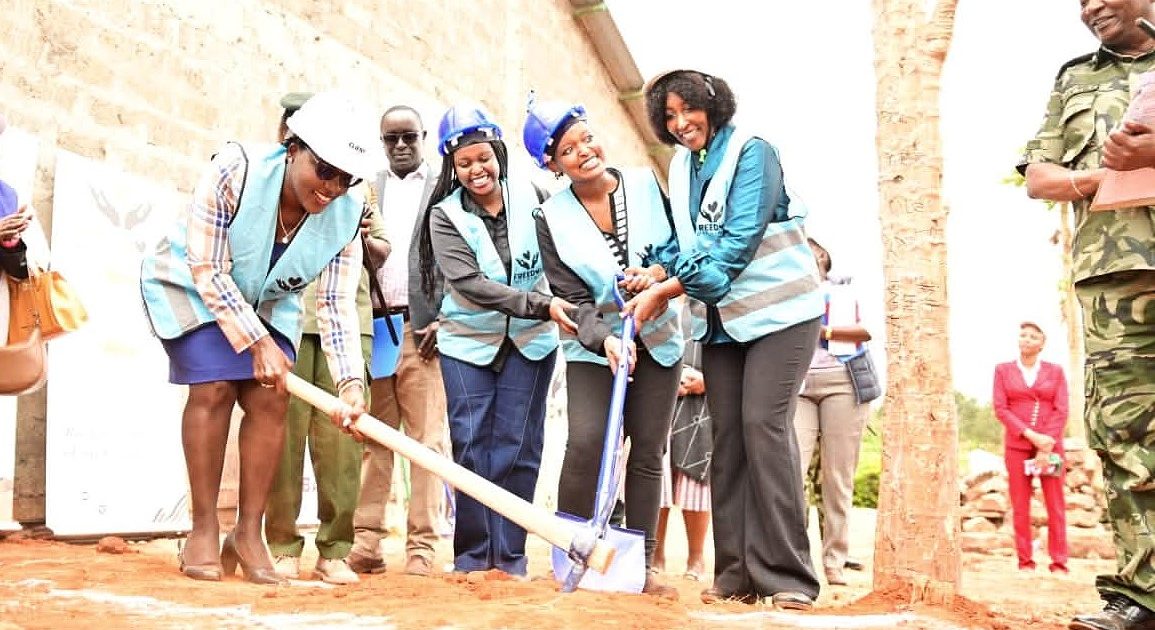
A new Sh9 million Mother and Child Accommodation Unit is set to be constructed at Embu Women’s Prison, marking a major milestone in improving the welfare of children living with their incarcerated mothers.
Developed with support from FreedomWithin Kenya, the facility will provide a safer, healthier and more nurturing environment for infants and young children spending their formative years behind bars.
Speaking during the groundbreaking ceremony on Thursday, Principal Secretary (PS), State Department for Correctional Services, Dr Salome Beacco, said the project was part of the Government’s broader reform agenda to transform Kenya’s correctional facilities.
She said the reform journey, which commenced in 2022 following the formation of a Presidential Taskforce on Prison Reforms, marked a turning point in efforts to transform the criminal justice system from a punitive model to one focused on rehabilitation, dignity and successful reintegration into the community.
“Some of the recommendations made by the taskforce, including rehabilitation and modernization of correctional facilities, are the ones we are now implementing,” she said.
Beacco cited Embu Women’s Prison as an example of the ongoing transformation in correctional facilities across the country. She said the institution had benefited from several projects, including a dining hall, revival of its borehole, landscaping, an Early Childhood Development and Education (ECDE) centre and the upcoming Mother and Child Unit.
Earlier, the PS commissioned the ECDE centre, comprising two fully equipped classrooms and a water, sanitation and hygiene facility. The centre will serve children of incarcerated mothers, children of prison staff and those from the neighbouring community.
Beacco said the Department was cognizant of the historical correlation between low literacy levels and offending, and had therefore shifted focus towards evidence-based rehabilitation that prioritises formal and vocational education for offenders and their dependants.
“We are working to upgrade daycare and child-friendly facilities across the country’s 46 women’s prisons, while strengthening partnerships with organisations willing to support reforms within correctional institutions,” she said.
The PS said the Government was committed to ensuring that the reform journey gained traction and had a meaningful impact in restoring dignity to inmates and officers in correctional facilities across the country.
She added that improved prison facilities should not only address the basic needs of inmates but also create an environment where incarcerated persons could undergo meaningful rehabilitation, vocational training and preparation for eventual reintegration into society.
She underscored the critical role of public-private partnerships in bridging the Department’s infrastructure deficit, noting that the Government could not undertake the reform journey alone.
The Mother and Child Unit is expected to complement these interventions by providing accommodation and care for children accompanying their mothers in custody. The initiative also reflects the Department’s efforts to make correctional institutions more responsive to vulnerable groups and to ensure that children are protected from the harsh conditions associated with incarceration within prison facilities while their mothers serve their sentences.
On staff welfare, Beacco highlighted ongoing improvements, including the provision of better-quality working facilities and the phased implementation of salary scheme increments.
Addressing prison overcrowding, the PS said the Department had decongested more than 4,950 inmates during the first quarter of the 2025/26 financial year, adding that the initiative was ongoing.
She further said the Department was collaborating with county governments to deploy individuals serving Community Service Orders (CSOs) to public institutions, including government offices, hospitals and schools.
She said the approach would ensure that community service sentences remained beneficial to society while promoting rehabilitation and encouraging offenders to contribute positively to their communities.
by Samuel Waititu