West Pokot County has embarked on an ambitious plan to establish model comprehensive schools in every ward, a move expected to transform learning infrastructure, improve education outcomes and address persistent disparities in access and retention.
The initiative is being implemented under the Kenya Primary Education Equity in Learning (KPEEL) programme, a World Bank-funded programme by the Ministry of Education aimed at improving learning outcomes, enhancing gender parity in transition and retention, and reducing regional disparities in education.
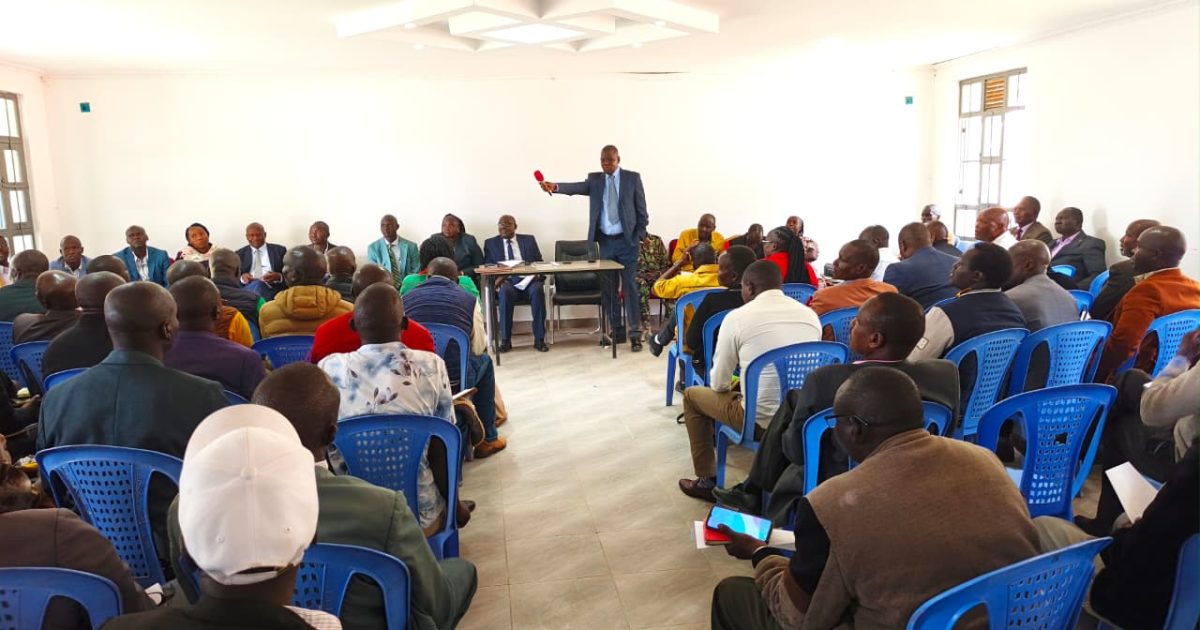
Stakeholders drawn from across the county met at Mtelo Hall in Kapenguria to deliberate on the identification of schools that will benefit from the programme and ensure equitable distribution of the proposed facilities.
The programme proposes three model comprehensive schools in every ward, bringing together primary, junior and senior schools within one educational administrative complex.
In wards hosting special needs education (SNE) schools, a fourth institution will be proposed as a model comprehensive SNE school in addition to the three regular comprehensive schools.
West Pokot County Commissioner David Saruni said the programme comes at a critical time when the county continues to grapple with low literacy, enrolment, retention and completion rates.
Saruni said the establishment of well-equipped comprehensive schools would help bridge education gaps and give children from marginalised and hard-to-reach areas greater opportunities to access quality learning.
“With the literacy levels within the county, this programme will help improve enrolment, retention and completion in our schools, which is very low at the moment, and raise them to the levels of the rest of the country,” said Saruni.
He said the initiative would also help ensure that learners are not disadvantaged because of their geographical or socio-economic backgrounds.
The County Director of Education, Yophes Magara, said the programme was designed to create modern learning environments capable of improving education standards and outcomes.
Magara said each selected complex would comprise a primary school, junior school and senior school, allowing learners to progress through the different levels within an integrated educational environment.
“The main aim of bringing about the model comprehensive schools is to improve education standards among pupils by providing better learning environments and strengthening the education sector,” he said.
He added that the programme would support the construction and improvement of classrooms, special learning rooms, integrated learning resource centres, laboratories, water, sanitation and hygiene facilities, playgrounds and administrative offices.
The facilities will also be equipped to modern standards, providing learners and teachers with an improved environment for teaching and learning.
Magara said the selection of beneficiary schools would be guided by strict criteria to ensure that the investment reaches communities with the greatest need and has long-term impact.
Among the requirements is equitable distribution of schools within each ward to ensure that no part of the ward is left behind.
Selected schools must also have adequate land to accommodate infrastructure for primary, junior and senior schools, with proof of ownership through title deeds, allotment letters or documented minutes showing transfer of ownership.
The institutions should have a strong potential catchment area, demonstrated by growing enrolment and significant distances between existing schools.
Accessibility, security and suitability of the terrain will also be considered. Schools located in areas prone to flooding, landslides, storm-water channels or other safety risks will not qualify.
Proximity to essential services, including water, electricity and internet connectivity, will also form part of the selection criteria.
Magara said the county education office had already consulted the six sub-counties and agreed that the process should begin at the ward level before the proposed lists are presented for verification.
The consultation brought together the County Commissioner, education officials, Members of the County Assembly, education quality assurance officers, community leaders, parents’ associations, boards of management, teachers’ unions, community-based organisations, sponsors and representatives of vulnerable and marginalised groups.
West Pokot County Executive Committee Member for Education Rebecca Kide welcomed the programme, describing it as a significant opportunity to improve the county’s education infrastructure.
Kide said the county government would work closely with the national government to ensure the initiative achieves its intended objectives.
“Education has no boundaries. We will continue working closely with the national government because our children are the leaders of tomorrow,” she said.
She said the county government had also prioritised bursaries and the expansion of Early Childhood Development Education centres as part of efforts to improve access to education.
Kide further highlighted the progress of Kapenguria University College at Keringet, saying its expected commencement of classes and enrolment would open up new opportunities for residents.
During the meeting, stakeholders also discussed preparedness for the 2026 national examinations and activities planned for the third term.
The anticipated El Niño rains also featured prominently, with Saruni urging school heads and teachers to continue sensitising learners on safety, particularly those travelling through areas prone to landslides and crossing large river valleys.
He said schools needed to remain vigilant as the rains were expected to intensify during the month, warning that the safety of learners should remain a priority.
The identification of the model comprehensive schools is expected to mark a major step in reshaping the education landscape in West Pokot, particularly by bringing modern infrastructure and learning resources closer to communities that have historically faced challenges accessing quality education.
by Parklea Ivor