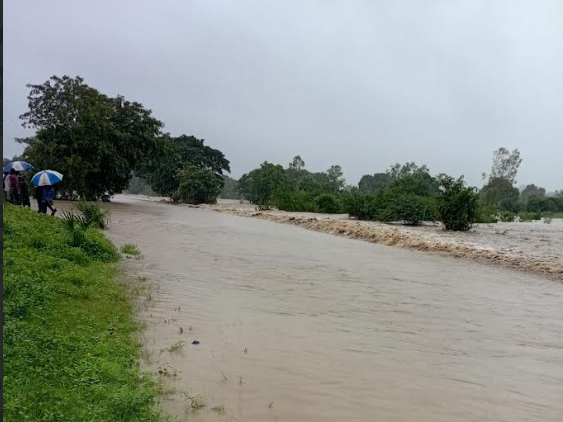
Residents in parts of Kwale County are raising concern over poor drainage and inadequate preparedness as heavy rains continue to affect the Coast, with communities now looking ahead to the anticipated October-December rainfall season.
The concerns have been particularly raised in Diani, where some residents and traders say poorly drained areas could leave businesses, roads and homes vulnerable to flooding if the rains intensify.
The Kenya Meteorological Services has clarified that the heavy rains recently experienced along the Coast were not caused by the anticipated El Niño-enhanced October-December rains. However, the recent downpours have renewed concerns among residents about the county’s preparedness for the coming rainy season.
The national government has warned of a high likelihood of above-average to very high rainfall during the October-December season and directed all 47 counties to map flood-prone areas, identify safe evacuation grounds and strengthen preparedness measures.
In Diani, residents say drainage remains one of the major issues that needs urgent attention before the heavier rains arrive.
Ben Ochieng, a resident of Diani, questioned whether sufficient resources had been set aside to improve drainage in areas such as Madingo and other parts of Diani.
“Where is the money that was said to be set aside to make proper drainage? We are seeing the rains and we know what can happen if the water has nowhere to go,” Ochieng said.
He called on the county government specifically Governor Fatuma Achani to prioritise drainage works in areas that are regularly affected by stagnant water and flooding.
Another trader, Mama Diana, who operates near the ukunda junction, said the rains were becoming a concern for small businesses operating along the roadside.
She also raised concern over street lighting, saying some of the lights in the area were no longer functioning.
“The drainage next to us can easily fill up if we get more rain. If that happens, the water could reach the roadside market and affect our businesses. We are also worried because some of the street lights are not working,” she said.
The concerns come against the backdrop of the county’s own recognition of drainage as an important component of flood management. According to the Kwale County Government, municipalities are mandated to construct and maintain storm drainage and flood-control infrastructure, as well as urban roads and street lighting.
The county’s development documents also identify Diani Municipality as having responsibility for storm drainage and flood controls, among other urban infrastructure.
Kwale County has experienced flooding in different parts in the past. In April, heavy rains affected areas including Lungalunga, Kiwegu, Jasini, Majoreni, Kinango, Matuga and Msambweni, with the Kenya Red Cross conducting assessments and supporting affected communities.
The Kenya Meteorological Services has explained that El Niño is a climate phenomenon rather than rainfall itself. Government officials have nevertheless urged Kenyans to prepare early, particularly because excessive rainfall could damage crops, roads, homes and other infrastructure.
The government has also activated a multi-agency preparedness framework covering early warning, contingency planning, resource mobilisation, response and recovery, with the Kenya Red Cross and county governments among the actors involved.
Kenya is also expected to access about Sh51.8 billion in emergency financing through the World Bank’s Rapid Response Option. The financing is expected to support responses to several risks facing the country, including El Niño-related disruptions, although the final amount will depend on the financing framework being completed.
For residents already affected by flooding in different parts of the country, the hope is that the resources being mobilised will translate into timely assistance, improved preparedness and practical support on the ground.
As Kwale residents continue to monitor the weather, many say they want preparedness to go beyond announcements and reach the communities most vulnerable to flooding.
Residents also welcomed sensitisation efforts by the Kenya Red Cross, saying the organisation’s work in communities can help people understand how to prepare and respond when heavy rains occur.
“We are happy to hear that the Red Cross is sensitising people who can reach us at the ground, but we hope they will also educate the others and us as well,” residents said, calling for more grassroots awareness on early warnings, evacuation procedures and flood preparedness.
With the October-December rains approaching, residents say the time to address drainage, lighting, roads and other vulnerable infrastructure is now rather than waiting for flooding to occur.
By Evelyn Njaramba