More than 300 National Government Administration Officers (NGAO) from Nyeri are undergoing data management training as part of a government planning program for local administrators.
The three-day workshop, which began on Tuesday at the White Rhino Hotel, is being facilitated by the State Department for Economic Planning in collaboration with the Kenya National Bureau of Statistics (KNBS).
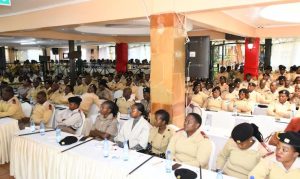
The training targets administrators from the ranks of assistant chiefs, chiefs, assistant County Commissioners and Deputy County Commissioners in 25 counties.
Eleven counties have already been covered in the training dubbed “Training on Grassroots Data Management for Evidence-Based Planning” during the first phase.
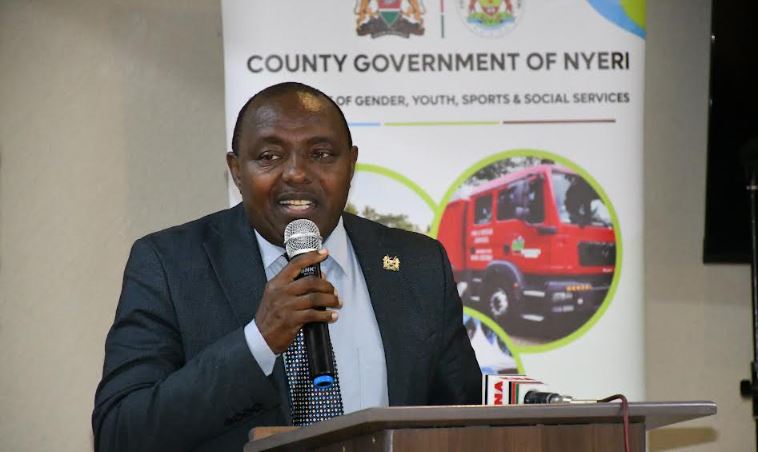
Speaking to the KNA on the sidelines of the workshop, Nyeri Deputy County Commissioner Maina Ngunyi said the training will help equip administrators with needed experts on data collection from the communities before it can be transmitted to the Designated Data Analysis Center.
“The aim of this training is actually to train administrators on how to collect data in the fields. As you are aware, we rely mostly on our administrators to get data to enable the Government to plan for the country. The government has realized data that is given in the field does not give accurate planning. So the aim of today’s training, which is going to be three days, is to make sure that chiefs and assistant chiefs, assistant County Commissioners and even Deputy County Commissioners are able to get the actual data that is accurate and that will enable the government to plan well,” said Ngunyi.
Ngunyi also welcomed the move by the State Department of Planning in its decision to retool administrators on data management and termed the move critical in the day-to-day operations of the Government.
He said officers from NGAO form a critical link between the Government and the local community, and therefore their input in national planning matters can never be overemphasized.
He cited the Government program to supply subsidized fertilizers to farmers as a case in point and pointed out that such an initiative would not have been possible without the input of chiefs in registering farmers in their areas of administration.
“The Government has seen the need to give these officers training that will enable them to collect accurate data that will help it plan its projects and programs. Government officers, especially administrators, collect several data; any data you may think of, whether it’s the number of farmers in the country, the people who are dying every day, the number of those on ARV drugs, or even the elderly persons on social support schemes. And the only way to get this data is through these administrators,” he explained.
On his part, Alphonse Obonyo, who is one of the facilitators for the training, said the skills the officers will acquire from the workshops will go a long way in ensuring the country has a data bank of information that is accurate, verifiable, and meets the globally acceptable standards and practices.
Obonyo, who works for World Governance, similarly said the main objective of the training was to educate the local administrators on how to manage and safeguard government data right from the sublocation and all the way to the national level for now and posterity.
“We are looking at graphic data, data from the local households, and sublocation to the location as it goes up. Data is what the government needs when it is doing planning, and so it has come up with a system where this data is supposed to be uniformly submitted, and a report is done in the best way so that economic planning can be done based on data that is well presented,” he said.
Among the sessions the officers are being taken through include national planning architecture, legal frameworks and community data systems, data quality assurance, and digital data systems, among others.
By Samuel Maina and George Kabithi