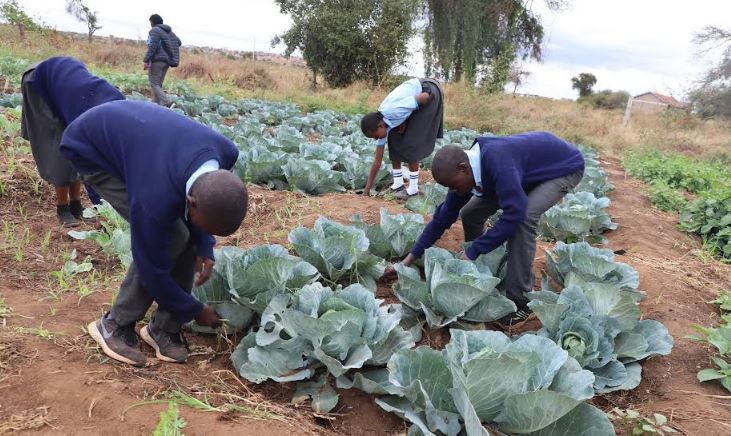
Schools in Kajiado County have been encouraged to establish school gardens to supplement meals offered in schools and improve nutrition among learners.
The call is part of the Scaling Up Homegrown School Feeding project, which seeks to increase the availability of locally produced food for school meals while giving learners practical skills in food production and nutrition.
The project is being implemented by the Food and Agriculture Organization (FAO), in partnership with the World Food Programme (WFP) and the International Fund for Agricultural Development (IFAD), with funding from the Government of Sweden.
Esther Wambui, an agriculture specialist with FAO Kenya, said schools with adequate land are encouraged to grow part of the food needed for their meals while using the gardens as practical learning spaces for learners.
She said pupils were being trained to grow food crops at school and encouraged to replicate the practices at home, extending the benefits of the programme to their families.
The project is being piloted in Kajiado, Embu, and Tharaka Nithi counties, with FAO working with Light Up Hope, a non-governmental organization in Kajiado County, to support school gardens and link local farmers to school feeding programmes.
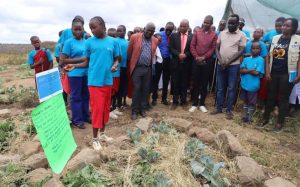
In Kajiado, the project has been piloted at PCEA Naserian and Paranae Comprehensive Schools, where model gardens are being used to demonstrate food production practices that can be adopted by other schools and households.
The gardens provide practical demonstrations on crop production, allowing farmers and learners to observe techniques that can be adapted to their own homes and farms.
Wambui said the project was also training women’s groups in climate-smart agriculture and food production to strengthen their capacity to grow nutritious crops despite changing weather conditions.
She said linking farmers to schools would provide them with a reliable market for their produce while contributing to household food security and incomes.
Wambui said the programme was supporting the Government’s target of providing school meals to 10 million learners by 2030, up from the current 2.6 million.
“We have to find ways of how we can reach ten million, and one of the ways is through supporting our smallholder farmers to do the production, then they aggregate their produce and sell to schools as a market,” said Wambui.
She said the project was also promoting greater diversity in school meals, moving beyond traditional maize and beans, commonly served as githeri, to include vegetables, eggs and other locally available nutritious foods.
Light Up Hope President Kelly Shaugnessy said the project was helping schools and communities adopt farming practices suited to the local environment at a time when many families in Kenya’s arid and semi-arid areas were facing unreliable rainfall and economic pressures.
She said disruptions in food production were putting pressure on household food supplies, with children particularly vulnerable to poor nutrition, which can affect their health, growth and ability to learn.
Shaugnessy said strengthening school feeding and local food production could help provide children with more consistent access to nutritious meals while supporting families to become more resilient.
She said water-efficient irrigation, soil conservation, and crop diversification were among the practices being promoted to help households cope with erratic rainfall and prolonged drought.
“We need to strengthen local food production so that schools and communities can withstand drought and ensure children have access to nutritious food,” said Shaugnessy.
At Paranae Primary School, headteacher Timothy Lemaiyan said the project had contributed to increased enrollment, improved performance, and better nutrition among pupils.
“Since the initiative started, our enrollment has gone up, performance has improved, and pupils now enjoy balanced diets that have boosted their nutrition,” said Lemaiyan.
Lemaiyan said the garden had also become a practical learning facility, enabling pupils to gain hands-on skills in agriculture and environmental conservation.
By Rop Janet