

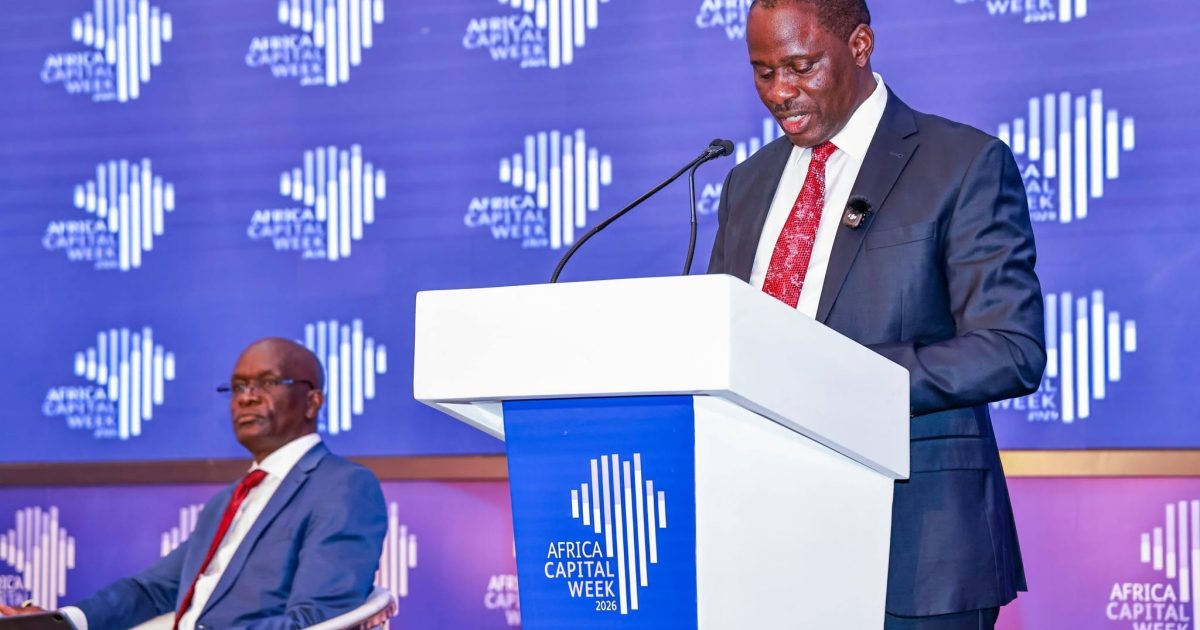
African governments have been urged to strengthen public investment management to unlock greater value from State-owned assets, to attract private capital and boost the continent’s capacity to finance its own development.
Principal Secretary for Public Investments and Assets Management, Cyrell Wagunda, said Africa must improve the quality of public investments while creating an environment capable of attracting institutional and private investors.
Speaking at the inaugural Africa Capital Week 2026 in Nairobi, held under the theme “Deepening Capital Markets to Advance Africa’s Economic Sovereignty,” Wagunda said the continent’s growing infrastructure, industrialisation, digital connectivity and climate resilience needs innovative and sustainable financing solutions.
Wagunda called for greater emphasis on proper planning, rigorous project appraisal and effective monitoring to ensure public investments deliver value for money and generate lasting economic and social benefits.
“Every shilling, Naira, Rand, Kwacha or Dollar invested should deliver measurable economic and social returns. Simply put, we must invest better before we invest more,” he said.
The PS said strong Public Investment Management systems would improve project preparation, reduce investment risks and create credible pipelines of investment-ready projects capable of attracting institutional and private capital.
He also called on governments to maximize returns from public assets, including State corporations, infrastructure, utilities, land and natural resources, through stronger governance, proper valuation, digitization and, where appropriate, structured commercialization.
Wagunda cited Kenya Pipeline Company’s recent initial public offering at the Nairobi Securities Exchange as an example of how capital markets can expand investment opportunities, strengthen corporate governance and enable governments to recycle capital towards new development priorities.
He further advocated diversification of development financing through instruments such as infrastructure bonds, infrastructure investment trusts and asset-backed securities.
According to Wagunda, Kenya’s recently launched Sovereign Wealth Fund and Infrastructure Fund are among efforts aimed at expanding financing options and mobilizing domestic capital for development.
The PS also highlighted Public-Private Partnerships as an important avenue for financing infrastructure, noting that successful PPP projects require proper preparation, transparent procurement, appropriate allocation of risks and predictable regulatory frameworks.
He stressed that transparency, accountability and good governance were critical to safeguarding public resources and building investor confidence.
Africa’s expanding pension, insurance and sovereign investment assets, he said, present a significant pool of capital that can support development if matched with credible and investment-ready projects.
Wagunda also encouraged governments to pursue responsible asset recycling, structured divestitures and public asset monetization where appropriate, while protecting strategic national interests.
He said Africa needed to develop an integrated investment ecosystem in which public investment management, asset management, capital markets and private-sector participation complement one another.
“Capital follows credible opportunities. Our responsibility is therefore to ensure that those opportunities exist,” he said.
Wagunda challenged participants at Africa Capital Week to move beyond discussions and translate the forum’s deliberations into practical partnerships, policy reforms and investments capable of strengthening Africa’s ability to mobilise capital, finance development and advance economic sovereignty.
By Joseph Ng’ang’a


