Kenya has signaled readiness for increased maize trade with Uganda as the two countries push for greater agricultural trade under the African Continental Free Trade Area (AfCFTA).
The arrangement, further, seeks to maintain expanded cross-border trade coupled with food safety and greater investment in agriculture.
Agriculture Cabinet Secretary (CS), Mutahi Kagwe said Uganda is well positioned to supply part of Kenya’s maize deficit, but urged the country to strengthen mechanisms that help farmers dry their maize properly and address aflatoxin concerns before the grain crosses the border.
Speaking during a luncheon meeting with Uganda’s Parliamentary Committee on Agriculture, Kagwe said improving post-harvest handling would create a win-win situation by opening greater market opportunities for Ugandan farmers while ensuring Kenyan consumers receive safe and quality food.
“We need a system in Uganda where maize is dried before it crosses the border,” Kagwe said. “We can buy, but we need aflatoxin-free maize.”
He noted that concerns around moisture and aflatoxin levels have made some Kenyan millers reluctant to take up maize from across the border, and said addressing the issue at source would help facilitate increased trade.
Kagwe said Kenya will continue protecting consumers by ensuring food entering the country complies with established safety and quality standards, even as it works with neighbouring countries to expand regional trade.
The CS placed the maize issue within the wider AfCFTA conversation, arguing that African countries should work together to address practical obstacles that continue limiting agricultural trade rather than allowing them to deny farmers access to markets.
“We have to ease off these small tariff and non-tariff barriers. We have to look for ways in agriculture where it is a win-win situation,” Kagwe said.
He said different African countries enjoy different agricultural advantages and should use them to complement each other, particularly where one country has the capacity to supply commodities needed by another.
At the same time, Kagwe invited Uganda to consider adopting Kenya’s Animal Identification and Traceability (ANITRAC) technology, which he said targets approximately 77 million livestock and is helping strengthen animal identification, traceability and efforts against cattle rustling.
“The safety of the animal is the main purpose,” Kagwe said, adding that improved identification makes it increasingly difficult for stolen livestock to be introduced into legitimate markets.
He called for greater sharing of agricultural technologies and knowledge between Kenya and Uganda, saying regional integration should ultimately create practical benefits for farmers and consumers.
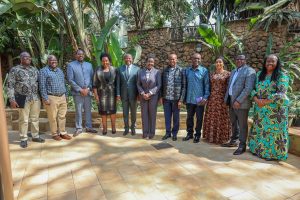
The meeting brought together CS Kagwe, Kenyan legislators and senior Ministry officials alongside members of Uganda’s Parliamentary Committee on Agriculture.
The discussions underscored a shared position that AfCFTA must move beyond agreements on paper and translate into real markets for African farmers, increased investment in agriculture, greater value addition and safe food for consumers, with Kenya and Uganda seeking practical solutions that allow agricultural produce to move across their borders while safeguarding the health and interests of their citizens.
The Ugandan Parliamentary Committee on Agriculture similarly called for greater intra-African agricultural trade, noting that despite the establishment of AfCFTA, African countries are still not trading sufficiently among themselves.
The Ugandan delegation called for harmonisation of agricultural and trade protocols, including within the East African Community, to facilitate movement of produce while maintaining appropriate safety and quality standards.
The delegation identified climate change, water for production, pest and disease control, energy, cold storage, extension services, weak markets, value addition and agribusiness among challenges requiring greater investment and regional cooperation.
Agricultural financing also emerged as a shared concern, with legislators from both countries warning that the sector remains underfunded despite carrying much of the responsibility for food security, employment and rural livelihoods.
The Ugandan delegation said agriculture receives about 2.2 per cent of the country’s national budget, which remains inadequate considering the sector’s importance to the economy.
Kenya’s National Assembly Agriculture and Livestock Committee Chairperson, Dr. John Mutunga, said Kenya similarly needs to increase investment in agriculture if the sector is to realise its potential as a major creator of jobs.
He said countries that successfully transformed their economies deliberately organised and invested in agriculture before developing agro-processing, value addition and industries that created employment.
He cited Kenya’s fertilizer and seed subsidy programmes, interventions to improve soil health and expansion of last-mile distribution as measures aimed at raising agricultural productivity.
Mutunga said Kenya’s farmer registration had grown from about 250,000 to more than 7.2 million farmers, giving the Government a stronger platform for targeting agricultural interventions.
By Joseph Ng’ang’a