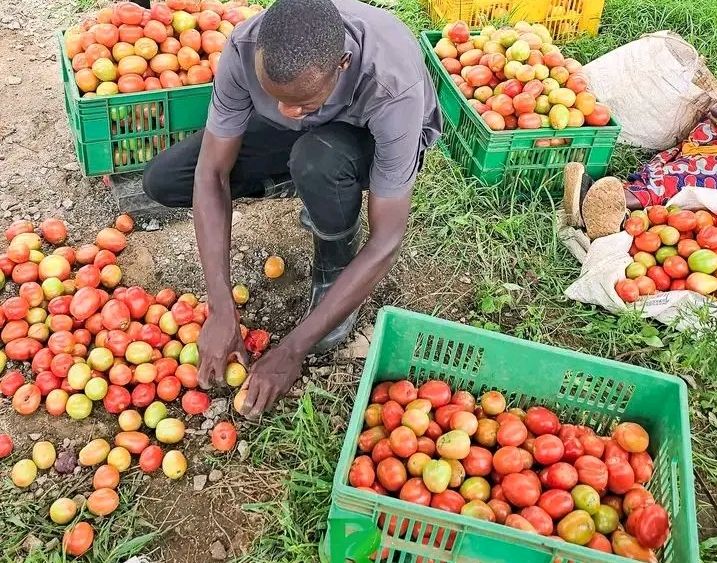
The rising unemployment crisis among young people continues to pose a major social and economic challenge, especially in rural regions where formal job opportunities remain scarce.
Yet, experts and stakeholders now argue that agribusiness could offer one of the most sustainable solutions if young people are properly trained, empowered with modern skills and supported with start-up capital.
Across many parts of the agriculturally rich areas of Tinderet Sub-county in Nandi County, a growing number of youths are gradually turning to farming and agribusiness ventures not merely as subsistence activities, but as profitable enterprises capable of transforming livelihoods.
Agricultural economists say the sector remains the country’s largest employer and contributor to the economy, yet many young people have for years shunned it due to the perception that farming is outdated, laborious and unprofitable.
However, changing market trends, increased demand for food products and advancements in agricultural technology are steadily redefining the sector and opening-up fresh opportunities for the youth.
According to agricultural extension officer, Peter Kigen, the region possesses immense agricultural potential that remains underutilized because many young people lack proper mentorship, technical knowledge and access to affordable financing.
He observed that thousands of graduates leave colleges and universities annually with little hope of formal employment, yet many could succeed if guided into productive agribusiness ventures.
Kigen noted that modern farming today extends beyond traditional crop cultivation and livestock keeping, adding that agribusiness now incorporates value addition, processing, packaging, marketing and technological innovations that can generate significant income.
“Many youths still imagine agriculture as digging with hoes in villages. That mindset must change. Agriculture has become a business and one of the fastest growing economic sectors globally. If youths are equipped with skills and financial support, unemployment can significantly reduce,” said Kigen.
Among the ventures that experts identify as highly promising for young people is dairy farming, particularly in regions such as Tinderet where climatic conditions favour pasture production.
Dairy farming continues to attract increasing numbers of youths due to the steady daily income generated through milk sales. Cooperative societies and milk processing plants have also improved market access, making the venture more attractive.
Local dairy farmer, Edwin Kiptoo, said many young people can begin with only one or two dairy cows and gradually expand their operations over time.
He explained that with proper feeding, disease control and management, dairy farming can provide sustainable income sufficient to support families and even employ additional workers.
“A youth can earn consistently from milk sales every day. The challenge is that many lack initial capital to buy quality breeds and construct proper sheds. If affordable loans are availed, many would venture into dairy farming,” Kiptoo said.
Poultry farming is also emerging as a lucrative agribusiness activity among unemployed youths due to its relatively low capital requirements and fast returns.
Experts note that broiler chicken farming can generate profits within a few weeks while layers provide regular income through egg production.
Agribusiness trainer, Beatrice Chepkemoi, observed that poultry products enjoy ready markets in hotels, schools and urban centers, making the business viable for both rural and urban youths.
She stressed the need for continuous training to help young farmers understand proper feeding practices, vaccination schedules and business management.
“Many youths venture into poultry farming without adequate knowledge and eventually incur losses. Training is critical because agribusiness is not guesswork. Proper management determines profitability,” said Chepkemoi.
Another promising area is horticulture, particularly the cultivation of vegetables, fruits and herbs.
With increasing urban populations and growing awareness about healthy diets, demand for fresh produce continues to rise across the country.
Tomatoes, capsicums, onions, cabbages and spinach are among the commonly grown crops that fetch good prices in local markets.
Agricultural consultant Joseph Langat said greenhouse farming allows youths to practice intensive agriculture while minimizing the effects of unpredictable weather conditions.
He added that modern irrigation systems can enable year-round production even during dry seasons.
“Land subdivision has reduced the availability of large farms, but greenhouse technology allows youths to produce high yields even on small plots. This makes horticulture suitable for unemployed youths with limited land,” Langat explained.
Bee keeping is also gaining popularity as an affordable agribusiness venture that requires minimal space and labor.
Experts say the demand for honey and other bee products has continued to increase both locally and internationally.
Besides generating income through honey sales, bee farming contributes significantly to environmental conservation through pollination.
Environmentalist Ruth Jelagat noted that many youths overlook apiculture despite its profitability and relatively low maintenance costs.
She said one can start with a few beehives and gradually expand production while targeting supermarkets, local shops and processing firms.
“Bee farming is among the ventures that can thrive even in semi-arid areas. It does not require huge tracts of land and the returns can be impressive if farmers receive proper support and market linkage,” she said.
Fish farming has equally emerged as another viable enterprise, especially in areas with reliable water sources.
Government and private sector initiatives have in recent years encouraged youths to establish fish ponds to meet the growing demand for fish products.
Aquaculture specialist, Martin Rotich, said fish farming offers opportunities not only in production but also in hatchery management, fish feed manufacturing and processing.
He pointed out that the venture can provide employment to many youths if modern technologies and training are embraced.
“Fish farming has enormous untapped potential. Unfortunately, many youths fear venturing into it because they lack exposure and technical knowledge. More sensitization is needed,” Rotich said.
Coffee farming, which has witnessed improved earnings in Nandi County in recent years, is also attracting renewed interest among the youth.
Experts believe value addition through coffee roasting, packaging and direct marketing can generate even greater income for young entrepreneurs.
Similarly, avocado farming has become increasingly lucrative due to the expanding export market.
Agricultural stakeholders argue that youths should be encouraged to engage not only in primary production but also in agribusiness value chains such as transportation, processing, branding and online marketing.
Despite the promising opportunities, lack of access to affordable capital remains one of the biggest obstacles preventing youths from venturing into agribusiness.
Many financial institutions often demand collateral security that unemployed youths cannot provide.
Youth leader Collins Cheruiyot called on both national and county governments to establish more accessible agricultural empowerment funds targeting young entrepreneurs.
He noted that many youths possess innovative business ideas but remain financially constrained.
“Most youths are willing to work, but they cannot raise the starting capital. Governments and financial institutions should create friendly loan products with low interest rates to support agribusiness startups,” said Cheruiyot.
Stakeholders also emphasize the importance of mentorship and practical training.
They argue that agricultural training institutions should modernize their programnes to align with emerging trends in agribusiness and digital technology.
Experts say the integration of mobile applications, social media marketing and e-commerce platforms can help young farmers access wider markets and better prices.
Agricultural economist Dr. Miriam Koskei said the future of agriculture lies in innovation, mechanization and value addition.
She warned that unless youths are deliberately incorporated into the agricultural sector, unemployment levels may continue worsening.
“Agriculture has the capacity to absorb thousands of unemployed youths if supported properly. What is needed is deliberate investment in training, affordable financing, market access and modern technology,” Dr. Koskei stated.
Community leaders in Tinderet have also urged parents and society to stop portraying white-collar jobs as the only path to success.
They observed that many successful agripreneurs are today earning more than individuals employed in formal sectors.
Elder Samuel Sang challenged young people to embrace hard work and exploit the numerous opportunities available within agriculture instead of waiting endlessly for government employment.
“Our youths should understand that wealth is created through productivity. Agriculture can provide dignified livelihoods if approached professionally,” Sang remarked.
As Kenya grapples with rising unemployment and economic uncertainty, agribusiness increasingly stands out as a practical and sustainable pathway toward youth empowerment.
With adequate training, supportive government policies, affordable financing and improved market access, the agricultural sector could become a major engine for job creation and economic transformation among the youth.
For many stakeholders, the solution to unemployment may not necessarily lie in the shrinking formal job market, but rather in empowering young people to view agriculture not as a last resort, but as a profitable business capable of shaping a more secure and prosperous future.
By Sammy Mwibanda