The Office of the Controller of Budget (OCOB) has commenced a 10-day monitoring and evaluation exercise in Kisumu County to assess budget implementation, verify expenditure and establish whether public funds have been utilised for their intended purposes.
The exercise, which runs from September 14 to 25, will focus on the utilisation of exchequer releases authorised during the 2025/26 financial year, settlement of pending bills, the County Assembly Fund and implementation of recommendations arising from previous monitoring exercises.
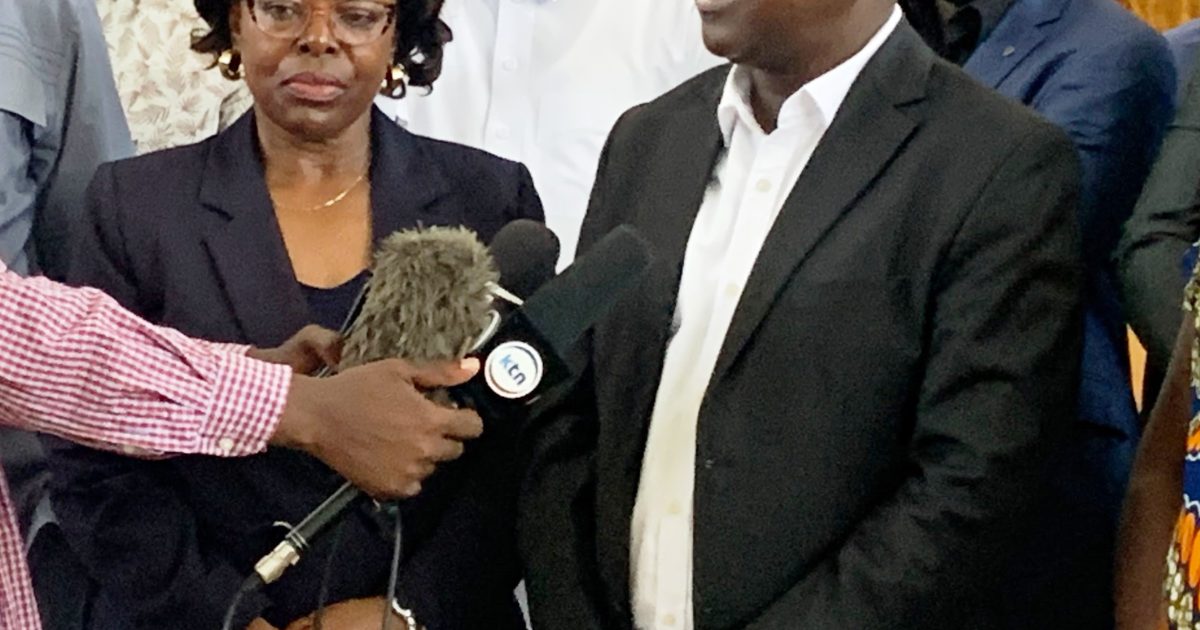
Controller of Budget Dr. Margaret Nyakang’o said the exercise would provide her office with an opportunity to verify information contained in its quarterly budget implementation reports by engaging county officials and examining actual expenditure on the ground.
“During our annual monitoring and evaluation exercise, we visit the counties and the county assemblies to understand their problems and also to ground-truth some of the issues that have been reported in my quarterly report, the budget implementation report,” Nyakang’o said.
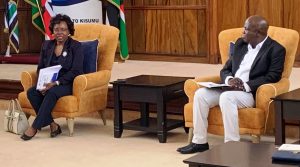
She spoke during a meeting with Kisumu Deputy Governor Dr. Mathew Owili, who received the OCOB team at the start of the exercise.
Nyakang’o said her office had not established whether any public revenue had been lost in the county but would investigate the matter during the exercise.
“As at this point in time, we have not established, as Office of the Controller of Budget, if any money has been lost. But the exercise has just started, and we’ll be finding out if indeed revenue was lost,” she said.
She recommended the integration of the county revenue collection system with the accounting system to reduce the risk of revenue leakages and improve financial accountability.
“The recommendation in terms of the revenue system is that it needs to be integrated with the accounting system so that the risk of leakage is reduced,” she said.
According to a letter dated August 31, 2026, addressed to Kisumu Governor Prof. Peter Anyang’ Nyong’o, the OCOB team will assess the utilisation of Operations and Maintenance funds, including exchequer releases of Sh428.69 million for medical insurance, Sh269.86 million for domestic travel, Sh229.43 million for the Kisumu County Bursary Fund and Sh114.50 million for legal dues and fees.
The team will compare approved exchequer requisitions with actual expenditure and payments made during the first nine months of the 2025/26 financial year.
During the financial year, Kisumu County was allocated an equitable share of Sh8.902 billion from the national revenue, in addition to Sh2.169 billion in conditional and non-conditional grants.
The exercise will also examine the settlement of pending bills by comparing the county’s payment plan with actual payments and determining whether payments were made according to the order of priority set out in the plan.
The county’s pending bills have also attracted the attention of the Senate, with Governor Nyong’o recently questioned over the county’s outstanding obligations amounting to Sh5.4 billion.
Nyakang’o said counties were required to prepare a comprehensive schedule of all declared pending bills, commonly referred to as a pending bills universe, followed by a payment plan submitted to the Controller of Budget‘s office.
“Every time requisitions for payments are made, we confirm that they are exactly reflected in the payment plan, pending bills settlement plan,” she said.
She said the arrangement was intended to ensure that pending bills were settled in an orderly manner and that counties gradually reduced their outstanding obligations.
The OCOB team will further assess the establishment and operationalisation of the County Assembly Fund and verify whether withdrawals authorised for County Assembly expenditure were used for their intended purposes.
The team will also review the implementation of recommendations arising from previous monitoring and evaluation exercises and observations contained in the County Budget Implementation Review Report for the first nine months of the financial year.
Nyakang’o also urged county officials to thoroughly verify financial figures with the OCOB budget coordinator before submitting the information to the office’s headquarters for compilation.
She said discrepancies in financial data should be identified and corrected at the county level instead of being discovered after the information had been incorporated into published budget implementation reports.
“I’ve not seen where the actual mistake was, but as a way forward, I have suggested that before the figures leave the county level, they should be thoroughly scrutinised and agreed with the budget coordinator from the Office of the Controller of Budget,” she said.
“We should not wait until the figures have gone to the Controller of Budget report and have been posted online for us to realise that there was a mistake. That should have been realised before the data left the county,” she added.
Nyakang’o said the new verification arrangement would help improve the accuracy and reliability of county financial data before it was submitted to headquarters.
“Going forward, we now have a way of operating which is a win-win, whereby my officers will ensure that the data is clean before it is brought to the headquarters for compilation,” she said.
On delays in the submission of the county budget, Nyakang’o said public funds could be available in the county account but could not be spent without an approved budget.
“The funds were in the account but the budget had not been submitted, so you cannot pay salaries without a budget,” she said.
She said expenditure would now proceed following approval of the budget, but noted that the county should have submitted it to her office by July instead of September.
“I believe that the next time, the budget will be made earlier within the law because that budget should have been in my office by July, not September,” she said.
Nyakang’o further disclosed that the National Treasury’s Integrated Financial Management Information System (IFMIS) department was integrating requisitions approved by the OCOB with the IFMIS system to prevent the substitution of approved requisitions during payment.
“After we approve a requisition, they cannot be substituted with others when the county is making the payments,” she said.
She said the integration process was at its final stage and was expected to become fully operational during the current financial year.
The Deputy Governor said the meeting marked the official opening of the monitoring process, which would culminate in an exit meeting at the conclusion of the exercise.
Owili said the engagement between county officials and the OCOB team was ultimately aimed at improving service delivery to residents.
“All that really is geared towards service delivery to the people of Kenya and in this case, the people of Kisumu,” he said.
The OCOB is an independent constitutional office established under Article 228 of the Constitution of Kenya, 2010. Its mandate includes overseeing the implementation of national and county budgets by authorising withdrawals from public funds and monitoring how government resources are utilised.
The office also monitors, evaluates and reports on budget implementation and makes recommendations aimed at strengthening accountability, transparency and prudent management of public resources.
Since the introduction of devolution in 2013, Kisumu County has received more than Sh120 billion in cumulative revenue allocations from the national government exchequer.
by Mabel Keya-Shikuku, Dorothy Pamella (Intern) and Crispine Oduor (Trainee)