The East African Legislative Assembly (EALA) is harmonising seed laws across the region to boost agricultural production, food security, and cross-border trade in quality planting materials.
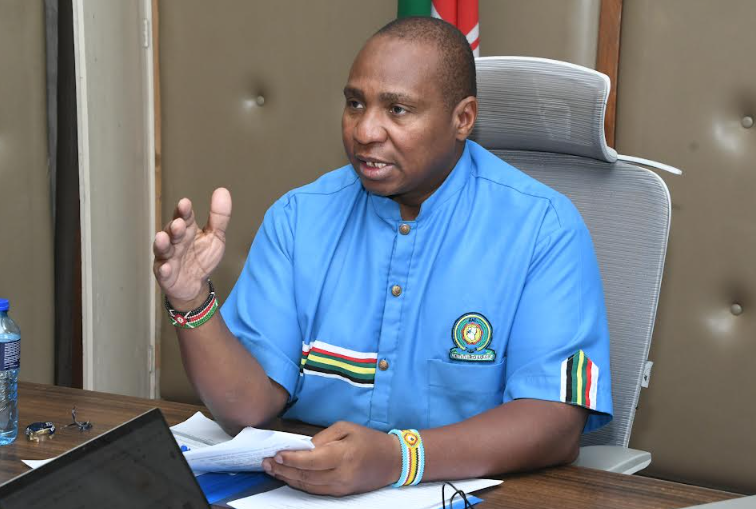
Speaking during a public hearing on the East African Community Seed and Plant Varieties Bill, 2025, EALA Member of Parliament and Chairperson, Agriculture, Tourism, and Natural Resources Committee, David Ole Sankok, said the Bill seeks to promote quality seed production, while protecting food sovereignty and indigenous seeds.
The Legislator warned that overreliance on seeds that cannot be replanted could threaten food sovereignty and leave Partner States vulnerable to food insecurity.
“Every season you have to go to the market. Supposing that market closes, what will happen to our food sovereignty and our food security?” he asked.
“That’s why we are actually making these laws, so that we can have food sovereignty on top of food security,” he added.
He said harmonising seed regulations would enable farmers and seed breeders to access wider markets, therefore, allowing Member States to benefit and expand agriculture output.
The Bill provides for coordination of the evaluation, release, and registration of plant varieties among EAC Partner States, as well as common processes for seed certification and protection of plant varieties.
It is anchored on Article 106 of the EAC Treaty, which provides for cooperation in quality seed development and production through research and plant breeding, enhanced capacity in seed technology, and an enabling environment for private-sector seed multiplication and distribution.
Under the proposed Bill, seed certified in one EAC Partner State could be recognised in other Partner States under agreed conditions, reducing duplication in testing, registration, and certification.
“The seed that is certified in Kenya doesn’t need to undergo all the processes in other Member States,” he said.
The Lawmaker said rapid urbanisation was increasing pressure on rural farmers to produce enough food to feed the growing population.
“As you know, 70 per cent of our population currently lives in urban centers. Now the remaining 30 percent who are in the rural areas are the ones that are supposed to feed them,” he said.
The Legislator said the proposed framework would not prevent farmers from retaining and planting their traditional seeds, arguing that food security must be accompanied by food sovereignty.
“As a farmer, you have the choice to make, whether to buy or to plant your own seeds without any interference,” he said.
The Bill is expected to address concerns around farmers’ rights to save, use, exchange, and replant seed, as well as the protection of community seed banks, traditional knowledge, biodiversity, and local genetic resources.
Stakeholders said there is a need to ensure that plant breeders’ rights don’t undermine farmers’ traditional practices.
They said the Bill would facilitate regional trade in breeders’ seeds, but would not give seed companies the authority to prevent farmers from planting their own traditional varieties.
Sankok called for stronger measures against counterfeit and substandard seeds, saying farmers needed better protection from unscrupulous traders.
He said the proposed system would improve seed identification and traceability, including the use of scanning technology to distinguish genuine seeds from counterfeit products.
Sankok warned that organisations involved in producing fake seeds would face penalties.
The Bill’s policy framework recognises the growing impact of droughts, floods, pests, and diseases on agricultural production and proposes greater emphasis on drought-tolerant and climate-smart varieties.
He said countries could also benefit from increased regional trade by producing crops suited to their respective environments and selling surplus produce to neighbouring markets.
On genetically modified organisms, Sankok said the proposed legislation does not seek to regulate GMOs.
He said GMO regulation remains governed by national biosafety frameworks and that EAC legislation would only address the matter if Partner States reached a common position on the technology.
Sankok said differences in regulatory and institutional capacity among EAC Partner States would be addressed through a gradual harmonisation process.
He stressed that countries with more advanced seed regulations will only align with the standards of the Bill.
Sankok said EALA was taking time to consult stakeholders because the Bill must eventually be implemented across all Partner States, noting that public submissions would be considered alongside views from other Partner States before the final legislation is adopted.
The consultations are expected to gather views from farmers, seed companies, researchers, regulators, civil society organisations, women and youth groups, and other stakeholders.
If adopted and effectively implemented, the Bill is expected to reduce regulatory costs, improve access to quality seed, promote agricultural innovation, and strengthen the movement of agricultural inputs across EAC borders.
By Ian Chepkuto