Egerton University is partnering with stakeholders to promote 4K Clubs in more than 50 schools within Nakuru County in an initiative that aims to empower young learners with knowledge and skills in responsible crop protection and sustainable farming practices.
The institution is actively involved in training 4K Club patrons, members, and school heads on agricultural innovations and sustainable agronomic practices.
Egerton University Vice Chancellor Prof. Isaac Kibwage underscored the importance of reviving school farming programmes, adding that the initiative by the university aims to inject fresh, technologically driven energy into school-age youth to directly combat the twin crises of aging farmer demographics and shrinking arable land.
“Egerton University is proud to continue working with schools in Nakuru County to support 4K Clubs, helping pupils learn practical farming skills and build a love for agriculture from a young age. The partnership aims to enhance agricultural productivity, ensure food safety, and improve health outcomes within the community,” noted the vice chancellor.
Professor Kibwage pointed out that the programme is also enhancing the capacity of 4K clubs in schools towards equipping learners with practical skills in combating climate change and sustainable agricultural practices.
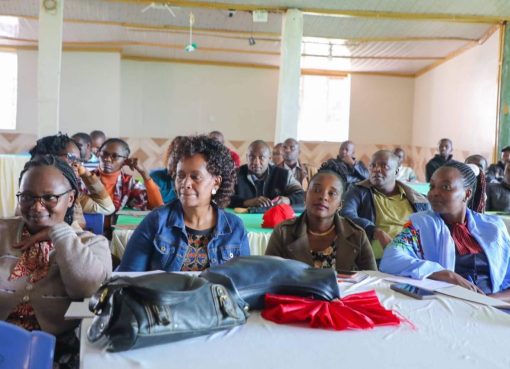
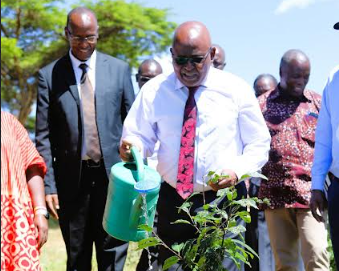
Speaking at the Njoro Main Campus during Egerton University’s 4K-Club open day towards revitalization of the 4K-Club framework in schools, the Don noted that they were encouraging pupils to integrate agroforestry by planting tree seedlings alongside vegetables.
Currently, 4K Club participation is limited to Grades 4–6. Egerton staff are working on a proposal to extend involvement up to age 35 to allow for continued participation and sustainability of the initiative.
Each of the schools is assigned a lecturer from Egerton as a mentor, supported by a teacher patron and student coaches from the Agricultural Education and Extension Student Association (AEESA). Egerton also conducts training for teachers and headteachers who serve as club patrons.
Prof. Kibwage noted that the clubs, once a cornerstone of agricultural and environmental education in schools, are a vital tool in fostering a generation that understands and actively participates in sustainable agricultural practices.
“To realize this vision, Egerton University allocated a dedicated demonstration farm and tech hub facility to the 4K-Club initiative, coordinated by Dr. Miriam Kyule. The center introduces young minds to cutting-edge tools like agricultural drone technology and smart irrigation programming,” the vice chancellor pointed out.
The 4K Club programme, an acronym for “Kuungana, Kufanya, Kusaidia Kenya” (Unite, Act, Help Kenya), was popular in the 1990s but has dwindled in recent years due to shifts in educational priorities and resource constraints.
With the growing threat of climate change, stakeholders believe it is time to shore them up back into the education system.
According to the vice chancellor, climate change is no longer a distant issue; it’s a reality affecting every aspect of our lives.
“We need to empower our children with the knowledge and skills to tackle these challenges from an early age. Enhancing capacity of 4K clubs can play a pivotal role in this effort,” he noted.
“This multi-stakeholder partnership aims to train and empower 4K Clubs—school-based agricultural groups—on the responsible use of crop protection innovations. The initiative is integrating sustainable practices into the activities of these clubs, fostering behavior change within schools and the wider community to embrace responsible farming practices,” the don elaborated.
The program focuses on equipping young learners and their mentors with essential knowledge and skills to promote better farming methods. The long-term goal is to enhance agricultural productivity, ensure food safety, and improve health outcomes within the community.
By enhancing the capacity of 4K clubs, students can learn to plant trees, manage waste, conserve water, and adopt sustainable agricultural practices—skills critical in mitigating the effects of climate change.
The clubs traditionally focused on teaching students practical farming techniques, environmental conservation, and community service. Under the initiative, 4K club members are now learning the importance of efficient water use, agroforestry, and soil conservation—skills critical in water-scarce counties.
Prof. Kibwage said aligning the clubs’ activities with the Competency-Based Curriculum (CBC) will highlight experiential learning and problem-solving.
“The CBC is about equipping learners with hands-on skills, and 4K clubs perfectly align with this vision. Through these clubs, students can develop solutions to real-world challenges like deforestation, soil erosion, and food insecurity,” he said.
The don indicated that as Kenya continues to face climate-related challenges such as droughts and floods, the capacity building of 4K clubs could prove to be a game-changer. By instilling environmental consciousness and practical skills in young learners, she added, the country takes a step closer to a sustainable future.
In the recent past, agricultural experts have indicated that 4K clubs were a crucial platform to nurture food security-conscious citizens.
Given the new understanding of food security as an interconnection of different determinants, revitalizing the clubs to enhance food, agriculture, and nutrition knowledge is noble.
Deputy Vice Chancellor in charge of Academics, Research, and Extension Prof. Bernard Aduda observed that Kenya, like the rest of the world, is currently looking for innovative ways to deal with the climate change crisis, considered to be the existential threat to the survival of planet Earth.
Prof. Aduda affirmed that by building the capacities of children to learn about agricultural production and by giving the children a platform to contribute to interventions that mitigate climate change, you give them a chance to start contributing to their future.
The 4-K clubs enabled learners to acquire a basic introduction to farming concepts at the primary school level. Using school gardens, pupils were taught how to tend to crops and rear animals. These clubs, however, waned in the late 1990s.
Deputy Vice Chancellor (Administration, Finance, and Planning) Prof. George Muthaa indicated that transitioning 4K-Club pupils into secondary school Young Farmers Clubs effectively bridges academic theory with field practice—protecting both the shrinking ecosystem and Kenya’s macroeconomic future.
By Jane Ngugi