At 5:12 a.m. in Migori town, the air no longer smells of petrol. David Ochieng, 32, pushes his sleek red electric boda boda out of his rented room in Oruba Estate.
He does not wait in line at a fuel station. He does not kick-start an engine. He presses one button, and the bike hums to life, quiet as a bicycle. Three years ago, that same morning would have started with Sh300 for fuel, emitting smoke and leaving him with a headache from engine heat. Today, it starts with Sh50 for a battery swap.
David’s story is now common across Migori County; fuel-powered boda bodas are being replaced by electric ones, transforming the economics, health, and dignity of thousands of riders.
Before electric motorbikes arrived in Migori, being a boda boda rider meant relying on fuel. For riders like David, the day began at Total or Rubis stations on Soko Mjinga Road. A full tank cost between Sh280 and Sh350, depending on the week. They had to earn that money before lunch, or the bike would sit idle.
“Fuel was our boss,” David says, wiping dust off his old helmet. “If petrol went up by Sh10, my profit dropped by Sh200 a day. You would ride from 6 a.m. to 8 p.m. and still go home with only Sh600.”
Out of that Sh600, Sh200 went to the bike owner if the rider was hired, Sh150 for food, and the rest to family. Savings were just a dream. Mechanical breakdowns created crises.
The machines themselves were harsh. Engine heat burned thighs in traffic. Loud exhausts caused constant ringing in ears. Smoke irritated lungs, especially for those who spent 12 hours a day on the road.
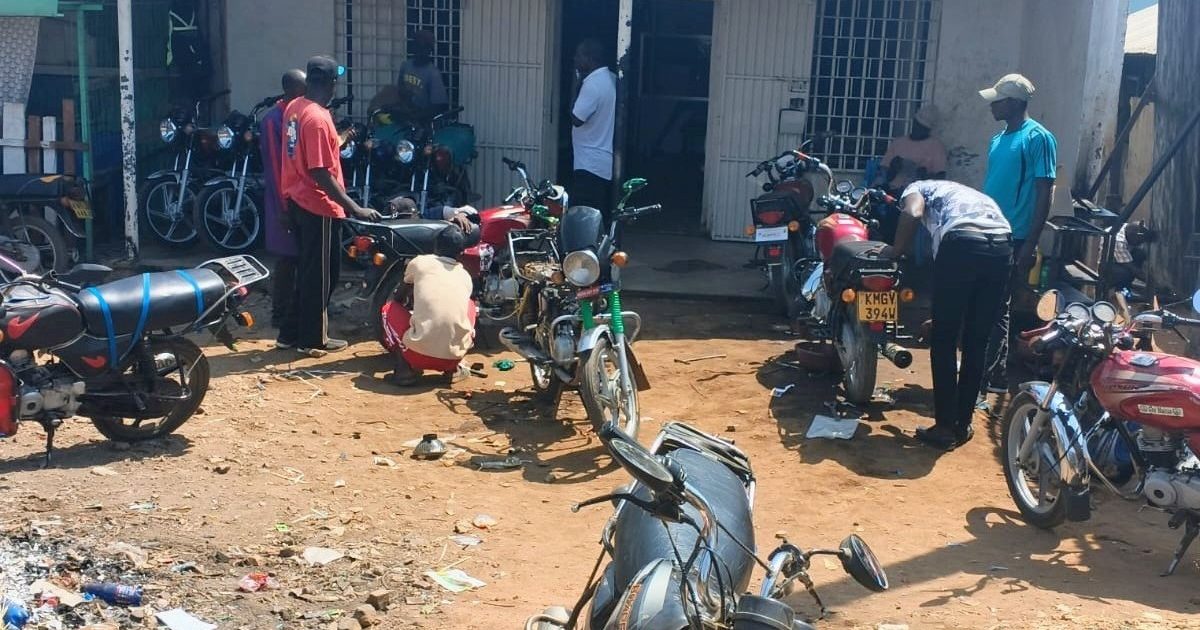
Around Posta and the main stage area, there are mechanics’ workshops that feel like a second home for riders. Carburettor problems, spark plug failures, and oil changes cost Sh1,000 to Sh3,000 every month. One breakdown meant three days without income.
Saitoti Jabuya, a fuel boda boda rider, said they faced blame for accidents and noise. Residents in areas like Banana and Posta estates on the outskirts of Migori town complained about reckless riding and air pollution. Police checks focused on expired insurance and “excessive noise,” and a Sh1,000 fine could wipe out a day’s earnings.
For many, the job was about survival, not progress. “You were working for the fuel tank and the mechanic,” says Ben Otieno, a rider who switched to electric last year. “Your children, your future… they came last.”
Things began to change in 2023 when electric motorbike companies, in partnership with SACCOs and county programmes, introduced battery-swappable e-bodas in Migori. Although the bikes looked similar, everything under the frame was different. There was no fuel tank, no engine oil, no exhaust.
The theme of this change is: less cost, more control, cleaner work. For Migori’s boda boda riders, electric bikes are transforming a hand-to-mouth hustle into a business with better margins.
The most significant change is numerical. An electric boda boda does not need petrol. It uses a lithium battery that riders can swap at charging stations in just three minutes.
A swap costs between Sh50 and Sh80 and provides 70–90 kilometres. In comparison, Sh300 fuels the same distance.
David now spends Sh150 a day on power for 200 kilometres of riding. “I save Sh150 every day,” he explains. “That is Sh4,500 a month. Last month I bought my daughter school shoes without borrowing.”
For hired riders, SACCOs offer “Lipa Mdogo Mdogo” plans. Instead of paying Sh250,000 upfront, a rider pays Sh300 daily until they own the bike. After two years, the bike belongs to them, and their daily costs drop to just power.
Electric bikes have fewer moving parts. There is no engine, no clutch, no exhaust pipe, and no oil changes required.
George Onyango, a mechanic in Migori town, now says his most common job is changing brake pads and tyres. Monthly maintenance has dropped from Sh2,000 to under Sh500.
“I used to visit the garage every two weeks,” says Brian Nyamori from Kehancha. “Now I go once every three months. Those are days I am on the road earning, not waiting.”
Silence is the first thing riders mention. Without engine vibrations and exhaust heat, 10-hour shifts are less tiring. The air around the stages is cleaner.
“It is quiet. Customers like it,” says Brian. “Mothers with babies now prefer my bike. They say it does not scare the child. I get more trips.”
Riders also report fewer headaches and less throat irritation. For a job that keeps you on the road all day, that matters.
Migori County has been promoting the Mazingira programme for cleaner towns. Electric boda bodas fit well within that plan. Zero tailpipe emissions mean less smoke in markets.
For riders, this is also good branding. Schools and NGOs now hire “green bodas” for errands, paying a bit more for the image.
Because e-bodas are quiet, riders can work early in the morning and late at night without bothering neighbourhoods. Hospital runs at 5 a.m., which fuel riders avoided due to noise, are now common.
Apps and digital payments are also easier. Most e-boda SACCOs provide riders with smartphones that include M-Pesa and app integration. Brian says 40 percent of his income now comes from app trips, which pay better than street hailing.
Perhaps the most overlooked benefit is respect. “Before, people saw boda riders as noisy and dirty,” David says. “Now customers ask, ‘Is this the electric one?’ They trust you more.”
That change has reduced harassment at checkpoints and increased tips. Riders report being invited to train youth groups and savings circles on the new model.
The transition is not perfect. Charging infrastructure remains limited outside Migori town. Riders in Suna West or Nyatike must plan routes around swap stations.
Battery life decreases in heavy rain, and the initial cost is high without SACCO support. Some older riders fear technology and prefer engines they understand.
“There is fear,” admits Brian. “But the math does not lie. Fuel is killing us slowly.”
Back in Oruba Estate, David finishes his day at 7 p.m. He has completed 18 trips, earned Sh1,800, and spent Sh150 on power. After SACCO fees and food, he takes home Sh1,100.
He parks the bike, removes the battery, and walks home. There is no smell of petrol on his clothes. There is no noise in his ears. He opens a notebook to track daily savings for a plot in the Kakrao area.
“Fuel boda bodas gave us a job,” he says. “Electric boda bodas are giving us a future.”
Across Migori, that future is being built one battery at a time. The engine noise is fading. In its place is the quiet hum of change, and riders who can finally plan beyond tomorrow’s fuel.
By Wendy Merryl and Collince Oki