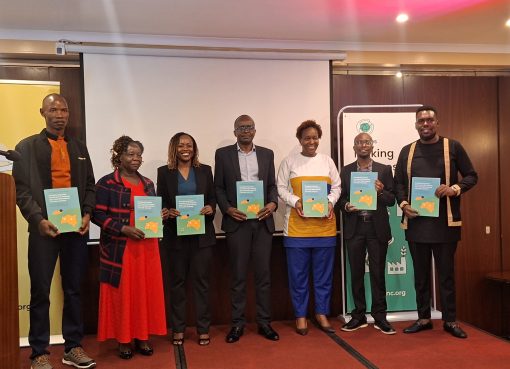
Mrs. Tessie Mudavadi, wife of Prime Cabinet Secretary Musalia Mudavadi, has donated 8 incubators from her infant pre-term aid programme, Okoa Malaika, to medical facilities in Narok, Kajiado, Kericho and Bomet Counties.
She handed over the donations to leaders including Narok Central Deputy County Commissioner Kennedy Mwangome, Narok Deputy Governor Koech Tamalinye, Health County Executive Committee Members (CECMs) and First ladies from the four devolved units at the Narok County Referral Hospital.
Okoa Malaika is an infant pre-term mitigation programme that distributes neonatal equipment to medical facilities across Kenya to ensure the well-being of mothers and children.
According to Mrs Mudavadi, the programme, implemented under the office of the Spouse to the Prime Cabinet Secretary with support from partners such as the Mudavadi Memorial Foundation and Ushiriki Wema, among others, has reached more than 20 counties so far.
The initiative is part of the Foundation’s ongoing commitment to reducing neonatal mortality and giving every newborn in Kenya a healthier start to life. It is aimed at supporting hospitals across Kenya with essential neonatal equipment to safeguard maternal and newborn health.
In her speech, Mrs Mudavadi highlighted the neonatal mortality rate in Kenya, which she said stands at 22 deaths per 1,000 live births, with many of the deaths attributed to preterm births.
She enumerated the challenges families faced in accessing specialized neonatal care, including limited healthcare facilities, resource constraints and geographical barriers.
“With the donation of these incubators to the respective counties, however minuscule it may be, we as Okoa Malaika are taking a crucial step towards ensuring that pre-term infants receive the care and stability they need in those critical early days,” Mrs Mudavadi said.
She at the same time urged Kenyans to support the Social Health Authority (SHA), aimed at achieving Universal Health Coverage for all citizens.
“As a nation, we are transitioning into a new health insurance platform; my humble request is that everyone plays their part and gives it all the support it requires for its intended impact to be realized,” she added.
The Prime Cabinet Secretary’s spouse noted that the Okoa Malaika program aligns itself with the government’s efforts to reduce infant mortality rates by ensuring a vibrant health sector under universal health care coverage,”
At the same time, Ms Musalia asked local communities to heed advice against retrogressive customary practices like early pregnancies that could negate gains being made just as the government strives to blend modern medical treatment with the traditional way of treatment.
“As much as the government respects the cultural practices of the local communities not only here in Narok but across the country I would advise against those found harmful and retrogressive,” she remarked.
According to Tessie, the national government has expanded the Linda Jamii health cover in an effort to curb the rising number of premature births, now estimated at 13 percent of all deliveries in Kenya.
Narok Governor Patrick Keturet Ole Ntutu in a speech read on his behalf by his Deputy praised Mrs Mudavadi for her donation, noting that pre-term infants are often forgotten and need special care.
Ole Ntutu stressed the seriousness of preterm births, highlighting the need for adequate care to enable premature children to live healthy lives.
“Unfortunately, some of these children die each year due to complications of early birth, and many survivors face a lifetime of disability, including learning disabilities and visual or hearing problems,” he said
When a baby is born too soon, it is often the mother who carries the emotional weight, the fear, the guilt, the uncertainty. When we invest in infant incubators, we are not only saving newborn lives; we are protecting mothers from preventable grief. We are strengthening women’s mental health. We are preserving families,” he said.
Prematurity remains one of the leading causes of newborn deaths worldwide.
In Kenya, inadequate neonatal intensive care units and equipment contributed to 4,112 newborn deaths out of 20,156 under-five deaths recorded in health facilities last year.
Experts estimate that three-quarters of these deaths could have been prevented with cost-effective interventions.
Deputy County Commissioner Mwangome expressed concern that cases of defilement, incest, female genital mutilation and early pregnancies were steadily rising in the Sub-County.
He warned chiefs and village elders against settling defilement cases through ‘Kangaroo’ courts, as the process compromised justice to the disadvantage of the affected girls.
The administrator decried incidents where local community members, whose daughters have been defiled, are coerced into an out of court settlement, instead of letting the law take its course.
He indicated that the Kangaroo ‘courts’ initiated at village level have played a role in protecting sex pests as many parents were opting for out-of-court settlements hence denying their children justice.
“There are a number of defilement cases going on unreported due to kangaroo courts initiated by village elders at a fee with the knowledge of some law enforcers, who derail justice for the gender-based violence (GBV) victims in some parts of this County. This has turned what should end up with punishment for culprits and justice for the girls into a gravy train for the elders and parents,” Mr Mwangome
He said that most of the girls were being impregnated by people well known to them and vowed that the government will harshly deal with perpetrators.
He warned parents against taking their girls through the outlawed cultural practice FGM.
The Deputy County Commissioner said the administration is vigilant to ensure no girl is taken through the retrogressive practice that interferes with their health, education and general future.
By Emily Kadzo and Emmanuel Karui