Health experts have called for greater involvement of families and communities in supporting breastfeeding mothers, saying collective responsibility is critical to improving child nutrition and maternal health in Tharaka Nithi County and across the country.
The appeal was made during celebrations to mark this year’s World Breastfeeding Week at Kirumi Health Centre in Maara Sub-county, where healthcare workers, community health promoters, mothers and development partners gathered to promote exclusive breastfeeding and proper infant nutrition.
Speaking during the event, Village Hopecore International Head of Public Health Department, Dr. Mutuma Njagi, said Kenya has made notable progress in promoting exclusive breastfeeding but more efforts are required to ensure every child receives optimal nutrition during the first six months of life.
Dr. Njagi noted that about six out of every 10 children in Kenya are exclusively breastfed, adding that the organisation is working closely with government and development partners to increase the rate through public education, community outreach and practical support for mothers.
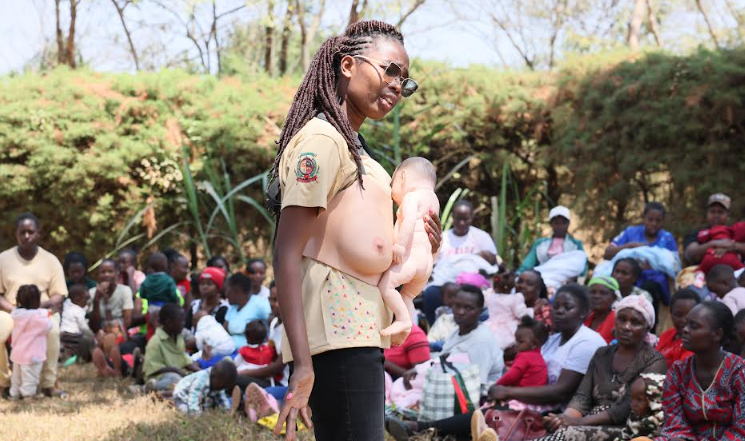
He said many people wrongly assume that breastfeeding comes naturally to every mother, yet many women require guidance on correct breastfeeding techniques, proper positioning and attachment, and the transition to complementary feeding after six months.
“Breastfeeding is not only the responsibility of the mother. The entire family and community have a role in ensuring mothers receive the support, encouragement and conducive environment they need to breastfeed successfully,” said Dr. Njagi.
The event was organised by Village Hopecore International in partnership with the Tharaka Nithi County Government, IDE Vitamin Angels and Helen Keller International under the Transforming Lives Through Nutrition Programme.
Hundreds of mothers, fathers, caregivers and community health promoters attended the event held under the World Breastfeeding Week theme, “Strengthening What Works,” which emphasizes protecting and expanding proven interventions that promote breastfeeding.
Dr. Njagi identified misinformation, cultural misconceptions and inadequate practical knowledge as some of the biggest obstacles to successful breastfeeding.
He observed that some mothers lose confidence after childbirth because they believe they are not producing enough breast milk, while others introduce infant formula or other foods too early due to pressure from family members or misinformation circulating within communities.
To address these challenges, he said the organisation has intensified training for healthcare workers and Community Health Promoters (CHPs), who provide household-level education, counselling and follow-up support to pregnant women and breastfeeding mothers.
He explained that the programme integrates maternal nutrition, antenatal care, infant feeding education and child health services to ensure mothers receive continuous support from pregnancy through the child’s early years.
According to Dr. Njagi, fathers and other family members play an equally important role by providing emotional support, assisting with household responsibilities and encouraging mothers to exclusively breastfeed during the recommended period.
“We are shifting the conversation from breastfeeding being a mother’s issue to it being a family and community responsibility. When families understand their role, mothers are more likely to breastfeed successfully,” he said.
He described breast milk as nature’s “superfood”, saying it contains all the nutrients babies require during the first six months while protecting them against infections, strengthening immunity, supporting brain development and promoting healthy growth.
As part of the World Breastfeeding Week outreach, the programme targeted 410 lactating mothers and 82 pregnant women with health education, nutrition counselling, growth monitoring and breastfeeding support services.
Community Health Promoter Purity Kageni from Muthande said misconceptions remain a major challenge during household visits.
She said some young mothers fear breastfeeding exclusively for six months because they believe it will permanently alter the appearance of their breasts, while others introduce powdered milk long before the recommended age despite clear medical advice.
“Some mothers tell us they do not have enough milk. We encourage them to eat balanced diets, breastfeed frequently and seek medical advice whenever they experience challenges because proper nutrition supports adequate milk production,” she said.
Kageni noted that CHPs continue educating families on exclusive breastfeeding for the first six months, followed by appropriate complementary feeding while continuing breastfeeding until the child reaches two years or beyond.
She credited Village Hopecore International’s continuous training programmes with equipping community health workers with the knowledge and skills needed to offer accurate information and practical support to families.
Beneficiaries of the programme also shared testimonies on how the initiative has transformed their lives and improved child health within their communities.
Ellyjoy Kawira from Ganga Ward recounted her experience raising twins after one baby was born weighing 3.2 kilogrammes while the other weighed only one kilogramme.
She said the situation initially caused fear and uncertainty, but support from Village Hopecore International and healthcare workers helped her successfully breastfeed and care for both children.
“They taught me proper breastfeeding techniques, maternal nutrition, regular health check-ups and how to monitor the babies’ growth. They also continued visiting us to monitor our progress and provide guidance whenever we needed help,” she said.
Kawira observed that the programme has contributed to healthier children within the community by empowering mothers with practical knowledge on nutrition and childcare.
“Since we joined the Malezi Bora programme, our children have become healthier and many parents now understand the importance of proper infant feeding,” she added.
Another beneficiary, Hellen Gatwiri, said the programme corrected many traditional beliefs surrounding breastfeeding and maternal nutrition.
She encouraged young mothers, especially members of Generation Z, not to avoid breastfeeding because of concerns about body image.
“They should know that breastfeeding is essential for their babies’ growth and development. The body naturally adjusts after the breastfeeding period, but the benefits to the child last a lifetime,” she said.
Another participant, Maureen Makena, pledged to share the knowledge acquired during the training with other mothers in her village to ensure more families adopt recommended infant feeding practices.
By Dickson Mwiti