Smallholder farmers in Teso North Sub-County are set to benefit from climate-smart agriculture training aimed at improving crop yields, enhancing food security and increasing household incomes amid growing challenges caused by climate change.
For decades, many farmers in the region have struggled with declining soil fertility, shrinking land sizes, unpredictable weather patterns and limited adoption of improved farming technologies.
These challenges have reduced productivity, leaving many households producing barely enough food for their own consumption and little surplus for sale.
FIPS Africa, a not-for-profit organisation, is seeking to reverse the trend through a programme that promotes sustainable farming practices and equips farmers with knowledge and technologies suited to changing climatic conditions.
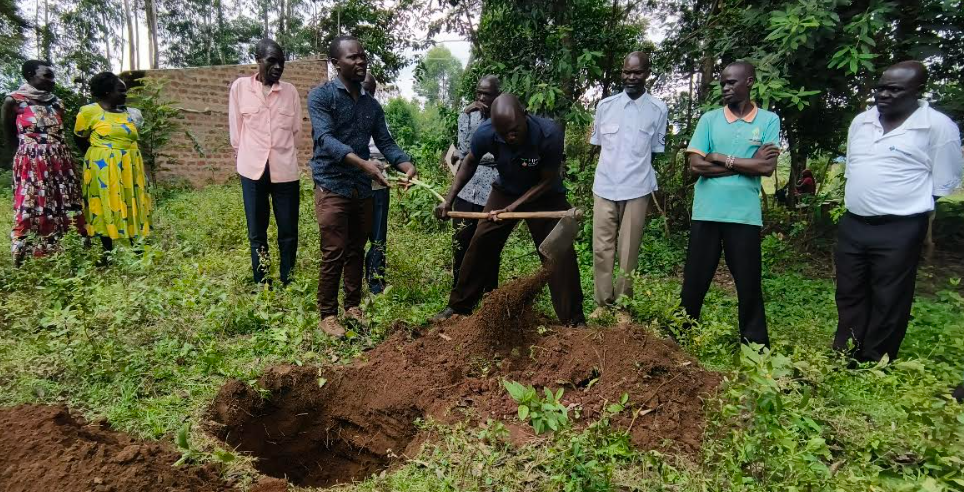
Speaking during a farmer sensitisation forum at Kakoli Village in Amagoro, FIPS Africa representative Kevin Wangila said the organisation will support farmers through season-based interventions designed to address specific agricultural challenges.
He said the programme will focus on training farmers on soil testing, use of improved seed varieties, proper planting methods, appropriate fertilizer application and adoption of recommended practices from agricultural extension officers.
Wangila said farmers will receive improved maize seed varieties that mature faster, withstand prolonged dry spells and perform better under changing climatic conditions.
The seeds will initially be distributed in small trial packs to enable farmers to compare their performance with conventional varieties under similar conditions.
“We would like farmers to witness the difference in performance of the improved seed varieties on their farms. Once they are satisfied with the results compared with conventional seeds, we shall work with agro-dealers and the County Government of Busia to make the seeds easily available so that farmers can scale up production,” he said.
To reduce overreliance on maize, Wangila said the programme will also promote crop diversification by introducing drought-tolerant crops such as sorghum, sweet potatoes and arrowroots.
He noted that diversification would not only improve household nutrition but also provide farmers with additional income sources while reducing risks associated with dependence on a single crop.
Beyond crop production, the programme will support dairy farming, which remains an important source of income for many households in Teso North.
Wangila said assessments conducted in Kakoli and Okuleu areas of Amagoro revealed that poor livestock feeding practices were among the major causes of low milk production despite many households keeping dairy cattle.
To address the challenge, FIPS Africa will distribute improved Super Napier grass cuttings to farmers to ensure a consistent supply of nutritious fodder throughout the year.
He added that through a partnership with the Busia County Government, farmers will also access subsidized Artificial Insemination (AI) services to gradually improve cattle breeds and increase milk production.
Wangila said the programme is encouraging farmers to invest in improved dairy cows, with a long-term goal of establishing at least 50 improved dairy cows in every village across Teso North Sub-County.
He explained that achieving the target would increase milk production volumes, support the establishment of milk collection centres and improve farmers’ access to reliable markets.
The programme will also support youth groups to venture into traditional vegetable production and poultry farming as alternative sources of income while improving household nutrition.
To ensure sustainability, FIPS Africa has identified Village-Based Advisors (VBAs) from every village who will serve as a link between the organisation and farmers.
The advisors will mobilise farmers, demonstrate recommended farming practices and provide guidance on climate-smart technologies within their communities.
FIPS Africa Kakoli Village-Based Advisor Simon Imo urged farmers to embrace the initiative, saying the technologies being introduced would help them maximize production from limited land while building resilience against climate change.
By Moses Wekesa