Garissa county leaders have called for concerted efforts to mobilize the residents into registering for National Identity cards and for voter cards ahead of next year’s general elections.
This collective push seeks to boost the region’s political bargaining power and secure its fair share of national resources, which leaders note depends heavily on voter turnout and registered numbers.
According to the 2019 census, Garissa County had a population of 841,353 while according to the Independent Electoral and Boundaries Commission (IEBC), Garissa County had a total of 201,473 registered voters in 2022.
At the same time, according to the National registration bureau (NRB), Garissa County has at least 328,000 national ID card holders, leaving more than 100,000 residents in the county who are yet to register as voters.
According to NRB’s Northeastern regional coordinator Mukora Muriungi, the bureau processed and delivered 18,541 IDs for newly registered people in the 2024/2024 financial year, and 28,871 IDs in 2025/2026.
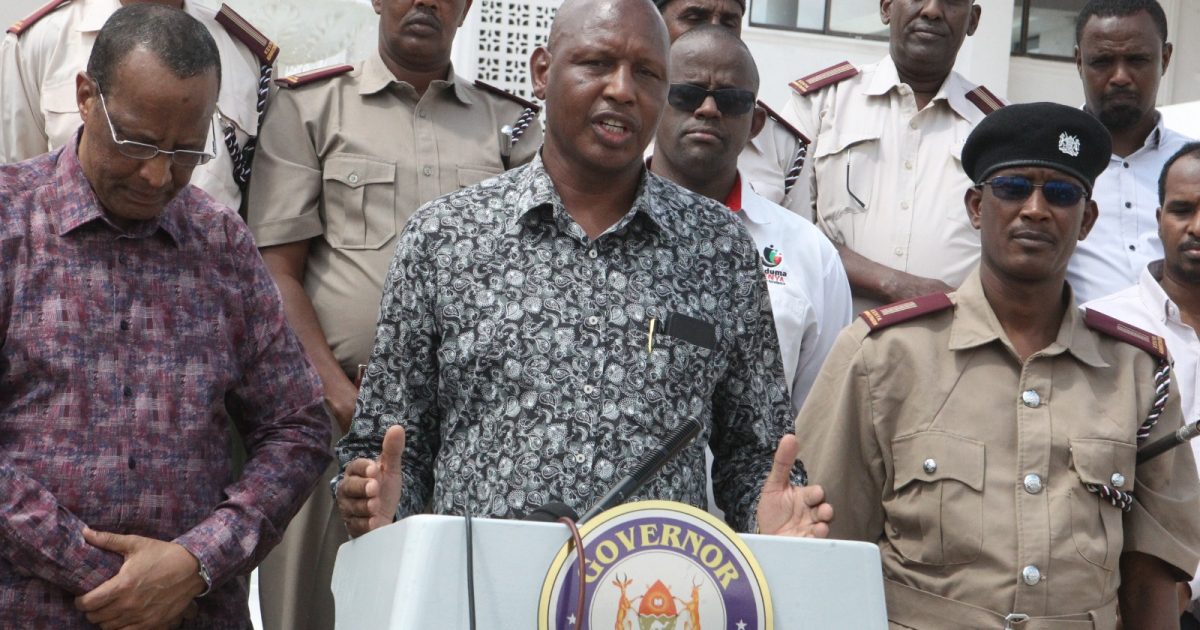
The leaders, led by Garissa governor Nathif Jama regretted that despite the presidential abolishment of the ID vetting process in the north eastern region, the local citizens’ registration for the national IDs was disturbingly low compared to the total population of the county.
Jama, who was speaking during a stakeholder meeting bringing together the Garissa county commissioner, deputy county commissioners, assistant county commissioners, chiefs and their assistants, Registrars of persons, officials from the IEBC and county government, called for mobile registration centers specially to reach the locals from far flung areas in the county.
“The northern region, comprising the counties of Isiolo, Marsabit, Mandera, Wajir and Garissa, we are doing extremely bad in terms of ID cards registration and also voter registration. If the vetting and the discriminatory process was abolished, people are still not registering for IDs, and those who have the IDs have not registered as voters and worse, those who have voter’s cards do not vote on the voting day,” Jama regretted.
“We used to talk about marginalization, but now there is no excuse. Now we are marginalizing ourselves because we have been asked to acquire ID cards like any other Kenyans, register as voters with all the offices here, but we are not doing that,” he added.
Garissa county commissioner John Cheruiyot on his part said that the NGAO team would continually support the registration of IDs for eligible citizens at the grassroots level, noting that the card was vital for Kenyans to access services.
Further, Cheruiyot directed all the chiefs and their assistants to create awareness on the registration and importance of acquiring the national IDs to the people under their jurisdiction during their public barazas.
“As NGAO officials, we have been working together with the registrar of persons to make sure that our people get National Identity Cards. ID is a vital document, it assists us to do many things including getting government services, registration for SHA, and many others that you know,” Cheruiyot said.
“As NGAO officers, and as stakeholders who are here, and as leaders, we are going to go out of our way to ensure our people get IDs, because it is our constitutional right. We will ensure that we facilitate them to get the IDs at the very location where they are, whether at the location level or at the sub location,” he added.
By Erick Kyalo