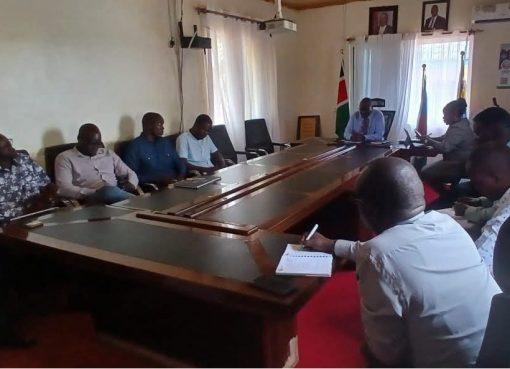
The Government has intensified efforts to curb water losses after revealing that about 43 per cent of treated water in Kenya fails to reach intended beneficiaries, costing the country billions of shillings annually.
Deputy Head of the Public Service (DHOPS) Amos Gathecha attributed the losses to leakages, illegal connections, meter inaccuracies and operational inefficiencies, saying the trend continues to undermine revenue needed to expand water services.
Speaking during the Non-Revenue Water Management Conference dinner at a Naivasha hotel on behalf of Chief of Staff and Head of the Public Service Felix Koskei, Gathecha said the losses were felt most by ordinary Kenyans.
“It is about the child who misses school because there is no water at home. It is about the mother who must wake up before dawn to search for water for her family. It is about communities that continue to pay more for water from vendors than households connected to formal water systems,” Gathecha said.
DHOPS said reducing non-revenue water is essential to achieving reliable and affordable water services for all Kenyans, in line with the Government’s commitment under the Bottom-Up Economic Transformation Agenda to put citizens at the centre of public service delivery.
Gathecha urged county governments, water service providers and regulators to strengthen governance, professionalise utility management and adopt technologies such as smart metering, Geographic Information Systems (GIS), artificial intelligence and digital monitoring to improve efficiency and reduce losses.
He also called for greater public participation through mobile reporting of leaks, regularisation of illegal connections, and flexible payment options for low-income consumers.
DHOPS stressed that tackling non-revenue water requires collaboration among national and county governments, regulators, the private sector and communities, noting that the ultimate goal is improved access to safe, reliable and affordable water.
The conference was organised by the Ministry of Water, Sanitation and Irrigation, the Water Services Providers Association (WASPA), the Kenya Water Institute (KEWI), the Council of Governors and the County Government of Nakuru, and continues with technical sessions aimed at developing strategies to reduce water losses nationwide.
By Jacqueline Adyang