The government has rolled out a nationwide mapping exercise to establish a comprehensive database of minority and marginalised communities in a move aimed at promoting inclusive governance, equitable service delivery and targeted affirmative action interventions across the country.
The exercise, spearheaded by the Executive Office of the President through the Minorities and Marginalized Affairs Unit, seeks to generate credible data that will guide policy formulation, development planning and resource allocation while ensuring historically disadvantaged communities are fully integrated into national development programmes.
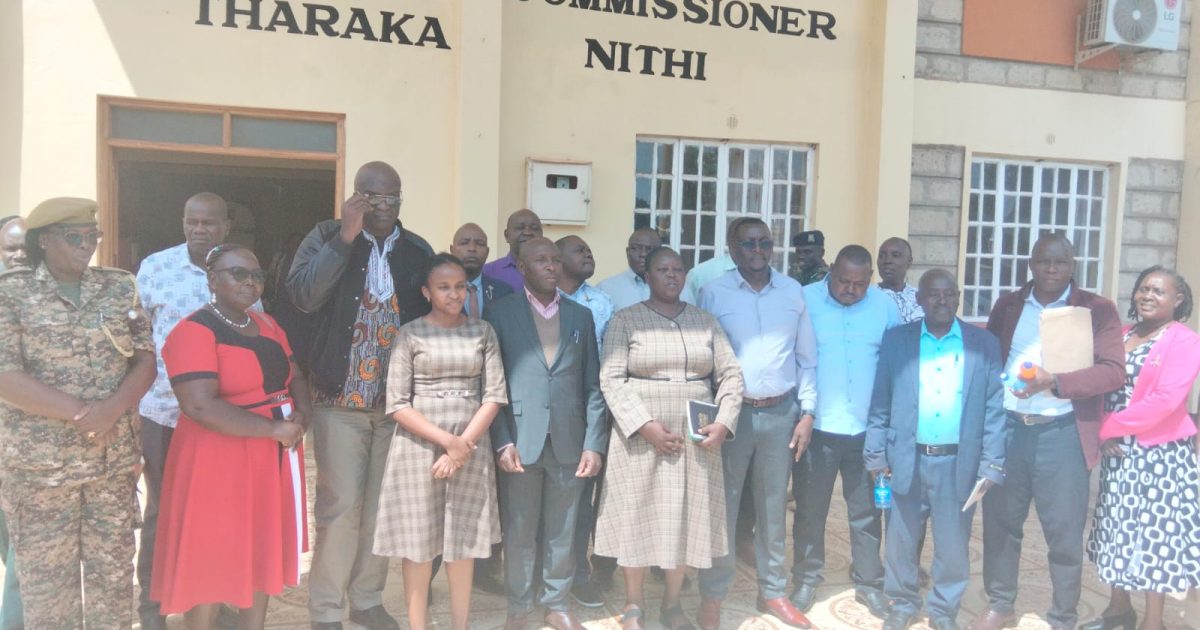
Speaking during a consultative stakeholders’ forum held at the County Commissioner’s Boardroom in Kathwana, Tharaka Nithi County Commissioner David Gitonga called on residents to cooperate with government officials by providing accurate and truthful information throughout the exercise.
Gitonga said the mapping exercise would enable the government to identify minority, marginalised and vulnerable communities, thereby ensuring they benefit from government programmes, public services and development initiatives tailored to their needs.
“The success of this exercise depends on the cooperation of the public. We encourage all targeted communities to participate fully and provide accurate information so that no deserving group is left behind,” he said.
He noted that reliable data remains critical in planning and implementing policies that respond to the unique social and economic challenges facing vulnerable communities across the country.
Director of Policy Advisory Services in the Office of the President Eunice Chelimo said Tharaka Nithi is among the counties participating in the nationwide exercise, which is expected to culminate in the establishment of a credible national database of minority and marginalised communities.
She said the database would serve as an important planning tool to support inclusive governance, equitable service delivery, meaningful public participation, targeted affirmative action initiatives and sustainable socio-economic development.
According to Chelimo, information collected during the exercise will be analysed and compiled into a comprehensive national report expected to be completed within two months.
She cautioned communities against fragmenting themselves into smaller clan-based groups, saying such divisions weaken their collective voice and diminish their ability to advocate for equitable development and government support.
“Communities should avoid breaking themselves into smaller units along clan lines. When you divide yourselves, you weaken your voice and actually deepen the marginalisation you are trying to address,” she said.
Chelimo urged minority and marginalised communities to participate actively in the exercise by providing accurate information and remaining united throughout the process.
“You have a critical role to play. This exercise is meant for you, and it will only succeed if you participate honestly and speak with one voice so that government can plan and deliver services fairly,” she said.
She further emphasised the need for recognition of the Tharaka and Mbeere communities, noting that their inclusion in national planning frameworks would ensure they are adequately considered in government development programmes, affirmative action initiatives and other interventions aimed at addressing historical inequalities.
Chelimo said the mapping exercise presents an opportunity for communities to strengthen their visibility in national planning processes and improve access to public resources and government services.
“When communities speak with one voice, they stand a better chance of influencing policy and benefiting from government interventions,” she added.
In Tharaka Nithi County, the Tharaka and Mbeere communities have been identified among the minority and marginalised groups targeted under the national mapping exercise. The information gathered is expected to inform future government policies and interventions designed to bridge development gaps and promote social inclusion.
Igambang’ombe MCA Njeru Ingara welcomed the initiative, expressing optimism that the exercise would help address long-standing development disparities affecting marginalised communities.
He said the data generated would provide government with a clearer understanding of the needs of underserved populations, leading to more equitable distribution of resources and improved access to development opportunities.
Tharaka Nithi Chief Officer for Gender, Children and Social Services Winnie Mukiri underscored the importance of sustainable interventions and inclusive policies in improving the socio-economic well-being of minority and marginalised communities.
She said accurate data would strengthen evidence-based planning and enable government institutions to design programmes that effectively respond to the unique challenges facing vulnerable groups.
The nationwide exercise is expected to strengthen government efforts to ensure that no community is left behind by providing reliable information that supports equitable development, social inclusion and improved access to public services for minority and marginalised communities across Kenya.
By Dickson Mwiti & Christine Ngitori