The Government has intensified a nationwide exercise to identify and document minority and marginalised communities as part of broader efforts to strengthen inclusive development, address historical injustices and provide evidence-based data to guide future policy interventions.
The exercise, being undertaken by the Minorities and Marginalised Affairs Unit in the Office of the President, seeks to establish a comprehensive national database of communities that have historically experienced exclusion and limited access to development opportunities.
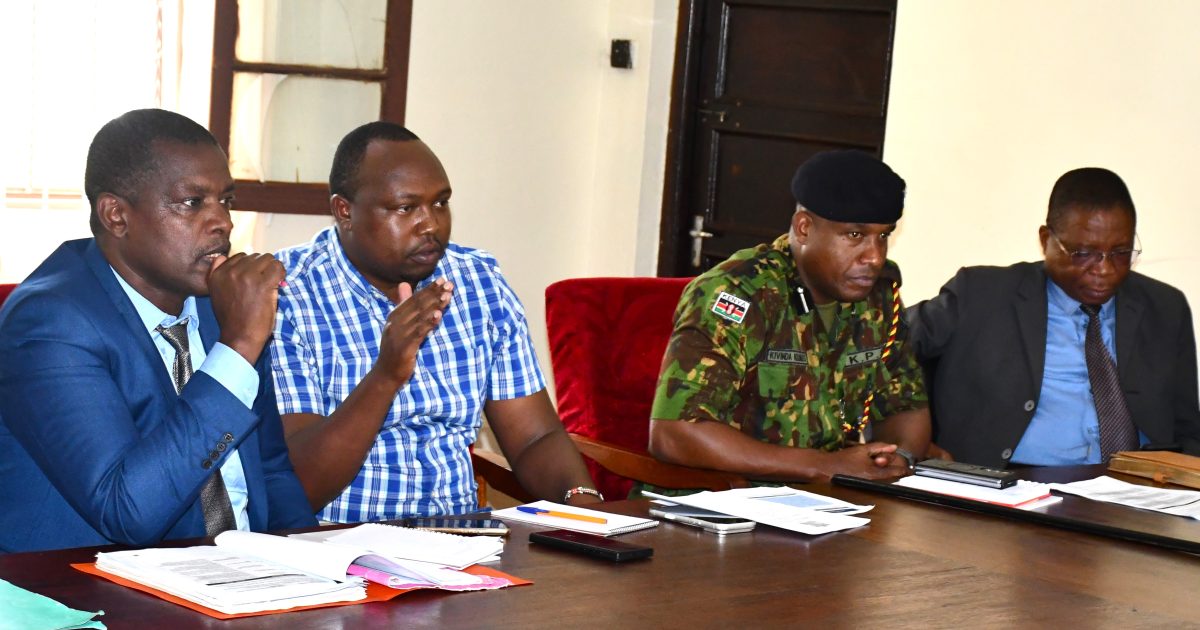
Speaking during a county consultative forum held at the Kericho County Commissioner’s boardroom, the Assistant Director for Policy Advisory Services in the Office of the President, Mr. Shadrack Barno, said the mapping exercise will provide government with accurate information needed to formulate policies and programmes that respond to the unique needs of minority and marginalised groups.
Barno, who is leading the South Rift regional team, said the exercise is being conducted simultaneously across the country through eight regional teams to ensure all eligible communities are captured.
“We are trying to map out communities that are both minority and marginalised because many of them have never been comprehensively documented. This exercise will enable the government to establish where these communities live, understand their history and challenges, and prepare an official record that will guide future interventions,” he said.
The consultative meeting was chaired by Kericho County Commissioner Ali Omari and brought together representatives of government departments, community leaders and other stakeholders to deliberate on the identification of communities requiring further documentation.
Barno explained that the exercise is implementing the National Policy on Ethnic Minorities and Marginalised Communities, launched by President William Ruto in December 2025, which provides a framework for promoting equality, inclusion and protection of vulnerable communities between 2025 and 2035.
He noted that the mapping exercise follows a structured three-stage data collection process designed to ensure accuracy and inclusivity.
The first stage involves county consultative forums that bring together key stakeholders to identify communities that may qualify as minority or marginalised groups.
The second stage consists of key informant interviews with individuals possessing extensive historical and cultural knowledge of the identified communities.
The final stage involves focus group discussions conducted within the communities themselves, allowing officers to gather detailed information directly from residents.
Barno said field officers will visit the affected communities to collect information on their historical background, migration patterns, settlement history, attachment to ancestral land and prevailing socio-economic conditions.
The teams will also capture the geographical locations of settlements using Global Positioning System (GPS) coordinates to create an accurate national inventory.
According to Barno, the exercise will provide reliable data to support policy formulation, improve service delivery and ensure government interventions are informed by verified evidence rather than assumptions.
He said discussions during the Kericho consultative forum identified the Ogiek, Talai and Nubian communities among groups requiring further documentation because of their historical experiences and development challenges.
The documentation process will also capture information relating to access to land, recognition, education, healthcare, economic opportunities and other public services.
Barno cited the Talai community as one of the groups that continues to experience historical challenges that require proper documentation before appropriate government interventions can be considered.
Responding to concerns over whether the exercise would eventually lead to the resettlement of affected communities, Barno said it was too early to make such commitments.
“At this stage, our responsibility is to identify the communities, document their grievances and verify the issues on the ground. Once the information has been compiled and validated, it will be upon the government to determine the most appropriate interventions based on the findings,” he said.
He emphasized that accurate documentation is essential in ensuring future government decisions are based on credible information that reflects the realities facing minority and marginalised communities.
Barno further said the nationwide exercise has been decentralised to cover every region of the country, with teams currently conducting similar consultations in Nyanza, North Eastern, Coast, Eastern, Upper Rift and other regions.
He noted that the South Rift regional team began the exercise in Bomet County before proceeding to Kericho, where consultations will be followed by key informant interviews and community focus group discussions.
The findings from all regions will be consolidated into a comprehensive national report expected to provide Kenya with its first detailed inventory of minority and marginalised communities.
Officials said the report will guide future policy decisions, improve planning and support targeted development programmes aimed at promoting inclusion, equality and equitable access to government services and economic opportunities.
By Dominic Cheres