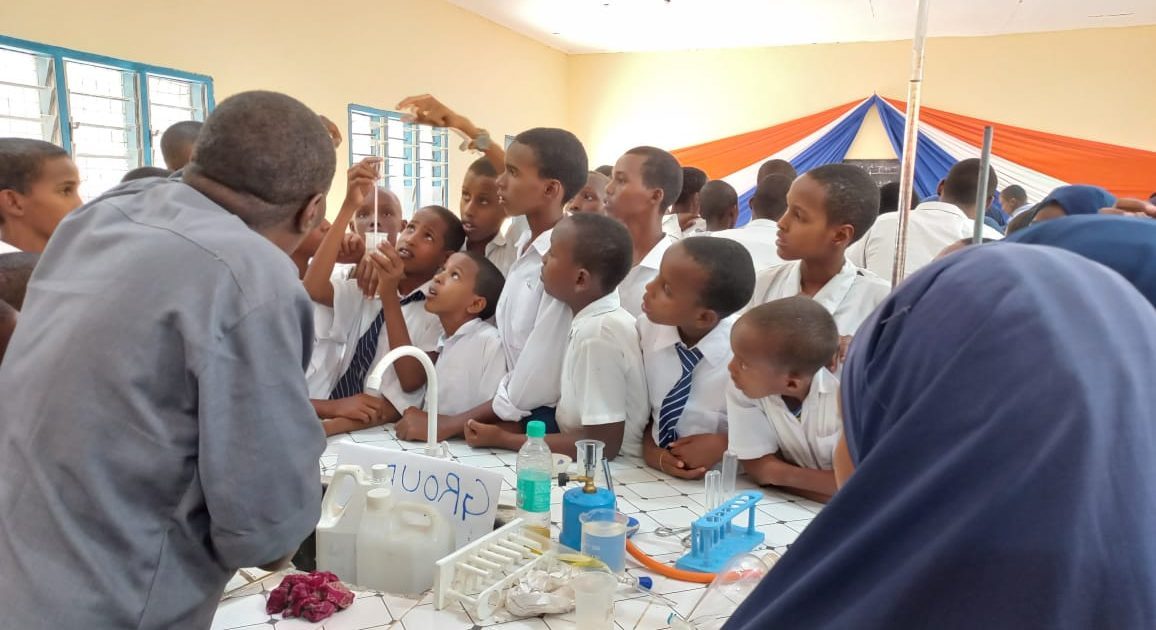
The government will integrate madrasa, duksi, and pastoral learning programmes into the formal basic education system following a directive by President William Ruto aimed at expanding equitable access to education for children in marginalized communities.
The President said the government will develop a clear legal and policy framework under the Basic Education Act to recognise alternative learning pathways that have historically operated outside the formal education system.
Speaking during the 63rd Madaraka Day celebrations held in Wajir County, Ruto noted that the absence of an official framework for such systems had disadvantaged many children, particularly in northern Kenya.
He directed the Cabinet Secretary for Education to engage stakeholders and recommend appropriate measures for implementation.
“Today I direct the Cabinet Secretary for Education to engage all relevant stakeholders and take the necessary measures under the Basic Education Act to consult widely and recommend appropriate measures for the formal integration of the same,” the President said.
“This will ensure that every child, regardless of background or circumstance, has a recognised pathway into learning, skills, and opportunity. Every child deserves a door into learning. It is our duty to open every door.”
The Head of State said the move is part of broader government efforts to promote inclusion and address historical inequalities in education access.
He noted that education remains central to national development, adding that government investment in the sector has increased, with the education budget rising from Sh500 billion in 2022 to more than Sh702 billion currently.
Ruto further said over 100,000 teachers have been recruited in the last three years, with an additional 20,000 expected to be employed.
He highlighted ongoing affirmative action programmes aimed at addressing teacher shortages in northern Kenya, including the operationalisation of teacher training colleges in Wajir, Kutulo, and Mandera.
“Today, through this affirmative action programme, a record 1,800 local teachers from Wajir, Mandera and Garissa counties have been employed and will be deployed in the region,” he said.
The President also disclosed that 4,616 students from the region are currently enrolled in teacher training colleges, the highest number recorded.
Ruto said the government’s development agenda seeks to ensure equitable growth across all regions, stating that northern Kenya will play a central role in the country’s economic transformation.
“Our message is clear: no child is too far away to deserve opportunity, and no county is too remote to deserve development,” he said.
By Hamdi Buthul