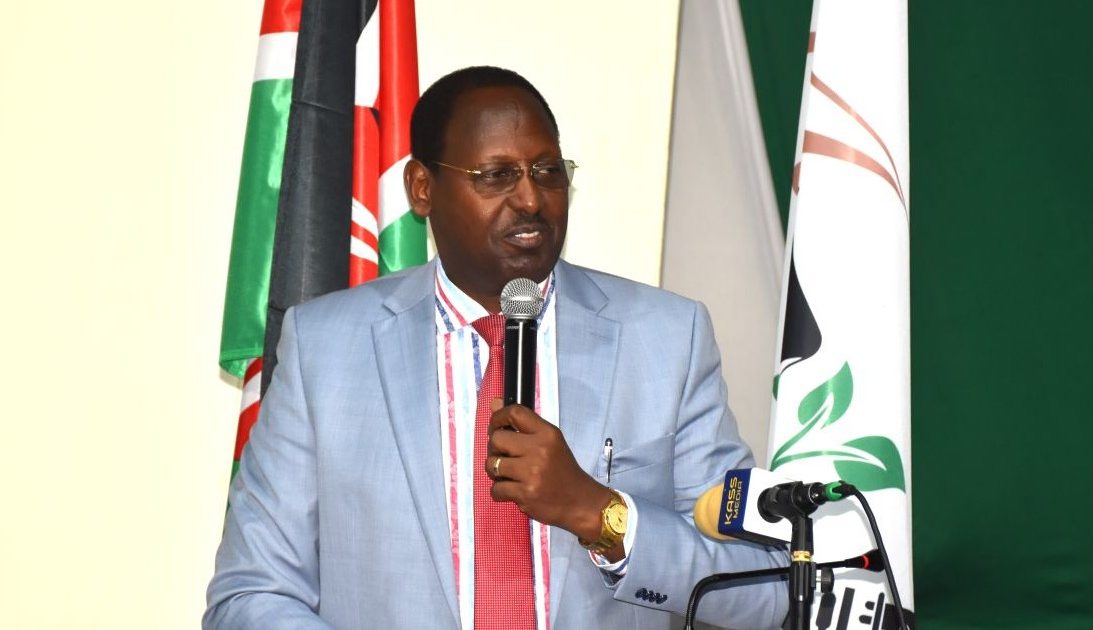
The chairperson of the Parliamentary Committee on Agriculture, Chairperson Dr. John Mutunga, has on Thursday called on the government to increase funding for agricultural research, warning that persistent underinvestment is slowing innovation and constraining Kenya’s economic growth.
Speaking on agricultural financing during the 2nd Kenya Agricultural Livestock Research Organization (KALRO) conference and innovation expo, Dr. Mutunga said the sector continues to face significant budget shortfalls, with a deficit of about Ksh43 billion recorded this year.
He noted that although the agriculture sector required approximately Ksh143 billion, only about Sh79 billion was allocated.

He emphasized that research institutions such as the KALRO remain consistently underfunded despite their critical role in driving agricultural productivity through long-term biological and genetic research.
“Research cannot be left to the private sector. It must be funded by the government because these are long-term biological experiments that require continuity,” he said, warning that interruptions in research cycles lead to loss of investment and delayed innovation.
Dr. Mutunga also pointed to Kenya’s failure to meet continental commitments under the Maputo and Malabo declarations, which recommend allocating at least 10 percent of national budgets to agriculture.
“Kenya has remained below these targets despite being a signatory,” he noted.
He further linked agricultural performance to national economic growth, arguing that stronger investment in the sector translates directly into jobs and productivity.
“Without agricultural growth, the national economy cannot grow. Kenya is still heavily dependent on agriculture, so investment in the sector directly translates to jobs and productivity,” Dr. Mutunga said.
The lawmaker highlighted challenges facing smallholder farming, noting that over 70 percent of Kenyan farmers operate on small plots of land, which limits mechanization and efficiency.
He called for reforms in land use planning and the aggregation of farmland to improve productivity and enable economies of scale.
Dr. Mutunga cited innovations from research institutions, including aflatoxin control technology developed by KALRO, saying such solutions remain underutilized despite their affordability and public health benefits.
He urged the government to integrate such innovations into subsidy programs and distribution systems to ensure wider uptake among farmers.
Dr. Mutunga warned that Kenya risks falling behind regional peers such as Uganda, Ethiopia, and Rwanda, which have invested more consistently in agricultural transformation and research-led growth.
Former Kenya Agricultural and Livestock Research Organization (KALRO) Chairman Prof. Ratiemo Michieka welcomed the government’s increased investment in research, saying it has strengthened institutions and boosted scientific innovation.
Prof. Michieka noted that research funding has grown steadily over the years, enabling scientists to undertake more studies and develop solutions that support national development.
He said the government now recognizes the importance of research and has continued to increase support for institutions, universities, and other research organizations.
Michieka, who is also the current chair of the African Union’s African Scientific, Research, and Innovation Council (ASRIC). praised KALRO’s progress, noting that it is delivering more impactful research today than during his tenure in the 1990s.
“I want to commend KALRO’s leadership for expanding its research portfolio and strengthening its contribution to the agricultural sector,” Prof. Michieka said.
Agricultural research should ideally receive at least 2 percent of the national budget, given global evidence showing high returns on agricultural research and development. Such investment is critical for strengthening food security, enhancing climate resilience, and driving long-term economic growth for future generations.
By Wangari Ndirangu