Health experts in Homa Bay County are embracing digital innovation to tackle HIV infections among adolescent boys, a group which officials say has long been overlooked in prevention programs.
A study conducted by Maseno University in collaboration with the Homa Bay County Government and the National Syndemic Diseases Control Council (NSDCC) through a gaming project demonstrated that mobile phone games can be an effective tool for educating young people about HIV prevention and healthy decision-making.
The intervention, dubbed Dedicated, Responsible, Energized AIDS-Free Mentored Boys (DREAMBOYS), uses a mobile phone application that allows adolescent boys to learn about HIV, sexual health, and life skills through interactive gameplay.
The project was developed in 2023 through a community-engaged, human-centered design approach.
“This journey started through consultations with various stakeholders, including Homa Bay County leadership, community health structures, and development partners. We piloted the intervention in Homa Bay and have now completed an effective assessment of the game,” said principal investigator Erick Ndenga, a public health researcher at Maseno University.
Ndenga, who spoke at a health event in Homa Bay, stated that the project aimed to provide a solution that speaks directly to adolescent boys in a language and platform with which they are comfortable.
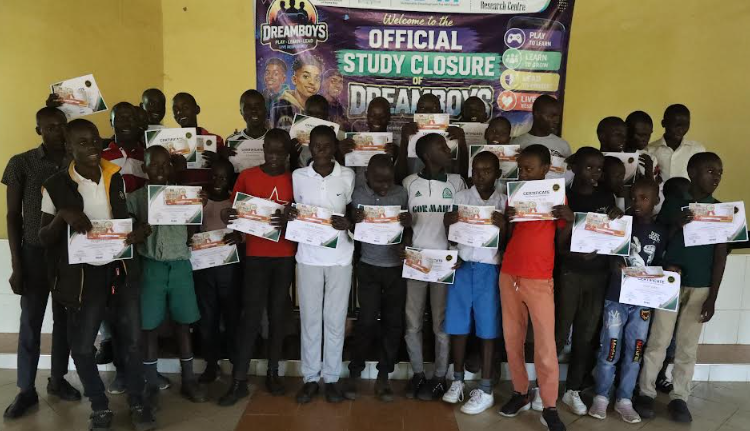
The study enrolled 35 boys aged between 11 and 17 years who used the application over a three-month period.
According to Ndenga, the findings revealed significant improvements in HIV-related knowledge among participants and showed early signs of positive behavioural change.
“We observed notable gains in knowledge acquisition and preliminary effects on behavioural outcomes. The adolescents began adopting positive behaviours that can help prevent HIV infection,” he said.
The researcher further noted that one of the most significant outcomes was increased awareness and acceptance of voluntary counseling and testing (VCT). Many participants reported that the game encouraged them to seek HIV testing and better understand how to deal with test results.
The study also improved awareness of HIV prevention methods such as Pre-Exposure Prophylaxis (PrEP) and condom use.
From the study, it was evident that many young boys previously lacked access to accurate information due to fear of stigma and discomfort discussing sensitive topics with parents or guardians.
“Participants appreciated having a private space where they could learn without fear of judgment. They told us they rarely discuss issues such as condom use because they fear judgment from parents or other adults,” Ndenga explained, adding that the game offered a safe and private learning environment that helped in addressing the confusion often encountered on social media and the internet
The application was designed to function offline, enabling participants to play without internet access. The researchers collected data by synchronizing the devices weekly, allowing them to track engagement, progress, and learning outcomes through a robust research dashboard.
Beyond quantitative analysis, the research team conducted focus group discussions to capture qualitative insights that could not be measured through game data alone.
Despite the project’s success, Ndenga acknowledged challenges in implementation, including overwhelming demand from adolescents who wished to participate.
“We received far more interest than the study could accommodate. This demonstrates the need to scale up the intervention so that more young people can benefit,” he said.
The research team is now seeking support to expand the project through larger implementation studies and randomized controlled trials aimed at reaching more adolescents and reducing new HIV infections, teenage pregnancies, and gender-based violence.
NSDCC Principal Programme Officer for Homa Bay and Migori counties, Nelly Asena, welcomed the initiative, noting that adolescent boys have often been overlooked in HIV prevention efforts.
“For a long time, we have left the boys behind. If we put concerted efforts into reaching them, we will achieve much better outcomes. This is one of the most promising interventions we can implement in Homa Bay,” said Asena.
She noted that Homa Bay continues to bear a significant HIV burden, with an estimated 1,180 new infections annually. Of these, approximately 243 occur among adolescents, underscoring the importance of targeted prevention programs.
According to the 2025 NSDCC report, Homa Bay County has an HIV prevalence rate of 11.6 per cent, among the highest in the country.
She said the government is increasingly promoting integrated approaches to health management by partnering with researchers, community organizations and other stakeholders to develop innovative strategies for reducing HIV infections among young people.
The DREAMBOYS initiative is now being viewed as a potential model for harnessing digital technology to empower adolescents with life-saving health information and support Kenya’s efforts to end new HIV infections among youth.
By Sitna Omar