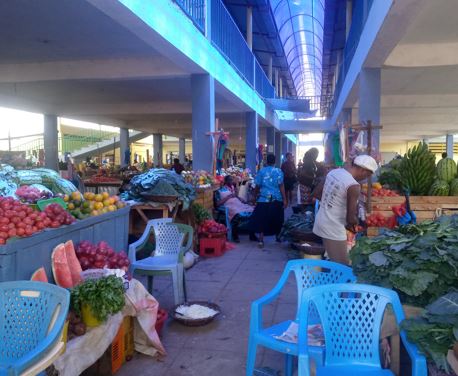
Small-scale traders in Homa Bay town have called on government agencies and authorities to address critical challenges affecting business, citing unpredictable weather patterns, poor infrastructure, insecurity, and the high cost of living.
Speaking at the Homa Bay Municipal Market, traders led by the market chairman, Daniel Ogumba, said heavy rains and poor infrastructure have continued to disrupt business operations and reduce daily earnings among traders.
Ogumba said the market is no longer sufficient to accommodate the growing number of traders, forcing many to operate along roadsides where they are exposed to various risks, especially accidents and harsh weather conditions.
He also expressed concern over insecurity within the market, particularly at night, whereby faulty security lights and the incomplete perimeter wall create a conducive environment for theft, leading to loss of merchandise and creating fear among traders, especially women.
“The market is too small for the number of traders we have. Many are forced to sell their wares along the roadsides, exposing them to various dangers and harsh weather,” Ogumba revealed.
He further noted that many traders are struggling with limited access to affordable credit, saying high interest rates charged by lenders have made it difficult for small businesses to survive.
According to Ogumba, many traders depend on mobile phone loans to sustain their businesses during the prevailing harsh economic times, but poor sales often make repayment difficult.
“Many traders cannot afford loans because of the high interest rates. If the government and financial institutions lower the rates, businesses in Homa Bay will grow,” he added.
Ogumba called on the government to introduce special funding programmes for small-scale traders to improve access to affordable credit and stimulate the local economy.
He also urged the county government to complete the market project, improve sanitation and drainage systems, and fast-track expansion efforts to create a more conducive business environment.
Other traders dealing with perishable goods emphasized that the ongoing rainy season has worsened business conditions.
Elizabeth Anyango, an onion trader, said heavy rains have disrupted transportation and reduced supply, causing onion prices to rise.
“Vehicles struggle to access markets because roads become muddy during the rains. Despite reduced sales, we are still expected to pay taxes and security fees,” she said.
Joyce Ogeno, a tomato trader who sources produce from Nakuru, Narok, and Mbita, said wet weather has caused significant losses as tomatoes spoil easily during transportation and storage.
“Sometimes the rain destroys tomatoes before we even sell them. When customers fail to come because of rain, many tomatoes go bad,” Joyce said.
Another trader, Auka Ogelo, echoed similar concerns, saying poor road conditions during rainy seasons make transportation difficult and reduce customer turnout.
The traders appealed to both the government and financial institutions to provide affordable loans and improve infrastructure to help businesses withstand harsh weather conditions.
They were optimistic that addressing infrastructure, sanitation, security, and financial challenges will help improve business activities and living standards in Homa Bay.
By Lucy Jotham and Sitna Omar