The State Department for Housing and Urban Development, in partnership with the Council of Governors (CoG), has embarked on a communication and documentation drive to strengthen reporting and public access to information on projects under the upcoming Kenya Urban Support Programme Phase II (KUSP II).
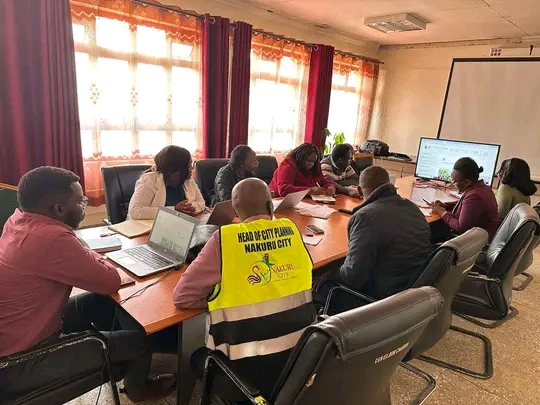
The initiative has seen County Communication and ICT officers from Nakuru City, Naivasha and Gilgil Sub-County undergo a capacity-building and website audit exercise aimed at improving the way information on KUSP II projects is collected, managed, documented and disseminated to the public.
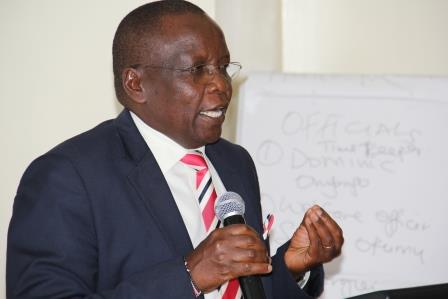
According to Head of the City Technical Unit and City Planning Nakuru County Mr Robert Kiprono Rutto, the exercise seeks to address gaps in the availability and accessibility of project information and ensure that project developments can be followed through appropriate digital platforms.
The KUSP II programme is designed to strengthen urban governance, improve the delivery and resilience of urban infrastructure and services, enhance private-sector engagement in urban planning and support the transition of refugee-hosting areas into integrated settlements.
The programme covers 79 municipalities in 45 counties, making effective communication and reporting important for coordinating information across the participating urban areas.
Mr Kiprono noted that the programme’s emphasis on communication comes as Kenya and other African countries experience rapid urbanization, increasing the demand for effective planning, infrastructure and public services.
The Head of City Planning pointed out that the Organisation for Economic Co-operation and Development (OECD), African Development Bank, Cities Alliance and United Cities and Local Governments of Africa project that Africa’s urban population will double from about 700 million to 1.4 billion by 2050, making urban planning, governance and financing increasingly important to development.
“Kenya’s urban population is also growing. World Bank data, based on United Nations population estimates, puts Kenya’s urban population at 32 percent of the total population in 2025. The increasing concentration of people in urban areas means municipalities require stronger systems for planning, service delivery, accountability and communication with resident,” he stated.
The Head of City Planning added, “The website audit undertaken in the participating municipalities is a key component of the exercise because KUSP II’s performance framework contains minimum conditions and performance standards that participating counties and urban institutions are required to meet.”
World Bank programme documents state that KUSP II uses performance-based requirements to determine access to institutional and urban development grants, with monitoring and reporting undertaken at both national and county levels.
The World Bank documentation further identifies communications and knowledge management among the areas in which the State Department for Housing and Urban Development is expected to strengthen capacity under KUSP II.
The programme’s monitoring framework provides for regular reporting, including reports from the National Programme Coordination Team and counties, to track implementation and results.
Mr Kiprono explained that the first phase of the communication and website audit exercise is targeting 10 municipalities, including Nakuru, before being extended to the wider group of participating municipalities.
The initiative is expected to help the participating cities and municipalities improve the consistency and timeliness of project updates while creating better channels through which residents can access information on projects being implemented in their areas.
The exercise is particularly relevant to Nakuru County, whose KUSP II urban areas include Nakuru and Naivasha.
The official KUSP II programme lists Nakuru’s indicative urban population at 367,183 and Naivasha’s at 170,551, illustrating the scale of urban populations that stand to benefit from improved planning, infrastructure and municipal services under the programme.
The initiative also reflects Governor Susan Kihika’s commitment to ensuring that KUSP projects deliver visible and lasting benefits to residents.
The programme’s official information indicates that Nakuru’s KUSP-supported development areas include urban mobility and roads, non-motorized transport infrastructure, public spaces and green areas, and drainage and flood control.
During the engagement, the teams agreed on the need for closer coordination between the KUSP II team, county governments and municipalities to facilitate timely documentation, reporting and dissemination of programme information.
Such coordination is intended to ensure that technical and financial progress is captured alongside project implementation and that relevant information reaches the public through accessible platforms.
The engagement forms part of broader efforts to strengthen institutional capacity as KUSP II moves towards implementation across participating urban areas.
By Jane Ngugi and Joy Njoki