Kenya has over 2,300 registered and accredited technical and vocational education and training (TVET) institutions, consisting of national polytechnics, technical and vocational colleges, and vocational training centres, according to data from the Kenya National Bureau of Statistics (KNBS).
Kenya’s total TVET student enrollment now stands at approximately 718,000 trainees, with recent placement data showing roughly 157,718 new students joining technical institutions in September this year
To this end, there are a total of 144,027 trainees who successfully graduated from technical and vocational education and training (TVET) institutions in Kenya last year.
All these young people come out scrambling for the shrinking job market, but two young TVET graduates are setting the pace, putting their skills to maximum use instead of waiting for formal employment.
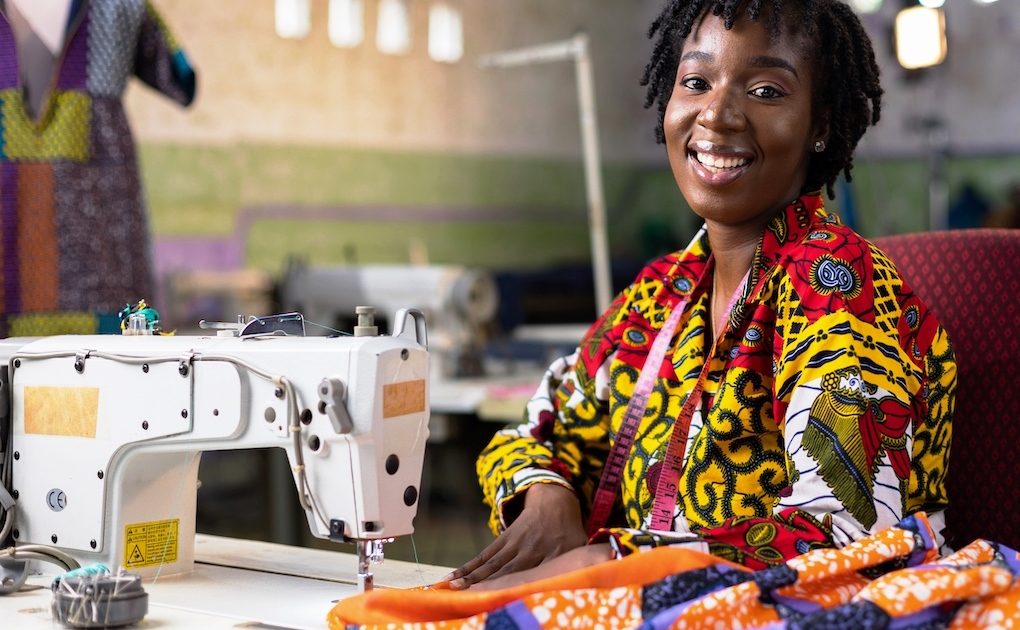
The rhythmic hum of sewing machines echoes through the busy streets of Kisumu’s Central Business District (CBD) as customers stream in carrying fabrics of every colour, type and design.
Inside a modest tailoring workshop in Kisumu’s Central Business District, measuring tapes hang around the necks of young tailors who are carefully transforming ordinary pieces of cloth into elegant outfits.
For these young entrepreneurs, tailoring is more than just stitching garments; it is a pathway to financial independence, creativity, and hope.
Twenty-seven-year-old Faith Achieng` begins her day before sunrise. By 7:30 a.m., she is already preparing sewing machines, arranging fabrics, and welcoming the first customers. Together with her business partner, Brenda Atieno, 25, the two have built a growing enterprise that now serves dozens of customers every week.
Faith says her journey into tailoring was born out of necessity after spending nearly two years searching unsuccessfully for formal employment after completing a vocational training course.
“I realized I could either continue waiting for a job or use the skills I already had to create one,” she says while carefully adjusting a customer’s dress I chose to bet on myself.”
Starting the business in 2023 was not easy. Faith had saved Sh85,000 from casual tailoring jobs, while Atieno contributed Sh65,000 from her savings earned through part-time dressmaking.
Together, they purchased two industrial sewing machines, an overclock machine, cutting tables, irons, and rented a small shop in Kisumu’s CBD.
Their first months were difficult, with some days passing without a single customer. However, through quality workmanship, referrals, and active promotion on WhatsApp, Facebook, and TikTok, business slowly began to grow.
Today, the workshop receives between 10 and 18 customers daily, depending on the season. Demand rises sharply during festive periods, school opening dates, graduation ceremonies, and wedding seasons.
The workshop specializes in making school uniforms, official suits, African wear, dresses, shirts, skirts, curtains, and custom-made fashion pieces.
On a good business day, the business earns between Sh8,000 and Sh15,000 in sales. After deducting the cost of materials, rent, electricity, and workers’ wages, it records an average daily profit of Sh3,500 to Sh5,500.
Atieno says tailoring has transformed not only her life but also that of her family. “This business pays my rent, supports my younger sister’s education, helps me buy food, and allows me to save every month. Before joining Achieng, life was very difficult.”
Beyond supporting themselves, the young entrepreneurs have also become employers. They now have four full-time employees and train three apprentices who are learning the trade while gaining practical experience.
Achieng believes that every new employee represents another young person rescued from unemployment.
“We don’t only make clothes. We create opportunities. Every person who learns tailoring here leaves with a skill that can change their future.”
Customers are full of praise for the workshop for meeting deadlines and producing quality work at affordable prices.
One regular client, Rose Atieno, says she has trusted the tailors with all her outfits for the past two years.
“Whenever I need a dress or office wear, I come here because they understand exactly what customers want.”
Despite their growing success, the young tailors continue to face significant challenges. The rising prices of fabrics, sewing accessories, and electricity have increased production costs. Some customers delay collecting completed garments, while others negotiate prices that barely cover expenses. During rainy seasons, business often slows as fewer people visit the town centre.
Competition from imported second-hand clothes also affects local tailoring businesses. “Many people buy cheap ready-made clothes instead of supporting local tailors,” Faith explains. “Sometimes we lose customers simply because imported clothes appear cheaper.”
Machine maintenance is another costly challenge. Industrial sewing machines require regular servicing, and mechanical breakdowns can interrupt production, delaying customer orders and reducing income.
Even with these obstacles along the way, the team remains optimistic.
The income generated from the business has enabled Faith to support her parents in the village, pay school fees for her younger brother, and continue investing in new tailoring equipment. Atieno has also started constructing a small house for her mother while saving money to pursue advanced fashion design training.
Looking ahead, the entrepreneurs have ambitious dreams. They plan to expand their tailoring business into a fully equipped fashion house capable of producing garments on a larger scale. They also hope to open a fashion training academy where young people from Kisumu and neighboring counties can learn tailoring, fashion design, and entrepreneurship.
Faith envisions launching a clothing brand that will proudly carry the name of Kisumu across Kenya and beyond.
“One day, we want people to wear clothes made in Kisumu with pride. We believe local talent can compete nationally and even internationally.”
As the sewing machines continue humming and colorful fabrics pass through skilled hands, these young women are proving that fashion is not merely about style—it is about creating livelihoods, restoring dignity, and inspiring a new generation of entrepreneurs.
Their story demonstrates that with skill, resilience, and hard work, a sewing machine can become a powerful tool for transforming lives, one stitch at a time.
By Mabel Keya – Shikuku and John Yuri Ochieng