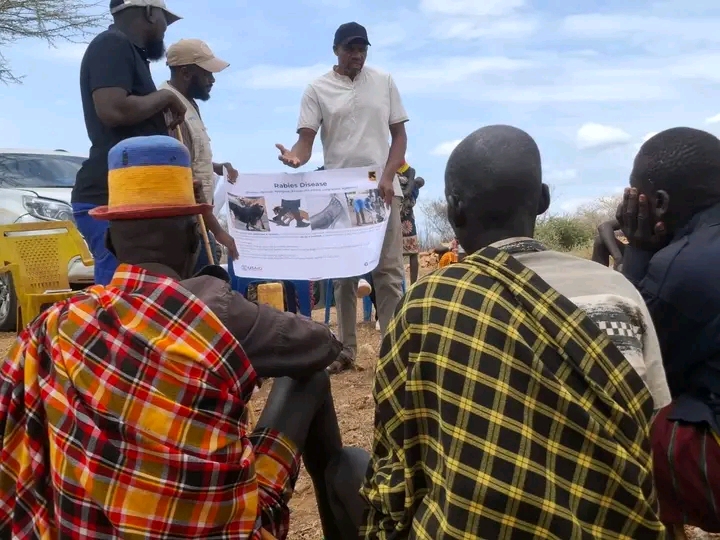
A multi-sectoral Joint Support Supervision (JSS) team has intensified sensitisation efforts in Lomokori and Lochor-Alomala villages in Lokiriama Sub-County, educating cross-border communities on Ebola Virus Disease (EVD) and five priority zoonotic diseases to strengthen early case detection, management and referral to health facilities.
The awareness sessions brought together residents, health facility staff and community health workers, including Community Health Promoters (CHPs), Community Disease Reporters (CDRs) and Community Mobilisers (CMs), with a focus on promoting collaboration in preventing and containing disease outbreaks.
The team sensitised communities on five priority zoonotic diseases—rabies, anthrax, brucellosis, trypanosomiasis and Rift Valley Fever—explaining how the diseases are transmitted from animals to humans and the measures required to prevent infection.
The sessions highlighted the importance of public awareness in Turkana County, where an estimated 60 per cent of the population relies on pastoralism for their livelihoods.
Residents were also informed of an upcoming livestock vaccination campaign scheduled for next week in Lokiriama and were encouraged to bring their dogs for vaccination to reduce the risk of rabies transmission through dog bites.
Speaking during the engagement, Lokiriama Sub-County Public Health Officer Simon Echwa said the sensitisation drives were helping bridge a critical gap between communities and the health system.
“These sessions help residents recognise the early signs before a disease has the chance to spread, and that early recognition saves lives,” he said.
Community members in Lomokori appealed for intensified screening at border entry points to safeguard the area against Ebola. They also requested the County Government to rehabilitate a sunken borehole to improve sanitation and strengthen preparedness against EVD.
Richard Lowoto Lokuruka of the Ministry of Health in Lokiriama acknowledged the concerns raised and reaffirmed the commitment of health authorities to addressing them.
“Our communities live closely with their livestock, so the risk of zoonotic spillover is real and constant. That is why such sensitisation efforts are crucial in preparing communities before an outbreak strikes,” he said.
Jamal Abdi, Project Manager for the International Rescue Committee’s Core Group Partners Project (CGPP) in Turkana, commended residents for their active participation and called for sustained collaboration.
“These cross-border communities are often the first to notice when something is wrong, whether it is a sick animal or an unusual illness. Our role is to ensure they have the knowledge, attitudes and confidence to act and seek support from health facilities immediately,” he said.
Mzee Echor from Lomokori said the information shared had enhanced his understanding of zoonotic diseases and renewed his confidence in health services.
“Before, I would only hear of diseases like brucellosis without fully understanding how they spread. Now I can explain it to more people, and I have regained trust in seeking health services,” he said.
Lokwayen James, a Community Mobiliser from Lochor-Alomala, noted that the JSS visits had refreshed the skills and knowledge of community health workers, enabling them to better educate residents.
He observed that animal and human health had previously been addressed separately, but the adoption of the One Health approach had enabled CHPs, CDRs and CMs to work closely with local administrators to disseminate information to households and improve community health outcomes through coordinated action.
The activity, supported by the International Rescue Committee through the Core Group Partners Project (CGPP), also covered health facilities in Loya, Lorengipi, Lochor-Edome, Lokiriama, Urum and Namoruputh.
Those present included veterinary officers, facility in-charges, nurses, public health officers, public health nurses and health records clerks.
by Peter Gitonga