Schools in Keiyo South are set to benefit from clean and affordable energy following the commissioning of the KyoGreen Biogas Unit at Mokwo Girls Secondary School and the launch of additional biogas projects in other learning institutions.
Head of Public Service Felix Koskei commissioned the KyoGreen Biogas Unit at Mokwo Girls Secondary School, describing it as a significant step towards promoting renewable energy in public institutions while reducing dependence on traditional cooking fuels.
The biogas unit is expected to provide the school with a sustainable source of clean energy for meal preparation, significantly reducing reliance on firewood, lowering operational costs and contributing to environmental conservation through reduced deforestation and greenhouse gas emissions.
Speaking during the commissioning ceremony, Koskei said the Government remains committed to supporting climate-smart technologies that improve service delivery while safeguarding the environment.
“The KyoGreen initiative demonstrates our commitment to sustainable development by providing institutions with affordable and environmentally friendly energy solutions. Besides lowering energy costs, these systems will help conserve forests and contribute to Kenya’s climate action agenda,” he said.
Koskei who was accompanied by Principal Secretary for the National Treasury Dr Chris Kiptoo noted that integrating renewable energy technologies in schools would enhance environmental stewardship among learners while creating healthier and cleaner learning environments.
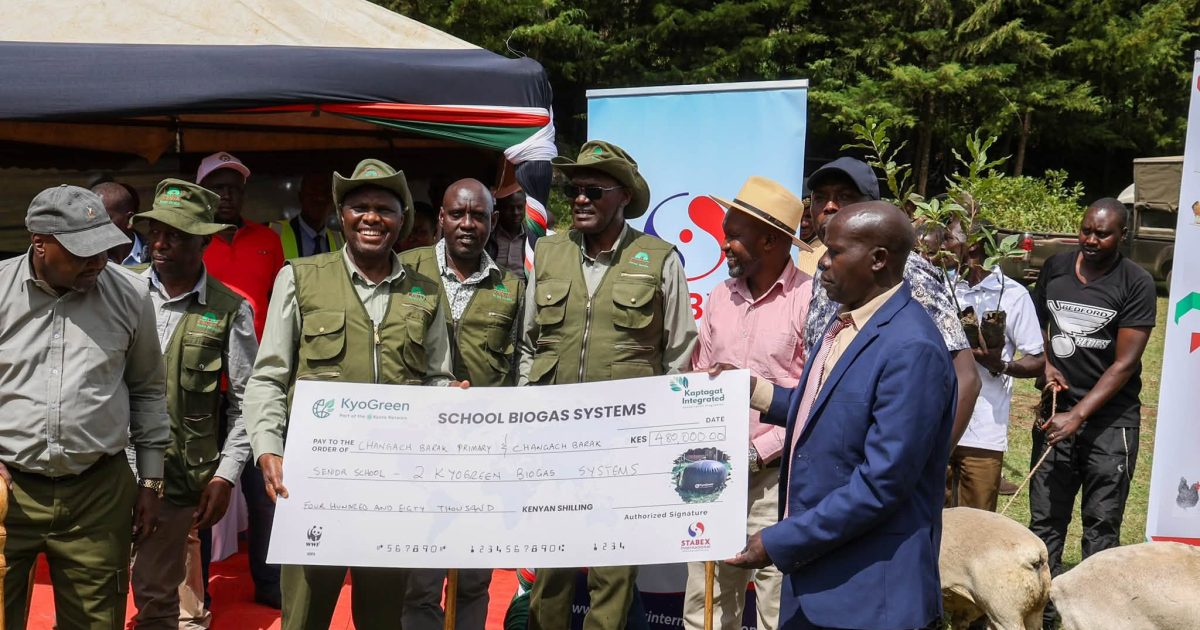
During the event, Changach Barak Primary School and Changach Barak Senior School jointly received a cheque worth Sh.480,000 to facilitate the installation of two KyoGreen biogas systems, further expanding access to clean energy in educational institutions within the constituency.
Dr Kiptoo said the investment in renewable energy infrastructure reflects the Government’s commitment to strengthening resilience in the education sector through sustainable and cost effective technologies.
“Reducing expenditure on conventional fuel allows schools to redirect resources towards improving learning outcomes and other essential educational needs. Renewable energy is an investment in both our environment and the future of our children,” he said.
Keiyo South Member of Parliament Gideon Kimaiyo welcomed the initiative, noting that schools in the constituency have faced increasing energy costs due to dependence on firewood and other conventional fuels.
“These biogas systems will ease the financial burden on our schools while promoting environmental conservation. We appreciate the National Government for supporting initiatives that improve learning conditions and advance sustainable development,” said Kimaiyo.
The KyoGreen programme forms part of broader efforts to accelerate the adoption of clean energy technologies in public institutions, enhance environmental conservation, and support the transition towards a green economy in line with national climate change mitigation and sustainable development objectives.
By Rennish Okong’o