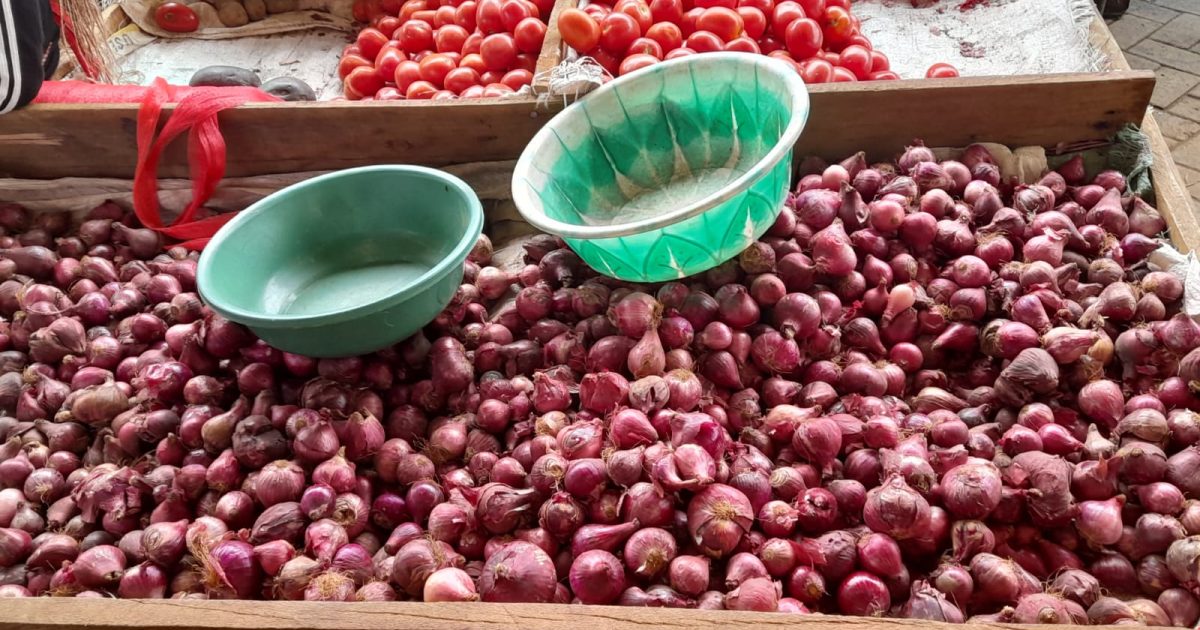
Residents of Kenol town in Murang’a County are grappling with tough economic times following a sharp increase in the prices of key household commodities.
A spot check at Kenol market revealed that prices of most staples, particularly cereals, potatoes, milk, and eggs, have risen significantly in the past six months, driven by scarcity, high farm-gate prices, and increased transport costs.
Mary Nyawira, a cereal trader at the market, said prices had increased due to reduced supplies from local farmers, forcing traders to source commodities from distant regions.
“The prices have gone high because the product is not available locally as it was some months ago. The supplier has to transport it over long distances, so I have to increase the prices to cover transport costs,” she said.
Nyawira said yellow beans had risen from Sh130 to Sh160 per kilogram, and njahi (black beans) from Sh90 to Sh120 per kilogram, while green grams had increased from Sh110 to Sh160 per kilogram.
She added that the price increases had driven away customers, resulting in lower sales.
“When prices go up, most of my customers are affected. With the current tough economy, they fail to buy, making my sales go low,” she said.
The scarcity of potatoes is among the commodities that have recorded the steepest price increases. Traders said a two-kilogram tin was retailing at between Sh180 and Sh200, up from about Sh100 previously. A 90-kilogram sack was selling at around Sh8,000, compared with Sh4,500 previously.
Nancy Chege, a trader at Kenol Market, said the potato shortage had made it difficult for many families to afford the staple and had also affected hotel operators who rely heavily on potatoes.
She said prices could remain high as the country enters the heavy rains season, which could affect both production and transportation, particularly for commodities that require intensive labour to move from farms to accessible roads.
Tomatoes, however, have recorded a different trend, with increased supply creating a glut and pushing prices down to as low as Sh30 per kilogram.
Milk and egg vendors are also feeling the effects of reduced supply amid high demand, a situation traders said was contributing to higher prices.
MacLean Chacha, who sells milk and eggs in Kenol, said the price of milk had increased from Sh70 to Sh75 per liter due to low supplies from farmers. He attributed the shortage to reduced production and increased demand.
Chacha said egg prices had recorded a sharper increase, rising from Sh430 to Sh530 per tray, representing a Sh100 increase.
“The price of milk has risen from Sh70 to Sh75 per liter, and eggs from Sh430 to Sh530 per tray. This has affected my business because many customers now opt not to buy, especially eggs. Some argue that we are hoarding them to hike prices for more profit, which is not the case,” he said.
He added that the rising cost of poultry feed had forced some small-scale farmers to reduce their flocks or leave the business, further worsening egg shortages.
“We hope for the best in the near future. If production improves, prices will stabilise,” he said.
The price increases have forced residents to adjust their household budgets, with some reducing purchases of commodities considered essential.
David Kamau, a Kenol resident, said the rising cost of food had interfered with his household planning and emergency savings.
“If I initially bought potatoes at Sh100 and now they are retailing at Sh170 per two-kilogram tin, I will not buy since it is almost double the price for the same quantity. But I hope this will change as we head to the rainy season, although the holidays may also affect prices further,” he said.
Residents are now calling on the government to intervene and cushion consumers from the rising cost of living.
By Joshua Kyalo and Joseph Loiren