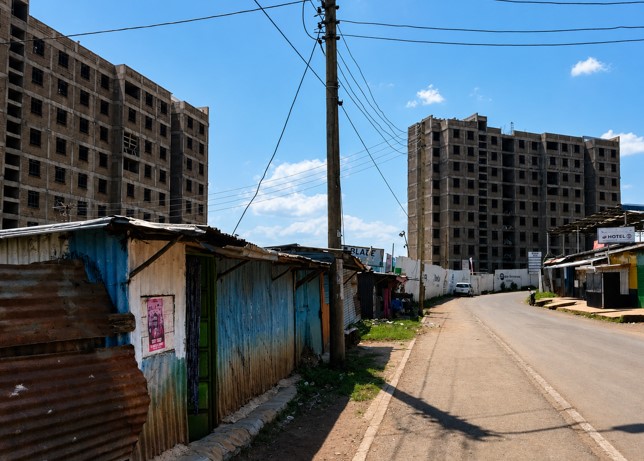
The ongoing Affordable Housing Project in Kericho County has led to the offshoot of many accompanying small businesses around the construction site, creating numerous opportunities for local entrepreneurs and improving household incomes.
The Majengo Talia Affordable Housing Programme (AHP), just a stone’s throw away from the Kiprugut Chumo Stadium on the outskirts of Kericho Town, has attracted a business spur, with various small and medium enterprises cropping up around the government project, which has employed hundreds of workers, both skilled and semi-skilled.
A spot check by KNA shows that the growth has seen small restaurants and cafeterias, barber shops, furniture shops, chemists, phone repair shops, boutiques, and mitumba businesses spring up, making the nearby Eland area more economically active.
The AHP Majengo-Talai site, where 324 housing units are being constructed at a cost of Sh778.2 million, has attracted workers, engineers, contractors and visitors, boosting demand for goods and services in the area.
Franklin Omondi, a mobile phone repair technician operating near the project site, revealed that he started his business after identifying a ready market among workers at the construction site.
He said most of his clients are workers from the site who use ordinary mobile phones, adding that many come with damaged screens, battery problems and charging faults, which he repairs, including screen and battery replacements, as part of his daily work.
“My charges are affordable and my services are quick and efficient. I have been eking out a living from this business for a year now and I am happy,” added Omondi.
Still within the area, Constance Nzinza owns a cafeteria named “Affordable Cafe”, where she serves workers from the project as well as other passers-by in the area.
She said the business was inspired by the construction project and the steady flow of customers it brought to the area.
The cafeteria offers simple Kenyan meals including githeri, ugali with sukuma wiki, meat, omena, fish, uji and tea, which she says are popular among her clients.
“This Housing project inspired me and my business partner to open this cafeteria and I am happy we are earning a decent living from this cafeteria business, and we hope in future it will even get better,” she said.
However, she noted that she faces challenges, including customers who accumulate debt, some who fail to pay, others who pay in instalments, and a few who disappear without settling their bills, which at times affects the business.
“Apart from that businesses are coming up well, even the number of mama mboga traders has increased because of the growing population brought by the project, and we expect business to improve further once the housing units are completed and occupied,” she said.
The housing project has also attracted several other businesses to the area, including furniture shops established to meet the growing demand for household items, as well as boutiques, a chemist and a private clinic.
Beyond creating hundreds of skilled and unskilled jobs for the local youth, the AHP has also attracted increased participation from Jua Kali artisans and local suppliers supplying doors, windows, metal works, masonry services and other essential inputs.
By Beatrice Chepkirui