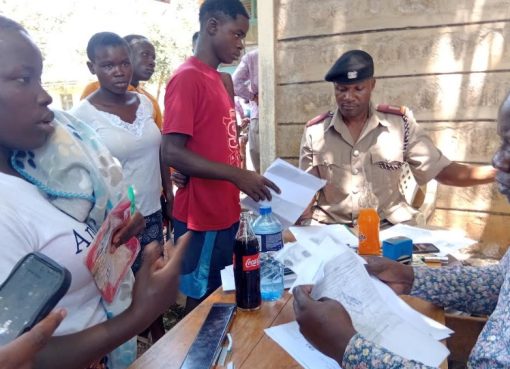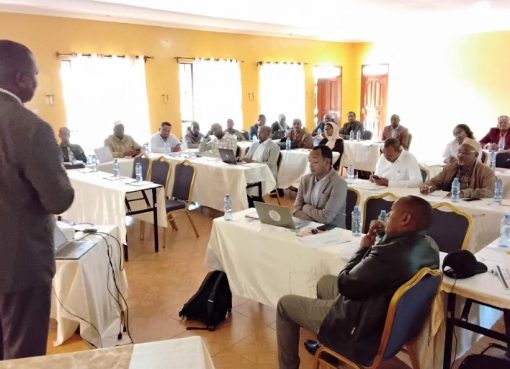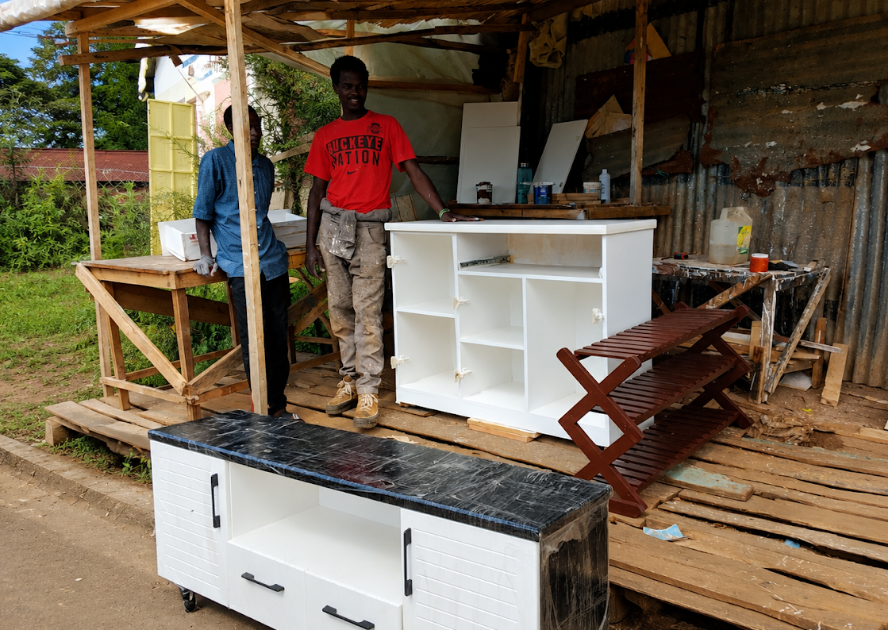
The National Youth Opportunities Towards Advancement (NYOTA) programme in Kericho County has entered its On-the-Job Experience (OJE) practical phase, with about 80 percent of youth who completed theoretical and socio-emotional skills training now placed under approved master craftsmen and employers for hands-on workplace attachment.
The placement marks the transition from classroom-based preparation to real workplace exposure, following completion of a one-month theoretical skills training that equipped beneficiaries with foundational work readiness competencies.
Kericho County Director of Youth Joash Ratemo disclosed to KNA that the practical attachment phase is ongoing across all six sub-counties: Ainamoi, Belgut, Bureti, Kipkelion East, Kipkelion West, and Soin/Sigowet, with beneficiaries placed in trades aligned to their interests, labour market demand, and availability of suitable local employers.
The youth director explained that the attachment phase is designed to deepen practical learning by allowing youth to translate classroom knowledge into real workplace tasks under close mentorship while strengthening their technical competence, discipline, and overall employability.
“The youth are being trained in various technical, vocational and service fields, including hairdressing, electrical engineering, tailoring, plumbing, masonry, mechanics, welding, carpentry, hospitality and catering, ICT, horticulture, barbering, baking, fashion design, among other skills, under master craftsmen,” Mr. Ratemo added.
During the attachment period, Mr. Ratemo pointed out that trainees are required to observe workplace discipline, follow instructions, maintain professionalism, and actively participate in assigned tasks as part of their skills development journey.
“The On the Job Experience (OJE) model is designed to strengthen employability by linking training directly to workplace environments, allowing youth to apply both technical and behavioral skills under supervision,” Mr. Ratemo noted.
The five-month On-the-Job Experience attachment provides beneficiaries with practical workplace exposure, mentorship, and technical skills development, after which they undergo assessment and certification.
“Upon successful completion, the youth are expected to transition into employment, self-employment, or further income-generating opportunities, leveraging the skills and experience acquired during the programme,” explained Mr. Ratemo
Earlier implementation of the programme saw a total of 805 youth successfully complete Phase I theoretical and socio-emotional skills training out of an expected 2,037 participants between January 29 and February 25, 2026, representing 40 percent attendance across the county.
Phase II of the programme, conducted between March 3 and March 27, 2026, recorded improved participation, with 1,039 youth attending training out of an expected 1,258, representing 86 percent attendance and marking stronger engagement compared to the initial phase.
The NYOTA programme, funded by the World Bank, continues to support youth employability, job creation, savings culture and strengthened employment systems through a coordinated multi-agency implementation framework.
By Kibe Mburu