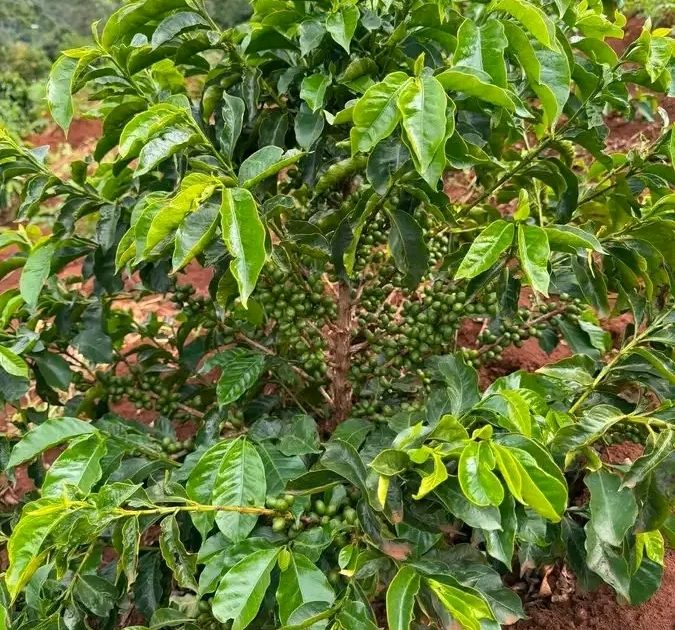
The impressive performance at the Nairobi Coffee Exchange has encouraged more farmers to rehabilitate abandoned coffee farms, expand acreage under the crop and invest in modern farming practices as the county government and national leaders intensify efforts to revive the sector.
According to the latest auction statistics, Nandi County has risen to become Kenya’s sixth-largest coffee-producing county after marketing more than 2.22 million kilogrammes of clean coffee valued at approximately Sh1.9 billion during the current season.
The county has steadily climbed the national rankings following sustained investments in coffee production, quality improvement and cooperative reforms.
Governor Stephen Sang described the achievement as a major milestone for the county’s agricultural sector, saying the impressive performance demonstrates that investments in agriculture are paying off.
“The outstanding performance of Nandi coffee demonstrates that our investments in agriculture are bearing fruit. We are committed to supporting our farmers through quality seedlings, extension services, value addition and improved cooperative management so that they continue earning better returns,” said Sang.
The county government estimates that coffee farming directly supports more than 30,000 households across Nandi. Agriculture remains the backbone of the county’s economy, supporting more than 70 per cent of the population either directly or indirectly, with coffee increasingly joining tea, dairy and maize as one of the leading income earners.
Across coffee-growing areas in Tinderet, Aldai, Chesumei, Nandi Hills and Mosop sub-counties, farmers say the latest payments have enabled them to educate their children, improve their homes, purchase livestock and reinvest in expanding coffee production.
John Keter, a coffee farmer from Tinderet, said the latest season had restored confidence in the crop after years of uncertainty.
“For many years farmers neglected coffee because returns were low. This season has changed everything. Farmers have received better payments and many people are now planting new coffee bushes. Coffee has once again become a profitable enterprise,” he said.
Agricultural experts attribute the improved earnings to favourable international coffee prices, improved husbandry practices, better quality management and strengthened governance within cooperative societies.
The county government has intensified the distribution of certified coffee seedlings, rehabilitation of ageing coffee bushes and farmer training on modern agronomic practices, including pruning, mulching, integrated pest management and soil fertility improvement.
County Executive Committee Member for Agriculture Dr Bernard Lagat said the county administration aims to significantly increase coffee production over the next five years through strategic investments.
“Our objective is to make Nandi one of Kenya’s top coffee-producing counties. We are investing heavily in extension services, quality seedlings and strengthening cooperative societies because coffee offers better returns to farmers than many traditional crops,” he said.
Political leaders have equally intensified campaigns encouraging farmers to diversify into coffee production.
Tinderet Member of Parliament Julius Melly has urged farmers to increase acreage under coffee, saying the crop offers more stable long-term income compared to overreliance on maize.
“Coffee has proved that it can transform household incomes. We shall continue supporting farmers through training, improved infrastructure and strengthening cooperative societies to ensure they maximize production and earn better incomes,” said Melly.
Nandi Woman Representative Cynthia Muge has also championed coffee farming through the Mama na Kahawa initiative, which supports women groups with certified coffee seedlings.
She said involving women and young people is critical to sustaining the county’s coffee revival.
“Women have become key players in coffee farming. Through organized groups, they are increasing production while improving household incomes and food security. We want more young people to see coffee as a viable business,” she said.
The operationalization of the Chebonet Coffee Mill in Tinderet Sub County has further boosted farmer confidence by reducing milling costs and improving efficiency in processing coffee before marketing.
Research has shown that Nandi possesses ideal ecological conditions for producing premium Arabica coffee because of its fertile volcanic soils, favourable temperatures and reliable rainfall.
The impressive earnings are already stimulating economic activity in rural trading centres. Business operators report increased sales of farm inputs, construction materials, motorcycles and household goods as farmers invest their coffee proceeds.
The local leaders believe the county still has enormous untapped potential. They recommend expansion of coffee acreage, rehabilitation of ageing bushes, greater investment in irrigation where possible, stronger cooperative governance and increased value addition through roasting, packaging and branding to enable farmers earn even higher returns.
For thousands of farming families, the current season has demonstrated that coffee is no longer merely a traditional cash crop but a reliable pathway to higher incomes, rural employment and sustainable economic transformation.
By Sammy Mwibanda