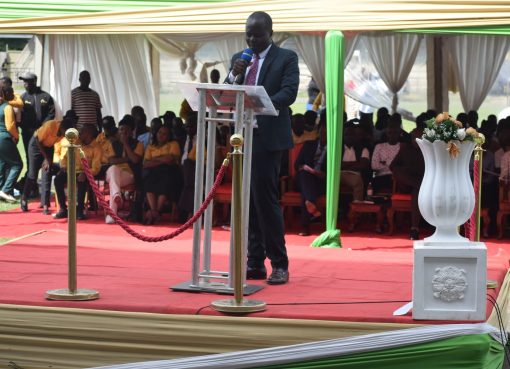
The Media Council of Kenya (MCK) has intensified its nationwide push for media and digital literacy among students through the ongoing Journalism Clubs Expo to combat misinformation and nurture future journalists and content creators.
Speaking during the Nyanza Region Journalism Clubs Expo at Homa Bay Boys Senior School, MCK Director of Media Training and Development Victor Bwire said the initiative is focused on equipping students with skills to responsibly produce and consume media content while also nurturing talent for the growing digital economy.
Bwire noted that the programme, which has already been held in Kisii and Busia before moving to Homa Bay, is targeting learners in secondary schools through journalism clubs as entry points for media literacy education.
“With the growth of the internet and digital platforms, there has been a lot of irresponsible production and use of content. There is information overload, misinformation, and fake news affecting even older people. That is why we are targeting the youth early enough,” he said.
According to Bwire, the sessions train students on identifying fake news, debunking misinformation, understanding how media works and safely navigating online spaces.
He added that students are also being sensitized on the dangers of harmful online content, including pornography, radicalization, hate speech, and unsafe dating platforms.
“We want students to understand which digital spaces are safe for learning and innovation and which ones expose them to danger,” he said.
Beyond digital literacy, the programme is also intended to promote journalism and creative arts as viable career paths.
Bwire emphasized that the digital economy is creating opportunities for self-employment among young people through content creation, blogging, podcasting, and online broadcasting.
“The formal job market is shrinking, but the digital economy is opening huge opportunities. Young people can use their communication and creative skills to earn a living through digital platforms,” he added.
The initiative also seeks to identify and nurture emerging talent among students. Through partnerships with sponsors and media stakeholders, talented students could receive mentorship, scholarships, or exposure opportunities within the media industry.
The expo brought together more than 40 schools from across the Nyanza region to compete in categories such as news anchoring, podcasting, sports commentary, news interviewing, and portfolio presentation.
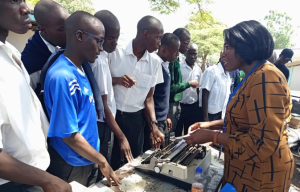
Mustaki Robert Wesonga, Coordinator of the Nyanza Region Journalism Clubs Patrons Secretariat, described the competition as highly competitive and successful.
“We have about 43 schools participating, and the students came very prepared. The judges from various media houses, including the Kenya News Agency, have helped make this event impactful,” he said.
Students who attended the expo said the experience had boosted their confidence and inspired them to pursue careers in journalism and media.
Rosella Asnath a student from Asumbi Girls High School, in Homa Bay, said the event had exposed students to opportunities in journalism beyond traditional professions.
“Many people think only engineering or medicine matters, but anyone with courage and a voice can become a journalist,” she said.
Another student, Ruth Atusi, said interacting with practicing journalists had motivated learners to pursue their dreams in media.
“We have learned a lot, and now our dream of becoming journalists is becoming brighter,” she said.
The students also called for increased support in terms of equipment and practical exposure, saying schools lack cameras, microphones, and studio facilities needed for media training under the Competency-Based Curriculum (CBC).
Cheryl Atieno, chairperson of the journalism club at Asumbi Girls, appealed to stakeholders to help schools acquire equipment that can nurture learners’ talents.
Teachers and club patrons echoed these concerns, urging the Media Council and media houses to strengthen partnerships with schools by providing mentorship and access to professional studios.
Goroba Osore, patron of the journalism club at Asumbi Girls High School, said practical exposure remains essential in preparing students for the evolving media industry.
“Not all patrons are fully equipped with current media industry knowledge. We need media professionals to visit schools more often and guide learners directly,” he said.
The MCK director indicated that instead of equipping every school individually, given the high cost of professional broadcasting equipment, the council is encouraging collaborations where students can visit media hubs and studios for practical learning experiences.
Bwire revealed that discussions are ongoing to establish a media hub in Homa Bay that would support students from across the region with practical training opportunities.
The journalism expos are currently being piloted in five selected counties across Western Kenya and Nyanza, even as the Media Council evaluates the possibility of expanding the initiative nationally.
By Sitna Omar