By D, KNA
Tucked 350 kilometers east of Nairobi, and occupying 870 square kilometers, Meru National Park is not only a haven for wildlife, but a living, breathing storybook of Africa’s most powerful conservation legends.
At the heart of this park lies the Meru Rhino Sanctuary, a place unlike any other.
Here, endangered rhinos both black and white roam freely, under the vigilant protection of dedicated rangers.
These are the unsung heroes of the wild, patrolling day and night to ensure that what is priceless never becomes a statistic.
Visitors to the sanctuary walk beside these guardians of nature, where they satisfy their curiosity of witnessing the endangered species.
They also offer a rare opportunity: not just to witness wildlife, but to understand what it truly means to protect it.
Here, the rhino’s horn is not seen for its black-market value, but for its pride, resilience, and significance to our shared planet.
The soul of Meru National Park lies not only in its animals, but in its history etched forever in the story of Elsa the Lioness.
In the late 1950s, conservationists Joy and George Adamson found themselves raising three orphaned lion cubs.
While two were sent to a zoo, the smallest, Elsa, remained.
And from this act of compassion, a global movement was born where Joy Adamson, with extraordinary vision, chose not to cage Elsa, but to teach her the ways of the wild: how to hunt, to survive, and to live free among her kind.
Elsa’s story, immortalized in the bestselling book ‘Born Free’ and its award-winning film adaptation, transformed how the world viewed wildlife.
She became a symbol of freedom, of love beyond species, and of the idea that true care means letting go.
Elsa is buried in the park she once called home, with her spirit still lingering in the lion’s roar at dusk and the quiet rustle of the grass at dawn.
Last Saturday, the legendary land welcomed a special visit from the Tharaka Nithi Press Club, who entered through Ura Gate, the park’s hidden southern entrance.
Accompanied by Assistant Director Kitavi Kaloki, the group explored Meru’s sweeping plains, wildlife havens, and tranquil hippo pools.
The partnership between the Press Club and Kenya Wildlife Service marks the beginning of a new chapter that is focused on opening up Ura Gate as the shortest and most accessible route from Nairobi, and as the gateway to one of the most scenic corners of Kenya.
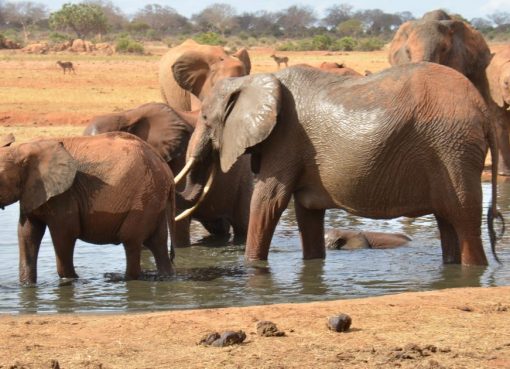
From the very entrance, wildlife greets visitors; lions basking under acacia trees, elephants lumbering in the distance, zebras dancing through the grass.
The Park is also home to all of Africa’s Big Five including the lion, leopard, elephant, buffalo, and both black and white rhinos, making it a one-stop for adventurers and conservationists alike.
According to Mr Kaloki, Meru isn’t just a paradise for tourists but it’s a source of healing, learning, and empowerment for surrounding communities.
With five scenic picnic spots, hippo pools, and riverine forests, the park offers more than thrills, it offers serenity.
The shade of tall trees, the cooling effect of riverside breezes, and the symphony of birds and wildlife make every moment here feel sacred.
Under Assistant Director Kaloki’s leadership, Meru is investing in conservation education, partnering with schools to build wildlife clubs, raise awareness, and nurture the next generation of stewards.
Schools enjoy subsidized rates to visit the park, inspiring children to cherish and protect their natural heritage.
Tharaka Nithi Press Club Chairman Alex Njeru echoed this commitment, stating that they will continue visiting the park and promoting it to ensure the people of Tharaka Nithi County benefit.”
He emphasized the importance of reviving Ura Gate not just as an entry point, but as a bridge between conservation and community development.
“In a world rushing ever faster, Meru invites you to slow down and step into something ancient, sacred, and real. It is one of the last places where you can walk the same trails as Elsa, witness the raw strength of rhinos, and breathe the air of a land that still remembers,” said Mr Kaloki.