Migori Woman Representative Fatuma Mohammed has appealed to the national government to increase allocations to the National Government Affirmative Action Fund (NGAAF), saying the current funding is inadequate to meet the growing demand for women’s economic empowerment programmes across the county.
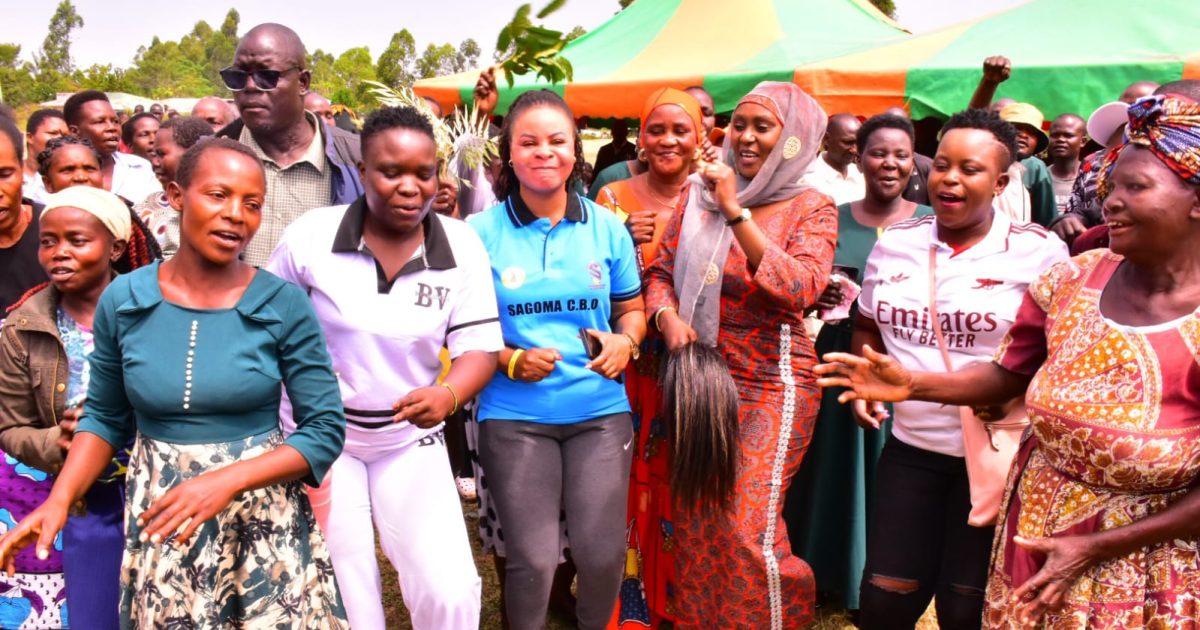
Speaking after issuing Sh250,000 in grants to 11 registered women’s groups at Wasweta II Ward in Suna West Constituency on Monday, Fatuma said her office receives about Sh2.7 million every quarter, an amount she described as insufficient to support women in all the county’s 40 wards.
She said many deserving women’s groups continue to miss out on funding because of budgetary constraints despite meeting the eligibility requirements.
“We are requesting the national government to consider increasing the NGAAF allocation. Even a small increase will enable us to reach more women because the demand is overwhelming. Many groups qualify, but we are forced to leave others out due to limited funds,” she said.
The grants are intended to strengthen women-led enterprises, expand table banking initiatives and improve household incomes through sustainable income-generating activities.
Fatuma said beneficiary groups would invest the funds in small businesses while NGAAF officials would conduct follow-up visits to monitor utilization and ensure the grants are used for their intended purpose.
She noted that the latest disbursement builds on previous NGAAF interventions that have supported women’s empowerment, education and community development across Migori County.
Earlier this year, more than 100 women and youth groups benefited from empowerment equipment worth about Sh12 million under the Wezesha Mama, Inua Jamii programme.
The initiative supplied beneficiaries with sewing machines, posho mills, water tanks, salon equipment, car wash machines and water pumps to enable them to establish and expand sustainable businesses.
Fatuma said the programme has continued to transform livelihoods by equipping vulnerable groups with productive assets instead of relying solely on cash transfers.
Besides supporting entrepreneurship, NGAAF has continued to provide bursaries to needy students and distribute sanitary towels to school-going girls to reduce absenteeism and school dropouts among vulnerable learners.
She said the impact of the fund is reflected in the growing number of women who have attained financial independence after starting or expanding businesses through NGAAF support.
“This is not just about giving out money. It is about giving women an opportunity to change their lives. When a woman succeeds in business, she educates her children, feeds her family and contributes to the local economy. That is why this programme is important,” she said.
Fatuma urged women, especially those in rural areas and informal settlements, to organize themselves into registered groups to qualify for future funding opportunities.
She observed that many potential beneficiaries are unable to access the grants because their groups are not formally registered or lack essential requirements such as Kenya Revenue Authority (KRA) PIN certificates and bank accounts.
“The biggest challenge we face is that many women have not registered their groups. Others lack KRA PINs or bank accounts. We encourage them to meet these requirements because NGAAF only supports organised and registered groups,” she said.
She also clarified that NGAAF funding is issued as grants and not loans, emphasizing that beneficiaries are not required to refund the money.
However, she said the fund maintains strict monitoring mechanisms to ensure the grants are invested in genuine income-generating activities that benefit all group members.
Beneficiaries welcomed the latest disbursement, describing the programme as a critical source of business capital for women who are unable to access conventional financial services.
Sharon Odek, a member of one of the beneficiary groups from Magoto, said previous NGAAF support had significantly improved members’ economic well-being.
“The money we received previously helped us strengthen our table banking, expand our small businesses and pay school fees for our children. Today, many of us are financially stable because of this programme,” she said.
She appealed to the government to increase the fund’s allocation so that more women’s groups can benefit from the initiative.
“There are many women who are still waiting for support. If the allocation is increased, more families will improve their livelihoods just as we have,” she added.
Another beneficiary, Jane Achieng’ from Suna West, said the grants had restored hope to women entrepreneurs struggling to access affordable business financing.
“Most of us cannot qualify for bank loans because we lack collateral. NGAAF has given us a chance to invest in our businesses without that burden. We promise to use this money wisely so that it changes our lives,” she said.
Fatuma maintained that increasing NGAAF allocations would enable the programme to reach more women entrepreneurs, strengthen grassroots enterprises and stimulate local economic growth across Migori County.
by Evetta Obuya