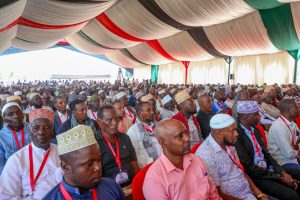
Over 1000 Muslim leaders drawn from the Western Region yesterday converged at Bukhungu Stadium in Kakamega County to chat away forward on how to socio-economically empower themselves.
The Muslim leaders converged under the national dialogue dubbed ‘Gumzo la Uchumi Mashinani’—an initiative aimed at promoting citizen engagement in assessing the implementation and progress of the Bottom-up Economic Transformation Agenda (BETA).
The meeting convened by the State Department for Economic Planning culminated in the launch of the Western Muslim Council (WEMUCO) SACCO Society, marking an important step towards economic empowerment and financial inclusivity of Muslims in Kakamega, Busia, Vihiga, Bungoma, and Trans Nzoia counties.
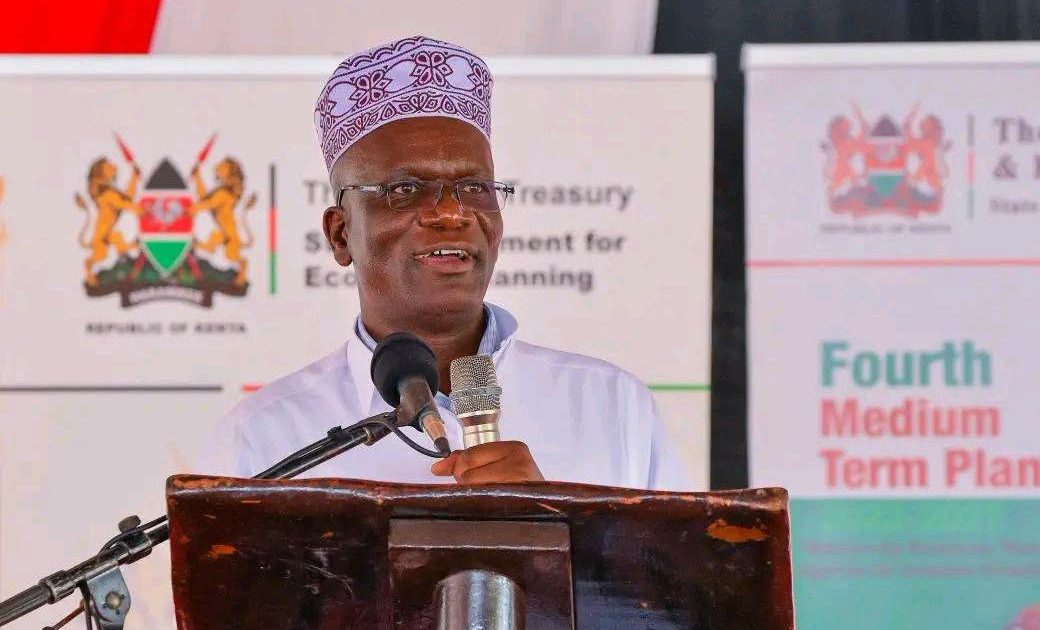
Speaking during the meeting, State Department for Economic Planning Principal Secretary (PS) Boniface Makokha said the platforms are geared towards ensuring that the voices from the grassroots directly shape how government economic programs are implemented.
He noted that religious leaders are the most trusted in any society; hence, it is important for the government to partner with you.
“Apart from peace building, you as religious leaders can also undertake civic education at the grassroots and report to the government whenever service delivery is wanting and advice on how best it can be improved. It is you leaders who know which projects are required where and which ones should be prioritized.”
Makokha called on western region residents to support the re-election of President William Ruto, saying his administration has implemented a lot of projects in the region compared to the previous regimes.
Kakamega Governor Fernandes Barasa said his administration will always be at the forefront to support and champion the interests of the Muslim community in the county.
He urged western region residents, especially those who have not registered as voters, to do so in order to be able to massively vote for President William Ruto next year.
He called on western leaders to champion the unity of the western region and not to be the reason for its disintegration.
Malava Member of Parliament, David Ndakwa, urged the Muslim leaders to preach unity and actively participate in discussions on issues affecting their respective communities and the country at large, saying unity of purpose is key in addressing the socio-economic and political challenges facing the Muslim community.
Ndakwa said political differences should not be allowed to divide communities, stressing the need for leaders to embrace dialogue and maintain unity despite different political affiliations.
He reminded the Muslim community that it has an important role to play in national development and should take advantage of opportunities provided by the government to improve their livelihoods.
The National Chairman of the Council of Imams and Preachers of Kenya, Sheikh Abdallah Ateka, lauded the organizers of the forum, saying it is in tandem with the “brethren to brethren” initiative designed by the State Department for Economic Planning to move critical budget and development conversations out of boardrooms and directly into communities.
Ateka said there is a need to establish a dedicated platform that would mobilize and pool resources from Muslim members, the national government, and county governments within the region, saying such an institution will support education needs, housing, small-scale businesses, and agriculture within the community.
By Melechezedeck Ejakait and Godfrey Wang’anya