Nairobi has been named among Africa’s five Cities to Watch in the Oxford Economics Global Cities Index 2026, with projections indicating significant growth in industrial output, financial services and employment over the next 25 years.
The Kenyan capital joins Accra, Cairo, Dakar and Luanda in the report, which projects that the five cities will collectively account for one-third of the Gross Domestic Product (GDP) growth generated by African cities assessed in the index over the period.
Notably, Nairobi ranks 327th overall among 1,000 cities globally but places 26th in human capital, reflecting its potential in talent development, innovation, and economic productivity.
Critiquing the report in Nairobi, the Nairobi International Financial Centre (NIFC) said the findings underscore the need to mobilise investment to support the city’s expanding economy and translate its growth potential into employment opportunities and sustainable development.
According to the report, Nairobi serves as East Africa’s commercial hub and a gateway to markets within the East African Community (EAC), supported by its financial services sector, technology talent, and digital infrastructure.
More than three-quarters of Kenya’s financial activity is concentrated in Nairobi, while its growing fintech sector and innovation ecosystem have strengthened its reputation as a regional financial and technology centre, commonly referred to as the ‘Silicon Savannah’.
Further, Oxford Economics projects that information technology will record average annual growth of 5.5 per cent over the next 25 years, while the finance sector is expected to grow by 4.1 per cent annually.
The city’s industrial sector is also projected to expand significantly, with industrial output expected to exceed 38 billion US dollars by 2050, representing annual real growth of 4.4 per cent.
This expansion could generate approximately 700,000 additional industrial jobs, placing Nairobi among the cities expected to record substantial industrial employment growth in the assessment.
The report further projects Nairobi’s population will reach 12 million by 2050, increasing demand for housing, infrastructure, consumer services, and investment.
Consequently, improved transport and logistics networks are expected to support regional integration and strengthen the city’s role in facilitating trade and business across East Africa.
However, the report also highlights the challenges associated with rapid urbanisation, noting the importance of institutional capacity in managing growth and sustaining economic development.
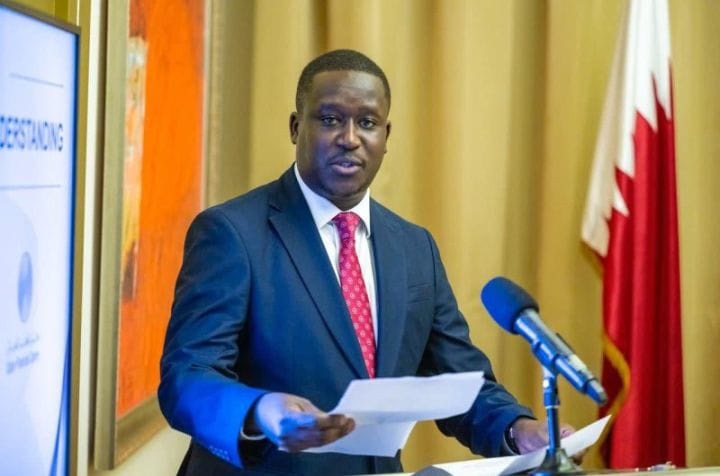
In his own remarks, NIFC Chief Executive Officer (CEO) Daniel Mainda stated that the Centre was focused on attracting investment to support businesses, infrastructure development, and emerging economic sectors.
“Our ambition is to build Nairobi into Africa’s Capital of Capital, the place where global capital meets African opportunity, where funds are domiciled, businesses are scaled and the continent’s future is financed,” Mainda declared.
He noted that Nairobi already had the talent, technological capacity and industrial momentum required for growth, adding that mobilising investment would be critical to translating this potential into jobs and lasting prosperity.
Equally, Mainda revealed that the Centre is prioritizing the establishment and domiciliation of investment funds and sector-specific investment vehicles targeting technology, artificial intelligence, and financial services.
“These initiatives are intended to broaden access to long-term growth capital for start-ups and Micro, Small and Medium-sized Enterprises (MSMEs), supporting business expansion and innovation,” explained the CEO.
In addition, he mentioned that NIFC is also working with relevant regulators to support the development of a responsible digital-assets and fintech ecosystem.
In sustainable finance, Mainda announced that the Centre is collaborating with the Capital Markets Authority (CMA) and other stakeholders on carbon-market regulations and investment structures aimed at mobilising credible climate finance.
Additionally, he reported that NIFC intends to support the National Infrastructure Fund (NIF) by working with the Fund and relevant institutions to structure and domicile investment vehicles for specific infrastructure projects.
Therefore, the initiative, according to the CEO, seeks to connect priority infrastructure developments with domestic and international institutional investors, complementing the NIF’s mandate and remaining subject to applicable regulatory approvals.
Meanwhile, the Nairobi International Financial Centre (NIFC) is a government initiative under the National Treasury established to develop an internationally competitive financial centre and connect global capital with investment opportunities in Kenya and across Africa.
by Michael Omondi/Nancy Omondi