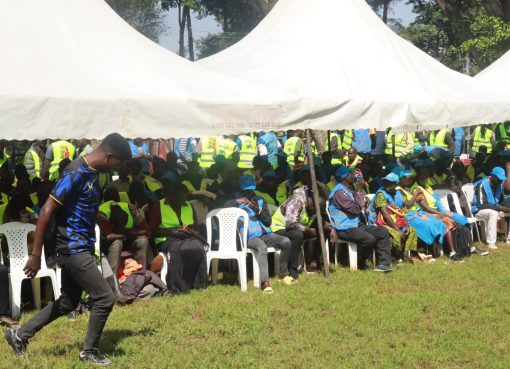
The County Government of Nakuru is conducting specialized safety and health training for human resource officers, safety focal persons, and county public service board members.
The county-led initiative targets both public and private sectors to ensure full compliance with the Occupational Safety and Health Act (OSHA 2007).
County Executive Committee Member (CECM) for Public Service Management Mr. Ambrose Ngare said they were conducting sensitization programs to ensure compliance with provisions of the Occupational Safety and Health Act (OSHA 2007) and the Work Injury Benefits Act 2007.
Speaking during the inauguration of a five-day safety and health training programme, Mr. Ngare said workers were also being enlightened to remain responsible at their workplaces by protecting themselves and not endangering others.
He urged the participants to strengthen their knowledge of occupational safety and health and ensure compliance with legal requirements in their respective jobs.
Mr. Ngare noted that the county government has invested in employee safety through the provision of personal protective equipment (PPEs), safety clothing, helmets, and dust coats for its workers.
“In Kenya, occupational safety and health (OSH) is recognized as a fundamental right and is anchored in law and policy frameworks overseen by the Ministry of Labour and Social Protection. Bill of Rights clearly provides that every citizen has the right to fair labour practices, reasonable working conditions, and a clean and healthy environment,” he explained.
The CECM observed that Kenya has established institutions like the Directorate of Occupational Safety and Health Services (DOSHS), which is mandated to inspect workplaces, enforce compliance, and promote safer working environments.
“Workplace safety is not just about compliance. It is about dignity, productivity, and national development as well. Unsafe working conditions lead to injuries, lost income, increased healthcare costs, and reduced productivity. At a national level, poor occupational safety and health practices are estimated to cost nearly four per cent of global GDP annually,” he pointed out.
He suggested that establishments should begin to strategically integrate Artificial Intelligence (AI) into occupational safety, as AI can help predict workplace risks before accidents happen by analyzing patterns in data, flagging high-risk environments, and supporting smarter inspections.
“AI-powered systems can monitor hazardous conditions in industries like construction and manufacturing, while digital tools can help track compliance and improve reporting accuracy. Data systems must be modernized. Reliable, real-time data on workplace injuries and risks is essential for informed decision-making and effective policy design. This will be efficient if we also incorporate AI within the systems,” elaborated the CECM.
Mr. Ngare noted that Occupational Safety and Health (OSH) is an important facet for the success of any business and its operations, adding that the International Labour Organization (ILO) has anchored this in its constitution through the principle that workers must be protected from sickness, disease, and injury arising from their employment.
He called on all employees to strive to observe all the safety requirements for maintaining a safe working environment. “Safety is very important for workplaces at large. Safe work procedures and policies play a significant part in meeting productivity targets by ensuring that the work environment is safe and conducive,” he affirmed.
By Jane Ngugi