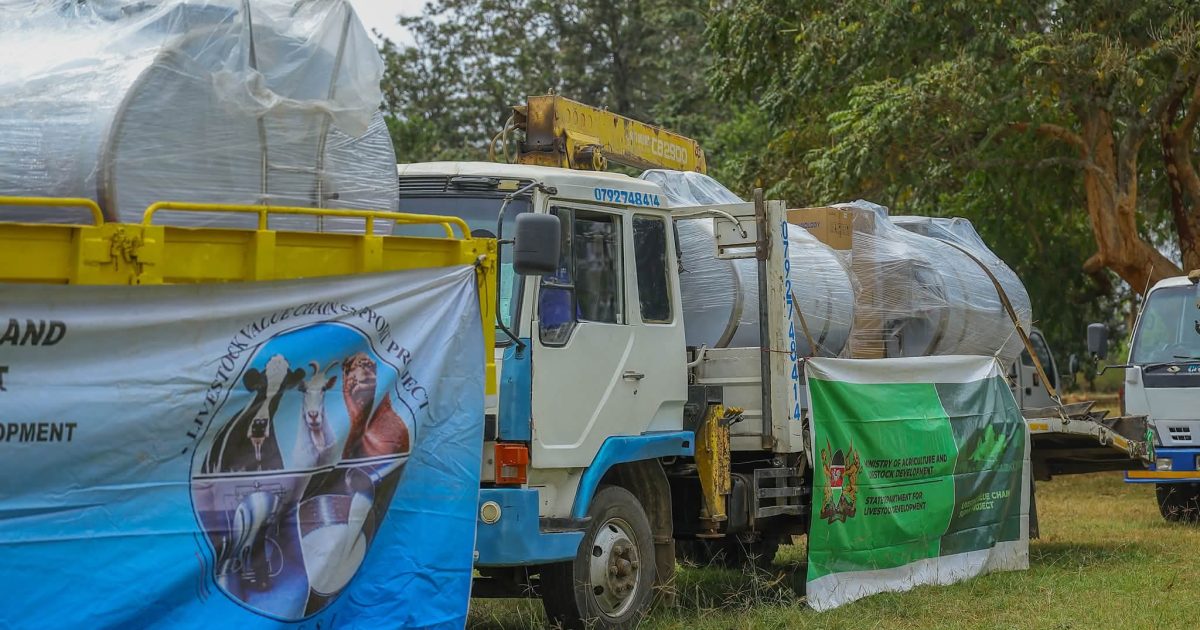
More than 18,000 dairy farmers in Murang’a County are set to benefit from 12 bulk milk coolers worth Sh87.94 million, in an intervention expected to reduce post-harvest losses, improve milk handling and raise farmers’ incomes.
The coolers, delivered to dairy cooperative societies in the county, have a combined capacity to handle more than 37,000 litres of milk produced daily, according to the Principal Secretary (PS), State Department for Livestock Development, Jonathan Mueke.
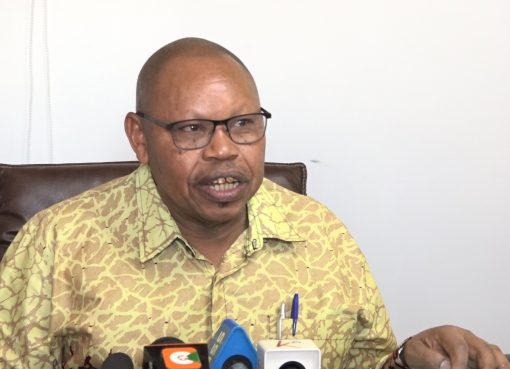
Speaking during the handover ceremony at the Kenya Agricultural and Livestock Research Organisation (KALRO) Seeds headquarters in Murang’a on Friday, Mueke said the project would save dairy farmers an estimated Sh661.75 million annually in post-harvest milk losses and create about 296 direct employment opportunities.
“The milk coolers will also create business hubs at the aggregation centres, further maximising the benefits of the Sh87.94 million investment,” he said.
The intervention comes amid an acute milk shortage in the country, which Mueke attributed to inadequate rainfall over the past two months, among other factors.
He identified poor remuneration of farmers by dairy cooperatives as one of the major factors contributing to reduced milk production, saying low returns discourage farmers from investing in quality feeds, especially during dry seasons.
“I urge milk cooperatives to pay farmers well because a commensurate return on investment will encourage them to invest in feeds and modern storage technology to cushion their animals during drought,” Mueke said.
He said the government had also made sexed semen technology available at the Kenya Animal Genetic Resource Centre (KAGRC) at Sh1,000, down from Sh8,000, as part of efforts to boost dairy production.
“The sexed semen technology guarantees 90 per cent female calves, increasing herd growth, milk production and strengthening Kenya’s dairy value chain by having more heifers,” he said.
Mueke also urged livestock farmers to participate in the ongoing mass vaccination programme to prevent a possible outbreak of foot-and-mouth disease.
Lands and Urban Development Cabinet Secretary Alice Wahome urged dairy farmers to increase production from their existing herds to take advantage of the large market for milk locally and beyond Kenya’s borders.
“Instead of increasing the number of animals, I urge you to focus on increasing production from your current herd. That way, even your profits will increase,” Wahome said.
She also encouraged farmers to join cooperatives, saying collective marketing would enhance their bargaining power and cushion them against price uncertainties.
Wahome said the government was committed to interventions aimed at reducing the cost of animal feeds and supplements to increase dairy production.
“These coolers will certainly save on post-harvest losses of 13.5 million litres of milk annually,” she said.
Dairy farmers welcomed the coolers, saying improved storage would reduce spoilage, minimise financial losses and enable them to negotiate better prices.
Julius Irungu Mwangi, chairman of Iyego Dairy Cooperative Society, said the facilities would enable farmers to store milk for longer periods, helping them secure better prices.
“The coolers will also eliminate brokers who take advantage of farmers by offering lower prices even when processors are offering higher prices,” he said.
John Chege Mwangi, a dairy farmer and chairperson of Juhudi Cooperative Society-Gatura, said his cooperative handles about 18,000 litres of milk daily and would benefit significantly from the new facility.
“Handling such a quantity of milk without a cooler means having losses from time to time, which results in reduced earnings for the dairy farmer. With these coolers, we will be able to curtail that and ensure our farmers earn what is rightfully theirs,” he said.
Mwangi said the cooperative has 3,413 registered members and appealed to the government to support them in undertaking value addition initiatives for their milk.
The farmers also called for government intervention to lower the cost of dairy feeds and supplements, saying high input prices were undermining investment in the sector.
Mwangi said the payments farmers receive do not match the rising cost of feeds and supplements, discouraging them from investing more in dairy farming and undermining efforts to address recurring milk shortages.
by Florence Kinyua