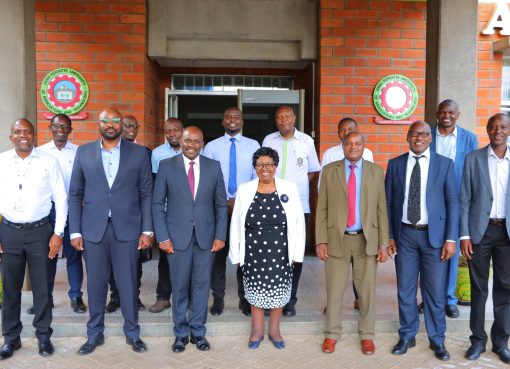
Religious leaders have been urged to take a leading role in promoting care for children by sensitizing communities to the importance of strengthening family ties and ensuring children are nurtured in a safe environment.
The call was made during a stakeholders’ engagement forum held at Word of Faith Church in Kiambu, which brought together government officers, child-focused organizations, and religious leaders to deliberate on strategies for advancing family-based care for children.
The National Care Reform Strategy for Children was introduced on June 8, 2022, and is designed to run for ten years, concluding in 2032.
Kiambu County Coordinator for Children Services Rose Barine said the church had a critical role to play in transforming the way vulnerable children are cared for, noting that child protection required collaboration among government, families, religious institutions, and other stakeholders.
“The church has a critical role to play in care reform for children. We strengthen families to make them suitable for the care our children need. Child protection is a collaborative undertaking,” said Barine.
She said religious institutions were well positioned to reach families at the community level and could help identify challenges affecting families before they resulted in children being separated from their parents or guardians.
Kiambu Sub-County Children Officer John Wachira said care reform was anchored in legal frameworks, including the Constitution of Kenya, which recognizes the family as the natural and fundamental unit of society under Article 45, while Article 53 provides for the rights and protection of children.
Wachira said raising children within a family environment gives them opportunities to acquire important values and life skills through everyday interaction with family members.
He noted that children could learn practical skills such as financial literacy, responsible use of resources, avoidance of wastefulness, and moral values when brought up in a supportive family setting.
He urged religious leaders to sensitize their congregations and communities on care reform and take the lead in advocating for approaches that prioritize family-based care for children, saying their involvement would strengthen efforts to create awareness and encourage families to take responsibility for the welfare and protection of children.
Phyllis Macharia, Monitoring and Evaluation Officer at Child in Family Focus Kenya (CFFK), defined care reform as the process of changing the systems and mechanisms used to provide care for children, with emphasis on ensuring that children’s care needs are met in appropriate family and community settings rather than in institutions.
She clarified that the reform agenda was not aimed at shutting down privately owned children’s homes but rather at advocating for change in the way care is delivered so that more children can be raised within family setups.
Macharia outlined the four pillars guiding the care reform process: prevention of separation and family strengthening, alternative care and tracing, reintegration, and transitioning children from institutional to family- and community-based care.

She cited statistics showing that eight out of every ten children currently living in children’s homes have a living relative or parent, underscoring the need to prioritize family strengthening and reintegration over institutional placement.
Kiambu County alone has an estimated 3,058 children living in 90 children’s homes across the county.
Peter Kamau of Child in Family Focus Kenya called on members of the public to involve the Children’s Office in child protection matters to ensure that interventions are undertaken within the appropriate legal and child protection frameworks.
The meeting also highlighted the importance of foster care and adoption for children who cannot remain with their biological families, while urging members of the public to work closely with the Children’s Office when seeking to assist children in need of care and protection.
Present at the forum were representatives from the State Department for Children Services, Legacy4Children, Child in Family Focus Kenya (CFFK), and World Without Orphans (WWO), who jointly called for the embracement of kinship care, foster care, adoption, and community-based care models to give every child a chance to grow up in a family.
Strengthening families and increasing community awareness remain critical to ensuring that children grow up in safe environments where they can develop socially, morally, and economically.
Sustained collaboration between government agencies, religious organizations, families, and child-focused organizations will be key to advancing care reform and safeguarding the rights and welfare of children.
By Winjoy Makena and Grace Naishoo