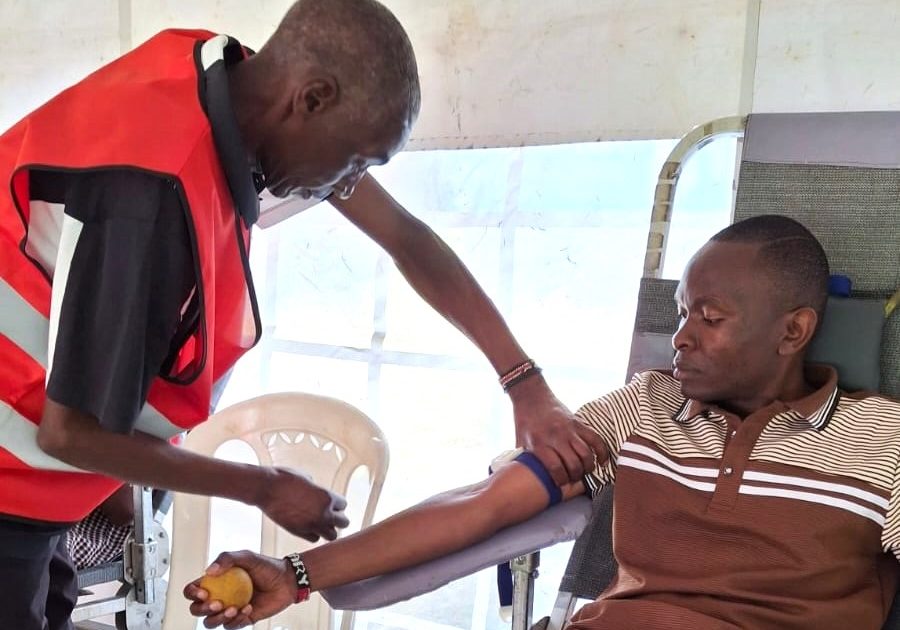
A blood donation drive organized by the Rotary Club in partnership with the Kenya National Blood Transfusion Service (KNBTS) has yielded 77 units of blood, providing a timely boost to blood stocks in Kericho County amid growing demand for lifesaving transfusions.
The exercise, which had targeted the collection of 100 units, attracted dozens of voluntary donors and is expected to strengthen blood reserves used in emergency treatment, major surgeries, maternal healthcare, treatment of accident victims, and the management of patients requiring regular blood transfusions.
Health officials say sustained voluntary blood donation remains critical in ensuring hospitals maintain adequate supplies throughout the year.
Speaking during the blood donation exercise held at Uhuru Gardens in Kericho Town, Blood Drive Coordinator Oscar Lumire said the initiative was organized in response to the shortage of blood in local blood banks and reflects Rotary’s commitment to improving lives through humanitarian service.
“We organized this drive because there is a shortage of blood in our blood banks, and we wanted to help save lives. This is in line with Rotary’s mission of doing good in the world and making a positive impact,” said Lumire.
Lumire said although the organisers had set a target of collecting 100 units of blood, the 77 units realized marked a significant contribution towards replenishing blood stocks in the county.
“We were targeting 100 units, but we managed to collect 77 units. We appreciate everyone who turned up to donate,” he said.
He noted that every unit of blood donated has the potential to save lives by supporting patients requiring emergency transfusions, including accident victims, mothers experiencing complications during childbirth, surgical patients, and children suffering from severe anemia.
He urged healthy Kenyans, particularly young people, to embrace voluntary blood donation as a regular civic responsibility to help maintain stable blood reserves.
The blood donation exercise was coordinated by the Kenya National Blood Transfusion Service (KNBTS) Kericho Satellite Centre, whose officers supervised the collection, screening, processing, and safe storage of the donated blood before its distribution to health facilities across Kericho County.
According to Lumire, the blood collected will be used to replenish county blood banks and ensure hospitals have adequate supplies to respond to emergencies and routine medical procedures. He said partnerships between humanitarian organizations and health institutions remain vital in strengthening the country’s blood transfusion programme.
One of the donors, identified only as Simba, encouraged more members of the public to participate in blood donation drives, saying the process is simple, safe, and takes only a short time.
“I decided to donate blood because the process is quick, free, and painless. Most importantly, I know my donation could help save someone’s life,” he said.
Kenya continues to experience periodic shortages of safe blood as demand often outpaces supply due to road traffic accidents, medical emergencies, complex surgeries, and maternal health needs. Health experts maintain that regular voluntary blood donation is the most reliable way of ensuring adequate blood stocks, noting that one unit of donated blood can be processed into different components capable of benefiting more than one patient.
By Monica Irua