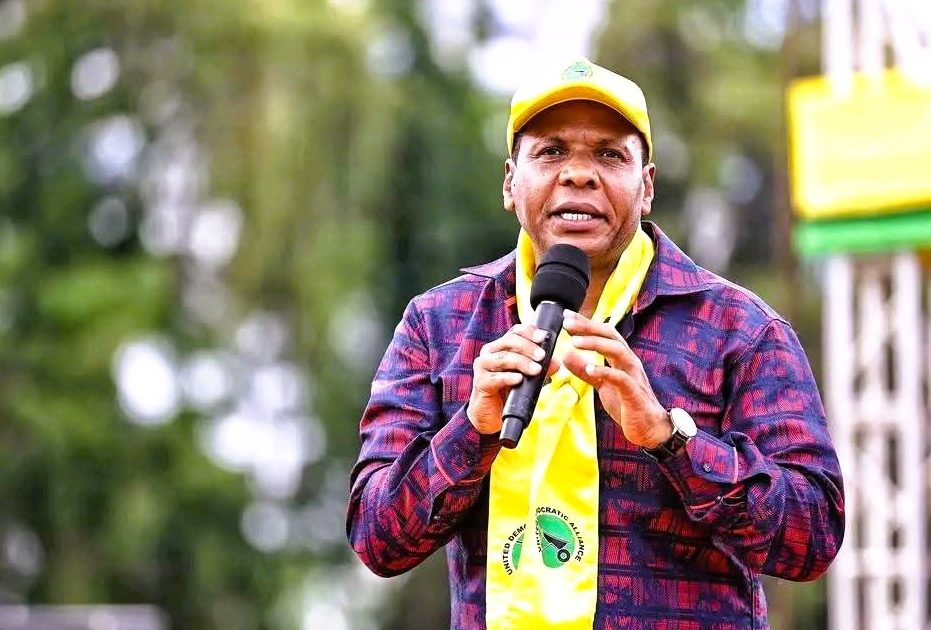
Tana River Senator, Danson Mungatana is calling on residents to reject ethnic alliances and divisive political factions ahead of the 2027 general elections.
Accompanied by Garsen MP, Ali Wario, Senator Mungatana said politicians who are mobilizing ethnic support to clinch elective seats should be rejected at the ballot box.
Mungatana said residents should reject politicians who mobilize ethnic and religious alliances to win elections saying the move allows failed politicians to escape scrutiny and accountability.
The Senator says leaders should be elected based on integrity and development record rather than tribal affiliations.
He cautioned against the mobilization of ethnic, tribal and religious identity as a shortcut to power, warning that such tactics damage cohesion in the long run.
He said ethnic-based political rhetoric and mobilization undermines unity, stunts socio-economic development, and fuels unnecessary electoral tensions every election cycle.
“We should disregard tribal alliances and endorsements and instead candidates and political actors must come out and sell their development agenda to the people,” he said.
He went on ‘we are singling out those seeking to become governors because that office receives Sh9 billion annually on behalf of the people of Tana River,’
Addressing residents of Kipini in Delta Sub County said those preaching the gospel of ethnicity for narrow political interests should be rejected.
He said in 2013, 2017 and 2022 general polls local politicians have won elective posts by inciting and fanning divisions between communities who have coexisted peacefully for decades.
“This unfortunate scenario that seems to have started since the inception of devolution has robbed us of the much needed development at the county level,” he said.
Mungatana said leaders should stop preaching divisions, promoting hate and instead embrace development, unity, and service to all the people regardless of their affiliations.
He said this culture of tribal endorsements should stop and leaders should be elected into office depending on their development track record.
Mungata who seeks to defend his senatorial seat in 2027 polls said communities who have lived side by side for generations should not be divided for selfish political interests.
“Communities in Tana River must come together irrespective of tribe and religion for the prosperity of our county and country,” he said.
His sentiments come in the backdrop of several leading politicians especially with an eye on the governorship seat forming tribal alliances.
“We must say no to deceptive politics and support leaders who want to genuinely serve the people and not sectarian interests,” he said and urged electorates not to vote based on tribe.
He said those candidates running for the gubernatorial seats must show competence in delivering to the people instead of resorting to tribalism.
Mungatana said in Tana River, while the registered voters are usually few, the situation is made worse by fewer people voting during elections.
Senator Mungatana also said it was time Kenya considered compulsory voting to allow collective participation in politics.
He urged Tana River residents to register in large numbers and take the next step of coming out and voting during elections.
He said in Australia, Belgium, Egypt and Gabon eligible voters must get out and vote during elections or pay a fine in lieu of voting.
“As a result in Australia you have 95 percent turnout for elections while here in Kenya we always talk of voter apathy since there are no consequences for failing to vote,” he said.
MP Wario said those seeking elective posts must always preach peace and unity among the diverse communities.
The legislator also said people should stop the habit of transferring their votes to Lamu and Garissa while they live and work in Tana River.
Wario warned that this trend weakens and hinders local development as development money is tied to population and voting.
By Hussein Abdullahi