The Government has moved to expand irrigation infrastructure across the country as part of a wider strategy to guarantee food security for Kenya’s growing population, even as the country’s landmass remains unchanged.
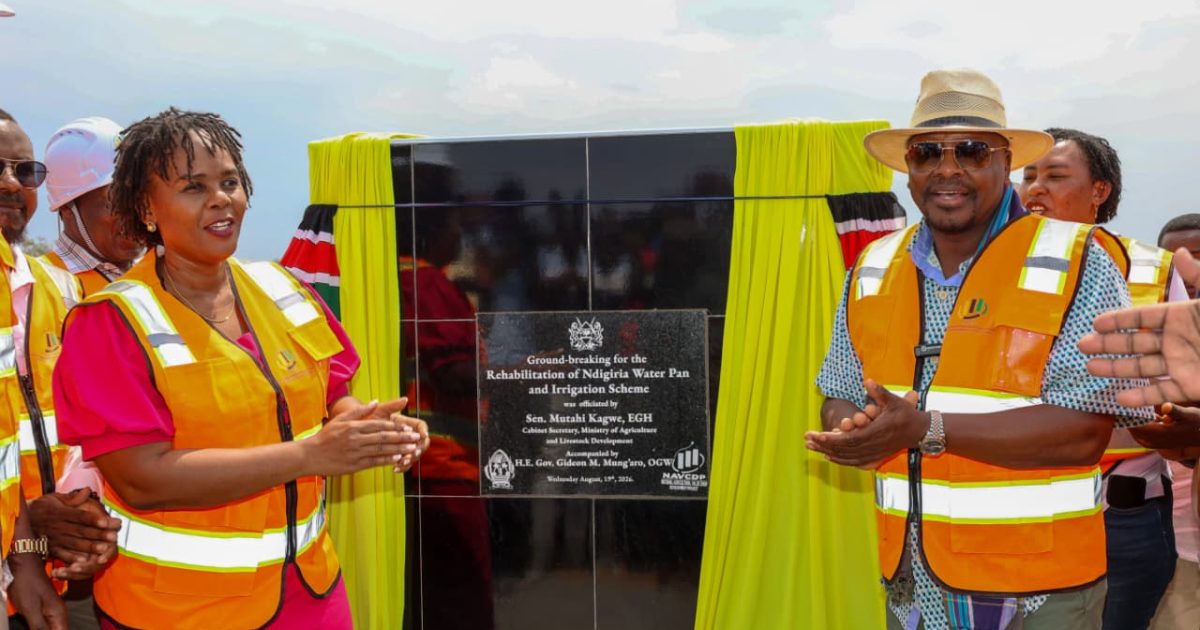
Speaking during the launch of the Sh 79 million rehabilitation of the Ndigiria Water Pan in Bamba, Kilifi County, Agriculture and Livestock Development Cabinet Secretary (CS) Mutahi Kagwe said the project is expected to transform food production in the semi-arid region as part of a wider Government strategy to guarantee food security for the country’s growing population.
“The population is growing, and that does not mean the size of Kenya will increase. It is therefore important that we have water available to match that growth and feed our population,” said CS Kagwe.
The CS said the country can no longer afford to let large volumes of runoff flow away during the rainy season, only for communities to grapple with water shortages and food insecurity months later.
He said the government’s strategy is to capture runoff from seasonal rivers, expand dams and water pans, and sustainably tap groundwater through deep boreholes, before channeling the water into agricultural production.
Kagwe linked the Ndigiria project to broader national efforts including the Galana-Kulalu Irrigation Scheme and ongoing dam development programmes.
“Kenya cannot continue depending on rain alone to feed its people. We must have water available for agriculture, so that farmers can produce whether it rains or not,” he said.
Established in 1963, the Ndigiria Water Pan is being rehabilitated to restore its water-holding capacity and support a 50-acre smallholder irrigation scheme.
The project will directly benefit more than 100 farmers, reach an estimated 4,026 indirect beneficiaries and provide water for about 15,398 livestock.
Implemented under the National Agricultural Value Chain Development Project (NAVCDP), the works include desilting and stabilisation of the pan, fencing, an intake structure, and pumping units, distribution pipelines, balancing tanks, solar power systems and farm irrigation infrastructure.
CS Kagwe said the goal is to turn water into food, jobs and income, urging beneficiaries to diversify production by combining food crops with commercially viable ones.
He said farmers allocated land under the scheme would receive seeds, extension services and technical support.
CS Kagwe directed the contractor to carry out the works in phases, to ensure residents continue accessing water during construction, separate livestock watering points from the irrigation facility, and prioritise residents for employment.
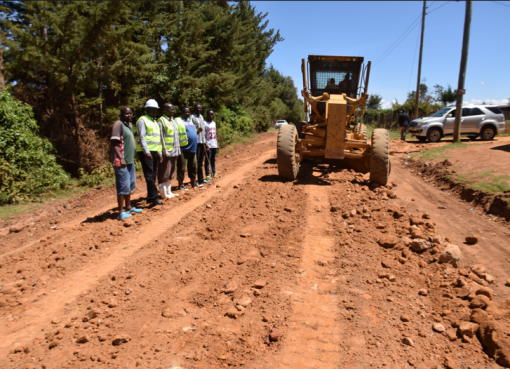
He also pledged to champion the grading of the Bamba road network at Cabinet level to ease movement of farm produce to markets.
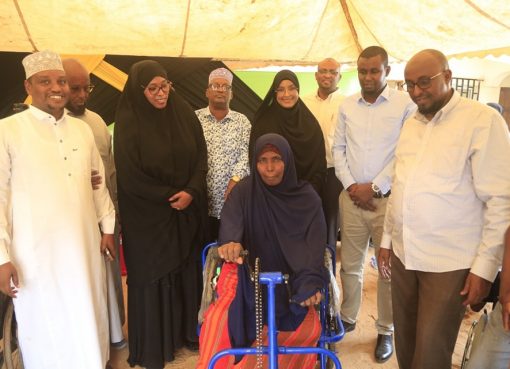
As part of the project’s financial empowerment component, CS Kagwe handed over Sh 30,512,579 to eight local SACCOs to strengthen farmers’ access to credit.
Principal Secretary (PS) for Cooperatives Development, Patrick Kilemi, said stronger cooperatives would help farmers aggregate produce, access markets and negotiate better returns.
Kilifi Deputy Governor, Flora Mbetsa Chibule, urged residents to take ownership of the project, saying its benefits would only be sustained if the community protected the infrastructure.
“This is our project. If we protect it and use it well, it will serve our children and grandchildren for generations to come,” said Chibule.
By Sadik Hassan and Ramadhan Nassib