On the shores of Lake Turkana, where fishing has sustained communities for generations, a new promise is taking shape, one built not on nets or boats, but on cooperation.
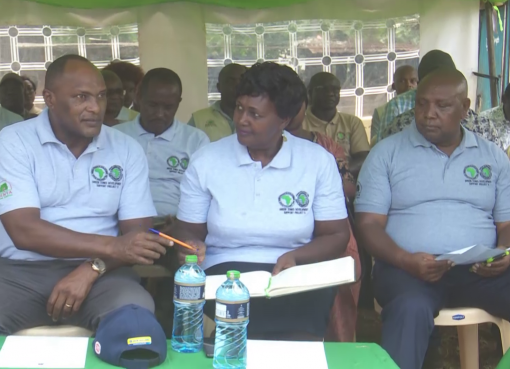
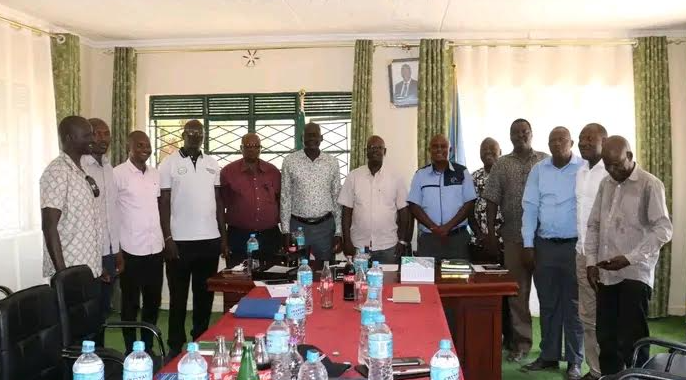
This week in Lodwar, a room full of officials from national and county government, wildlife and maritime agencies, and research institutions arrived at a rare consensus: Turkana’s fisheries sector needs a common table.
Stakeholders agreed to set up a coordination forum bringing together the County Department of Fisheries and Aquaculture, the State Department of Blue Economy and Fisheries, Kenya Fisheries Service, Kenya Wildlife Service, Kerio Valley Development Authority, Kenya Maritime Authority, Kenya Marine Fisheries Research Institute, and the County Beach Management Unit Network, the body representing local fisherfolk.
The forum, meeting quarterly and backed by a WhatsApp group for real-time communication, is meant to close a gap that has long frustrated efforts to grow the sector: too many players working in silos.
For County Executive Committee Member for Agriculture, Livestock Development and Fisheries Dr. Michael Eregae, the idea felt overdue.
He described it as timely and workable and tasked two officials—Bett John of the county fisheries department and Kennedy Opiyo of the State Department of Blue Economy and Fisheries—with fast-tracking its formation.
“To effectively identify areas of collaboration, address gaps, and enhance inclusivity, a coordination strategy would be ideal for the sector,” Eregae told the gathering, calling for a stronger sector that lifts the living standards of the fisherfolk who depend on the lake for their livelihoods.
Chief Officer for Livestock Development, Fisheries and Aquaculture Peter Ikaru struck a similar note, framing coordination as the key to unlocking both local and export markets.
His department, he said, remains committed to training fishermen in resource management, building landing sites and market infrastructure, and helping local catch meet the quality standards needed to compete abroad.
Behind the talk of committees and quarterly meetings lie tangible plans that could reshape daily life for lakeside communities.
Assistant Director of Fisheries Ken Opiyo told the meeting that new landing sites are planned for Kalokol in Turkana County and Loiyangalani in Marsabit County, aimed at cutting the post-harvest losses that eat into fishermen’s earnings.
He also pointed to a pending change in national law — a revised Public Finance Management Act that, for the first time, would create an Artisanal Fish Development Fund.
The fund would channel credit and training to fish processing cooperatives.
Water transport is also set for an upgrade.
Edwin Were of the Kenya Maritime Authority announced the purchase of two ferries to connect Kalokol and Loiyangalani, along with two jetty landings under an upcoming project.
Safety featured prominently in his remarks: a rescue centre planned for Kalokol will come equipped with two speedboats and a water ambulance, while the Authority is also acquiring an aircraft and drones to support emergency response on waters across the country.
The Authority was further directed to work with telecom providers to extend mobile network coverage to blind spots along the lake — coverage that could mean the difference between a timely rescue and a tragedy — and to build a Maritime Information System delivering real-time weather updates to fisherfolk.
Beyond infrastructure, stakeholders agreed the new forum would also serve as a space to confront harder issues: illegal fishing, the catching of undersized fish, monitoring and surveillance, and the accidents and insecurity that periodically trouble the lake.
The meeting drew a wide cross-section of the sector’s key players, among them John Bett, Edward Wanyama and Paul Kebo of the County Fisheries Department, William Tonui of KWS, Erick Opallo of KeFS, Maurice Obiero and Casiares Olilo of KMFRI, Stephen Ekuwom of the BMU Network, and Mark Loupe of Fisheries Administration.
For a community whose fortunes rise and fall with the lake, the forum offers something less tangible than a ferry or a rescue boat, but perhaps just as valuable: a shared table where the people who shape the sector’s future are finally speaking with one voice.
By Peter Gitonga