Blue economy stakeholders have been urged to strengthen collaboration with the government to unlock the full potential of the maritime sector, expand maritime education, and create meaningful opportunities for young people to drive socio-economic development.
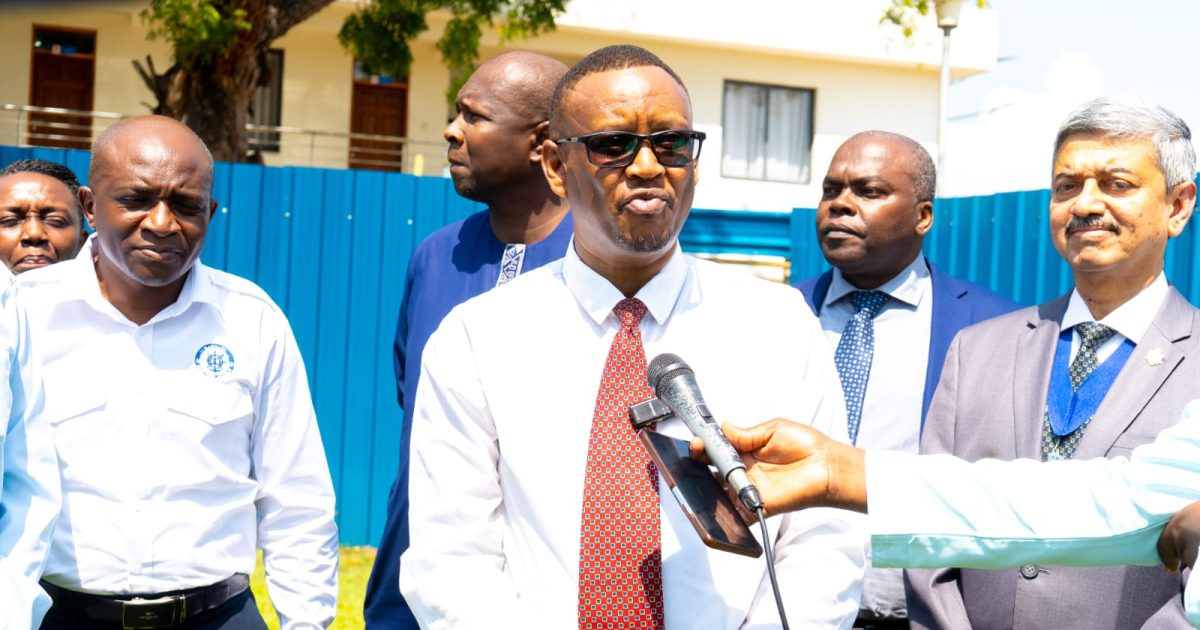
Speaking during the Institute of Chartered Shipbrokers (ICS) East Africa Branch networking conference in Mombasa, Bandari Maritime Academy (BMA) Chief Executive Officer (CEO) Dr Eric Katana said closer partnerships between the public and private sectors are essential to building a resilient, competitive and future-ready maritime industry.
Dr Katana noted that the global maritime sector is navigating unprecedented change driven by supply chain disruptions, rapid technological advancements, climate change, geopolitical uncertainties, evolving trade patterns, cybersecurity threats, growing consumer demand and increasingly stringent regulatory requirements.
“These challenges remind us that resilience is no longer an option; it is an essential capability,” said Dr Katana.
“For maritime professionals, resilience means much more than surviving periods of uncertainty. It means developing the knowledge, skills, networks, ethical values and innovative mindsets needed to anticipate change, adapt quickly and lead confidently. It is about building individuals and institutions that remain effective regardless of changing circumstances,” he added.
Dr Katana observed that the maritime sector remains one of the world’s most important drivers of global commerce, with more than 80 per cent of international trade transported by sea.
“Every product we consume, every economy that grows, and every nation participating in international trade depends directly or indirectly on efficient maritime transport and logistics,” he said.
He noted that East Africa’s maritime economy presents enormous growth opportunities, citing the continued expansion of regional ports, improvements in transport corridors, deeper regional integration, growing blue economy initiatives and increased investment in logistics infrastructure.
According to Dr Katana, these developments are creating strong demand for highly skilled professionals capable of managing increasingly sophisticated shipping, logistics, maritime insurance, port operations, freight forwarding, chartering and supply chain systems.
He also encouraged students pursuing maritime careers, describing the industry as dynamic, intellectually stimulating and globally connected. However, he emphasised that academic qualifications alone are no longer sufficient.
“Today’s employers are looking for professionals who combine technical competence with adaptability, critical thinking, communication skills, emotional intelligence, digital literacy, leadership and ethical judgment,” he said.
Dr Katana further observed that the maritime industry is undergoing rapid transformation through artificial intelligence, automation, blockchain technology, digital documentation, smart ports, data analytics, autonomous vessels and green shipping initiatives, all of which are redefining the way business is conducted.
ICS East Africa Branch Chairman Elijah Mbaru said the conference had brought together industry stakeholders and students to explore opportunities that young people can leverage within the expanding maritime sector.
“I think our relationship as an industry is symbiotic. No single sector can thrive without the other. We are here to strengthen cargo movement, train the leaders of tomorrow and ensure the industry adapts to the changing trends in global shipping,” said Mbaru.
He observed that persistent disruptions in the shipping industry continue to increase the cost of doing business and challenged stakeholders to embrace technology to remain globally competitive.
“We have to be players. We can no longer afford to be mere participants. We must move from policies to practice,” he said.
ICS International Chairman Krishnan Subramaniam said the maritime sector offers immense opportunities, noting that the global shipping industry is more interconnected than ever before. “We are an interconnected world as far as maritime is concerned,” he said.
By Sadik Hassan