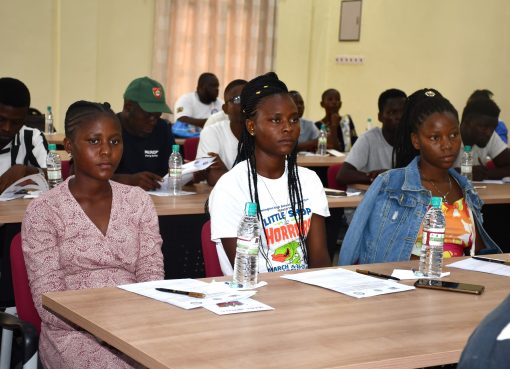
The Ministry of Education has been urged to incorporate student elections into education policies as a strategy to nurture responsible leadership, promote civic responsibility, foster healthy competition, and curb student unrest in schools.
Bright International Academy Principal Dan Odongo said student elections provide learners with an opportunity to exercise democratic rights and participate in the management of their school.
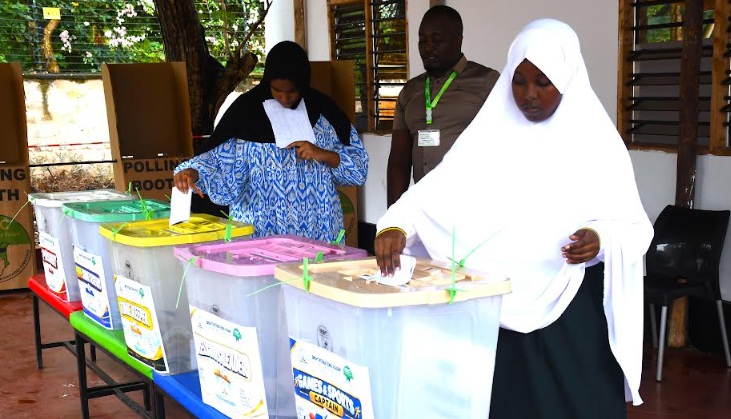
Speaking during the school’s student council elections conducted by the Independent Electoral and Boundaries Commission (IEBC), Mr. Odongo said the institution had embedded student elections in its calendar to give learners a voice in choosing their representatives.
“Since the onset of civilisation, we have had government of the people, for the people, and by the people. As a school, we are so entrenched in this. We give that democratic space to our learners,” stated Mr. Odongo.
He explained that the initiative was aimed at nurturing civic responsibility among students and preparing them to become responsible citizens.
“For this reason, we adopt a system of leadership whereby the students have a say, and they have a voice in electing their leaders. Through this, several things can be sorted out, including voicing the needs of the children, voicing in such a way that their voices are respected by the very people and persons that they did elect,” stated Odongo.
The student elections were preceded by peaceful campaigns, offering important lessons to the electorate as the country prepares for the 2027 General Election.
Mr. Odongo reiterated that, besides academic instruction, the school seeks to nurture democratic and patriotic citizens.
“By this, we nurture a leadership that, from the very word go, respects each other. They respect each other because this is the only thing that will show that competition is not about cutthroat affairs,” said the principal.
He added, “It is not a matter of life and death, and we have even seen this in developed democracies where elections just pass without a lot of drama and brouhaha that we actually witness in our elections.”
Mr. Odongo noted that student elections were an important strategy for addressing unrest, chaos, and violence in schools and society, as learners could channel their needs and concerns through elected leaders, who would then communicate them to the school management.
Asad Faisal, a Grade Five pupil and candidate for the Vice President position, said he would champion the inclusion of all students in school activities if elected.
“When I become the vice president, I will make sure that I confirm with the teachers that every single student should take part because sometimes if they don’t take part, they can even get zeros in the exams and fail. That is why I want to do that,” said Faisal.
Rayyan Hashim, a Grade Six pupil running for the President position, said she wanted to provide exemplary and servant leadership.
“My message to students is to work hard, and they will achieve what they want one day,” said Hashim.
IEBC Assistant Registration Officer Elizabeth Kuvuna lauded the school for allowing students to exercise their democratic rights, saying the initiative was preparing them for future participation in civic duties.
“The activity is going on smoothly and peacefully, and students have learned a lot from this election because the moment the election was announced, they started their campaigns. The campaign period was also peaceful because we didn’t get any complaints from our office,” she said.
The Registration Officer also urged the youth and other eligible Kenyans who have not registered as voters to visit IEBC offices and register to participate in next year’s polls.
She revealed that voter registration remained low in Mombasa, calling for concerted efforts by stakeholders to increase the number of registered voters.
By Sadik Hassan